Sponsored

Does a fully charged Taycan weigh the same as one that's nearly depleted?

SWORDER

Well-Known Member
Joined
Jun 8, 2021
Threads
37
Messages
165
Reaction score
245
Location
USA
Vehicles
2021 Taycan Turbo S
Country flag
Got into an discussion about whether or not Taycan is "weighed down" after being fully charged, similar to how an ICE vehicle becomes heavier after filling the tank.

I'm not a science guy but vaguely remember from high school that electrons have no mass. So it seems, in theory at least, that the fully charged vehicle should weigh the same as the depleted one (all other factors being equal).

Before pressing send on this post, I actually Googled "do electrons have mass?" Some people say that they have none. Others indicated that electrons actually do have a mass of 9.1093837015 × 10 −31 kg. If the latter is indeed true, would that mean that the charged vehicle would indeed be heavier, but by so little that conventional scales would be unable to detect it?

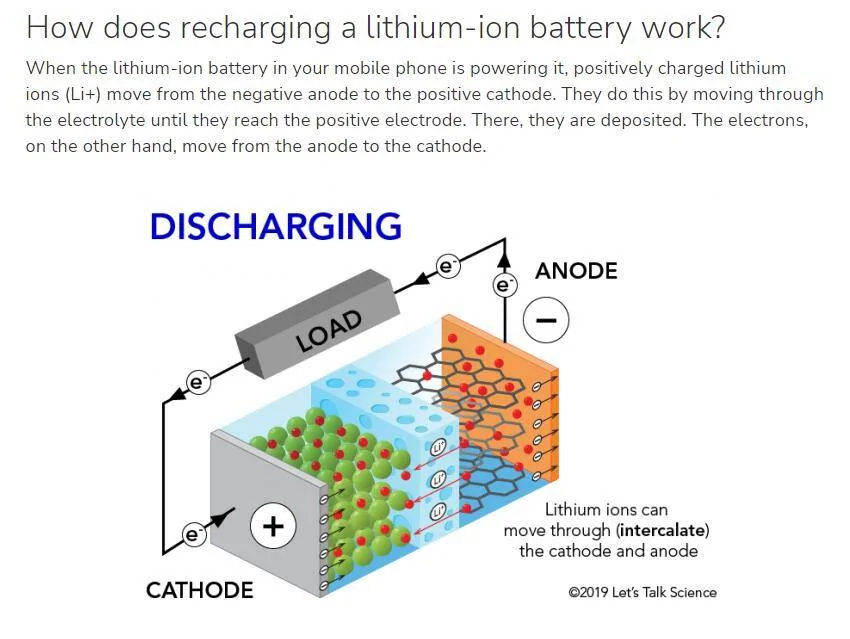
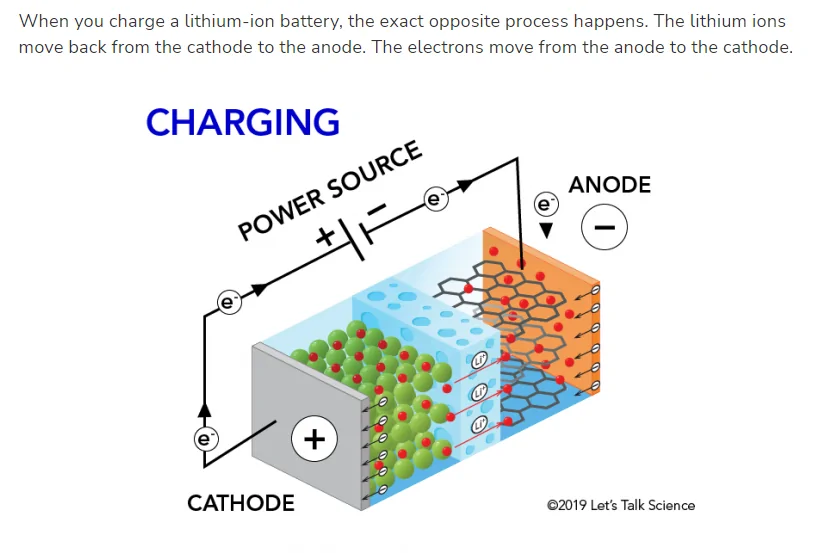
What exactly is happening when we charge our vehicles? Are fresh new electrons being injected into the battery? Or is it just using existing electrons and changing their charge, or maybe moving them from the "positive" side to the "negative" side (or vice versa)? Do the electrons just burn off when consumed as the car is driven, kind of like gasoline does when a ICE gar is driven, or do they still hangout in the battery but just in a just different state?
Sponsored


 

wurzitup

Well-Known Member
First Name
MD
Joined
Aug 28, 2021
Threads
6
Messages
374
Reaction score
362
Location
CA
Vehicles
2022 Taycan
Country flag
No change in weight. Electrons effectively have no mass. And if you can detect their mass, you correspondingly can't know they are in the battery.
Coming from someone with a degree in radiation science and radiation physics.
 

daveo4EV

Well-Known Member
First Name
David
Joined
Jan 28, 2019
Threads
192
Messages
7,007
Reaction score
10,478
Location
Santa Cruz
Vehicles
Cayenne Hybrid, 911(s) GT3/Convertable
Country flag
Got into an discussion about whether or not Taycan is "weighed down" after being fully charged, similar to how an ICE vehicle becomes heavier after filling the tank.

I'm not a science guy but vaguely remember from high school that electrons have no mass. So it seems, in theory at least, that the fully charged vehicle should weigh the same as the depleted one (all other factors being equal).

Before pressing send on this post, I actually Googled "do electrons have mass?" Some people say that they have none. Others indicated that electrons actually do have a mass of 9.1093837015 × 10 −31 kg. If the latter is indeed true, would that mean that the charged vehicle would indeed be heavier, but by so little that conventional scales would be unable to detect it?

What exactly is happening when we charge our vehicles? Are fresh new electrons being injected into the battery? Or is it just using existing electrons and changing their charge, or maybe moving them from the "positive" side to the "negative" side (or vice versa)? Do the electrons just burn off when consumed as the car is driven, kind of like gasoline does when a ICE gar is driven, or do they still hangout in the battery but just in a just different state?
there is no change in mass as a result of the trivial amounts of power being added the battery - and in the grand scheme of physics vs. mass - 93 kWh is trivial.
 

Klepper

Well-Known Member
Joined
Mar 24, 2021
Threads
4
Messages
414
Reaction score
480
Location
Houston, TX
Vehicles
Porsche
Country flag
From that link above:

"Electrons are not lost when a battery is discharged. If a battery is losing electric energy, it doesn't mean that it's losing the electric charge! They're just moved from one electrode closer to the other and it's just the motion through the wire stretched between the electrodes (and the electric field inside the wires) that powers the electric devices. But the whole battery is always electrically neutral; because it contains a fixed number of protons, it must contain a fixed (the same) number of electrons, too."


JimBob

Well-Known Member
First Name
James
Joined
Jan 26, 2021
Threads
75
Messages
950
Reaction score
1,109
Location
Toronto Canada
Vehicles
Taycan 4S
Country flag

Vercingetorix

Well-Known Member
Joined
Aug 6, 2021
Threads
23
Messages
991
Reaction score
1,072
Location
The O. C.
Vehicles
Taycan 4S
From that link above:

"Electrons are not lost when a battery is discharged. If a battery is losing electric energy, it doesn't mean that it's losing the electric charge! They're just moved from one electrode closer to the other and it's just the motion through the wire stretched between the electrodes (and the electric field inside the wires) that powers the electric devices. But the whole battery is always electrically neutral; because it contains a fixed number of protons, it must contain a fixed (the same) number of electrons, too."
So then why the need to recharge? Something is lost due to heat.


Vercingetorix

Well-Known Member
Joined
Aug 6, 2021
Threads
23
Messages
991
Reaction score
1,072
Location
The O. C.
Vehicles
Taycan 4S

285kph

Well-Known Member
Joined
Aug 30, 2019
Threads
1
Messages
126
Reaction score
140
Location
Boston
Vehicles
2012 BMW X5 - 2021 Taycan - 2022 BMW X5 45e
Country flag
With respect to your last question,

https://electronics.stackexchange.c...trons-actually-flow-when-a-voltage-is-applied

In particular start at the line "Thinking about current in terms of electrons moving around is the start down a path to a poor mental model of how electricity works. Here are just a few things wrong with it:"
Well, electric current is quite literally the net motion of charge carriers through a circuit per unit of time, and for most power circuits those charge carriers are electrons.

But indeed, no electrons are lost or added when discharging or charging a battery - it is just the chemical configuration of charges within the battery that is changed.

Regarding the original question, charging the Taycan battery from 0 to 100% should change the weight by a few micrograms, i.e., the mass corresponding to the stored energy.
 

285kph

Well-Known Member
Joined
Aug 30, 2019
Threads
1
Messages
126
Reaction score
140
Location
Boston
Vehicles
2012 BMW X5 - 2021 Taycan - 2022 BMW X5 45e
Country flag
Before pressing send on this post, I actually Googled "do electrons have mass?" Some people say that they have none. Others indicated that electrons actually do have a mass of 9.1093837015 × 10 −31 kg.
I'm not sure if I this is funny or deeply disturbing. Whether electrons have mass or not is not a matter of debate or opinion, but a simple scientific fact that can be verified in any number of experimental approaches. The correct answer is that electrons have a rest mass as indicated above, within a small uncertainty. "Some people" have no clue and should not be talking.
 

epirali

Well-Known Member
First Name
Edmund
Joined
Jan 15, 2020
Threads
13
Messages
752
Reaction score
1,125
Location
USA, East Coast
Vehicles
RS Etron GT, Jaguar I-Pace, BMW i8, ex Taycan TTS
Country flag
Well technically the "energy" stored that will be used in the electrons moving around DOES have mass. But if you use E=MC^2 and work backwards the mass=E/(C^2). So technically yes it weights more, but I am not sure if we have precise enough instruments to measure the increase in mass...


Top