
Sponsored

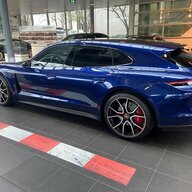
Sell 2021 Taycan Turbo resale value (before vs after warranty expiration)?

amelen

Well-Known Member
First Name
Alex
Joined
Dec 15, 2020
Threads
55
Messages
615
Reaction score
411
Location
North NJ
Website
www.alexmelen.com
Vehicles
2021 Taycan Turbo
Country flag
I still have my '21 Turbo - haven't really been thinking of selling until recently I just had a big warranty issue with my wife's GLS which is a month out of warranty. With my Taycan warranty ending in April next year - I wonder if it makes sense to sell it before then? I guess two thoughts really:

1) With my luck, it seems risky to keep past warranty.
2) I wonder if resale values would be higher selling it while it still has a warranty?

Anyone have any input - specifically on item #2?
Sponsored
 
OP
OP
amelen

amelen

Well-Known Member
First Name
Alex
Joined
Dec 15, 2020
Threads
55
Messages
615
Reaction score
411
Location
North NJ
Website
www.alexmelen.com
Vehicles
2021 Taycan Turbo
Country flag
Hmm, that's what I'm thinking too. Seems like even with 3mo warranty I'd have a much easier time selling it? Hmm

GLS: An OTA update bricked it. Mercedes is stepping up and covering it but it could have cost me 10 grand or more.
 

whitex

Well-Known Member
Joined
Jul 30, 2021
Threads
87
Messages
8,221
Reaction score
7,255
Location
WA, USA
Vehicles
2023 Taycan TCT, 2024 Q8 eTron P+
Country flag
GLS: An OTA update bricked it. Mercedes is stepping up and covering it but it could have cost me 10 grand or more.
Technically they messed the car up with their free OTA service, so they should be on the hook, warranty or not. No different than taking your car for a free inspection and the dealer accidentally bricking it while they ran diagnostics.

Out of curiosity, what was the breakdown of the $10K? Parts (which ones needed to be replaced), labor?


OP
OP
amelen

amelen

Well-Known Member
First Name
Alex
Joined
Dec 15, 2020
Threads
55
Messages
615
Reaction score
411
Location
North NJ
Website
www.alexmelen.com
Vehicles
2021 Taycan Turbo
Country flag
Technically they messed the car up with their free OTA service, so they should be on the hook, warranty or not. No different than taking your car for a free inspection and the dealer accidentally bricking it while they ran diagnostics.

Out of curiosity, what was the breakdown of the $10K? Parts (which ones needed to be replaced), labor?
I don't have the full breakdown, but the MBUX control unit itself was $5k in parts and the labor rate was $225/h. They also had to take a lot of things apart since I think they ultimately broke more things while trying to fix it at the dealership.

I agree it should technically be on them but it will be an interesting situation for car manufacturers who aren't used to covering things under warranty PAST the warranty. What happened if their OTA update broke the car 4 years after warranty for example? Also, the dealerships all wanted to charge a huge diagnostic fee just to start things off (that MB wouldn't cover I'm sure). Here's my full post on it if you want to see more detail:

https://mbworld.org/forums/gls-class-x167/895544-2020-gls-stuck-update-mode.html
 

KLHubb

Well-Known Member
First Name
Kent
Joined
Jan 15, 2024
Threads
4
Messages
510
Reaction score
386
Location
New York
Vehicles
Taycan 4S 2009 911S 2012 Cayenne
Country flag
I bought a Porsche 86 month warrantee for $5k, and plan to have worry-free driving until it expires in 2027. So far, no problems in my 2020 4S, save my own mis-steps. I am looking forward to the debut of the Cayman E, and will consider trading if it looks/perorms as anticipated..


whitex

Well-Known Member
Joined
Jul 30, 2021
Threads
87
Messages
8,221
Reaction score
7,255
Location
WA, USA
Vehicles
2023 Taycan TCT, 2024 Q8 eTron P+
Country flag
I agree it should technically be on them but it will be an interesting situation for car manufacturers who aren't used to covering things under warranty PAST the warranty. What happened if their OTA update broke the car 4 years after warranty for example? Also, the dealerships all wanted to charge a huge diagnostic fee just to start things off (that MB wouldn't cover I'm sure).
This is definitely something which legacy automakers need to address ASAP, but the solution is well known - Tesla did it.

First of all, OTA should never, ever be allowed to brick a car - worst case recovery should be reprogramming the car from scratch - a couple of hours in the shop.

Second, they need to always OTA update to a known good set of software, i.e. all software is always updated as a set, never piecemeal, as that can result in an untestable number of software/firmware combinations on the car. Tesla also figured this one out early. Current generation of engineers seems to have grown up with PC's and iPhones which update OS and apps separately, and they often reject the wholistic approach to OTA, but they will eventually be forced to the known good set of ALL software on the car as the bills for bricked cars start rolling in (most manufacturers today don't have complete OTA yet). Lack of vertical integration is also hurting the traditional manufacturers as different software is written by different companies and is updated differently. Perhaps an industry OTA standard would help.

Third, hardware needs to be designed for OTA, such that it can NEVER be bricked by a failed OTA, and that it can always revert back to older software should ANY part of OTA (other components too) fail. Such hardware is often more expensive (e.g. you need to have 2 banks of memory, so you can update one bank while the other one stays bootable and operational at all times - that dual bank costs extra money).

The bigger issue however, which even Tesla has not (at least publicly) solved is end of life. Cars are connected devices with ever increasing capabilities. Should someone hack Tesla OTA, most of Tesla cars have the capability to be controlled by software, so someone could write a virus that would cause all infected Teslas to accelerate at midnight on new years day into whatever is in front of them at the time. Imagine the carnage, and stock price the next day (and the money you could make shorting the stock the prior day). There are other, less dramatic scenarios, like hacking cars for espionage purposes (all these cars driving around collecting data including videos, radio transmissions, etc - a treasure trove of information for spies). Such risks means all connected cars need to be continually updated in order to stay safe (think phones, any phone which has not received an update in a couple of year is hackable by a script-kiddie who download hacking scripts and runs them, without much understanding what they do and what vulnerability they exploit). So you end up with a situation where you have to continue to update the car for it to stay connected safely to the internet, and at the same time you need to bear the costs of development and testing for old cars from which you derive no revenue anymore. My personal speculation is that the solution to that will be to brick the car's internet connection at some age - no more connected services for the car, including OTA. Of course for a car which depends on connectivity for daily operation, that is a problem. Notice that Tesla still actively provides OTA updates for their 12 year old cars today, which means they have not revealed at which point they stop OTA for their old, out of warranty cars (no 12 year old Tesla is under manufacturer warranty).
 
OP
OP
amelen

amelen

Well-Known Member
First Name
Alex
Joined
Dec 15, 2020
Threads
55
Messages
615
Reaction score
411
Location
North NJ
Website
www.alexmelen.com
Vehicles
2021 Taycan Turbo
Country flag
This is definitely something which legacy automakers need to address ASAP, but the solution is well known - Tesla did it.

First of all, OTA should never, ever be allowed to brick a car - worst case recovery should be reprogramming the car from scratch - a couple of hours in the shop.

Second, they need to always OTA update to a known good set of software, i.e. all software is always updated as a set, never piecemeal, as that can result in an untestable number of software/firmware combinations on the car. Tesla also figured this one out early. Current generation of engineers seems to have grown up with PC's and iPhones which update OS and apps separately, and they often reject the wholistic approach to OTA, but they will eventually be forced to the known good set of ALL software on the car as the bills for bricked cars start rolling in (most manufacturers today don't have complete OTA yet). Lack of vertical integration is also hurting the traditional manufacturers as different software is written by different companies and is updated differently. Perhaps an industry OTA standard would help.

Third, hardware needs to be designed for OTA, such that it can NEVER be bricked by a failed OTA, and that it can always revert back to older software should ANY part of OTA (other components too) fail. Such hardware is often more expensive (e.g. you need to have 2 banks of memory, so you can update one bank while the other one stays bootable and operational at all times - that dual bank costs extra money).

The bigger issue however, which even Tesla has not (at least publicly) solved is end of life. Cars are connected devices with ever increasing capabilities. Should someone hack Tesla OTA, most of Tesla cars have the capability to be controlled by software, so someone could write a virus that would cause all infected Teslas to accelerate at midnight on new years day into whatever is in front of them at the time. Imagine the carnage, and stock price the next day (and the money you could make shorting the stock the prior day). There are other, less dramatic scenarios, like hacking cars for espionage purposes (all these cars driving around collecting data including videos, radio transmissions, etc - a treasure trove of information for spies). Such risks means all connected cars need to be continually updated in order to stay safe (think phones, any phone which has not received an update in a couple of year is hackable by a script-kiddie who download hacking scripts and runs them, without much understanding what they do and what vulnerability they exploit). So you end up with a situation where you have to continue to update the car for it to stay connected safely to the internet, and at the same time you need to bear the costs of development and testing for old cars from which you derive no revenue anymore. My personal speculation is that the solution to that will be to brick the car's internet connection at some age - no more connected services for the car, including OTA. Of course for a car which depends on connectivity for daily operation, that is a problem. Notice that Tesla still actively provides OTA updates for their 12 year old cars today, which means they have not revealed at which point they stop OTA for their old, out of warranty cars (no 12 year old Tesla is under manufacturer warranty).
Agreed but the dealerships definitely didn't see it that way and all wanted a "diagnostic fee" at the very least (which I doubt MB would ever reimburse). Seems like there is very little guidance from manufacturers on this right now - at least not from Mercedes. Their solution here was just to replace the hardware - but i think ultimately the same issue can happen again. They are far from software experts here, which is probably why VW Is partnering with Rivian on EV software going forward.
 

whitex

Well-Known Member
Joined
Jul 30, 2021
Threads
87
Messages
8,221
Reaction score
7,255
Location
WA, USA
Vehicles
2023 Taycan TCT, 2024 Q8 eTron P+
Country flag
Agreed but the dealerships definitely didn't see it that way and all wanted a "diagnostic fee" at the very least (which I doubt MB would ever reimburse). Seems like there is very little guidance from manufacturers on this right now - at least not from Mercedes. Their solution here was just to replace the hardware - but i think ultimately the same issue can happen again. They are far from software experts here, which is probably why VW Is partnering with Rivian on EV software going forward.
Of course dealers want money to diagnose, why should they eat the cost of MB's mistakes? As the car is out of warranty, the customer should pay for diagnistics, but that diagnostic should not be more than an hour's worth, and if it turns out OTA caused a problem, both the diagnostic fee and cost of just re-programming the entire car should be covered by MB. The reprogramming should really be mostly unattended process (therefore inexpensive), if the car is designed correctly. Of course traditional auto makers are not there with their designs yet, hence the issue. What will pan out of the VW/Rivian collaboration still remains to be seen. As I mentioned before, lack of vertical integration can be a big pain, VW may not be able to force their suppliers to confirm to all VW requirements, or those might just be too expensive (both because they may require extra hardware and because that might become very vendor specific, so less reuse between vendors for suppliers). I still think this will not get solved unless all traditional automakers agree on an OTA standard. Of course looking at the success of CCS1 collaboration results in USA vs. non-collaborative NACS solution, dashes my hopes that they will solve the OTA problem any time soon.
 
OP
OP
amelen

amelen

Well-Known Member
First Name
Alex
Joined
Dec 15, 2020
Threads
55
Messages
615
Reaction score
411
Location
North NJ
Website
www.alexmelen.com
Vehicles
2021 Taycan Turbo
Country flag
Of course dealers want money to diagnose, why should they eat the cost of MB's mistakes? As the car is out of warranty, the customer should pay for diagnistics, but that diagnostic should not be more than an hour's worth, and if it turns out OTA caused a problem, both the diagnostic fee and cost of just re-programming the entire car should be covered by MB. The reprogramming should really be mostly unattended process (therefore inexpensive), if the car is designed correctly. Of course traditional auto makers are not there with their designs yet, hence the issue. What will pan out of the VW/Rivian collaboration still remains to be seen. As I mentioned before, lack of vertical integration can be a big pain, VW may not be able to force their suppliers to confirm to all VW requirements, or those might just be too expensive (both because they may require extra hardware and because that might become very vendor specific, so less reuse between vendors for suppliers). I still think this will not get solved unless all traditional automakers agree on an OTA standard. Of course looking at the success of CCS1 collaboration results in USA vs. non-collaborative NACS solution, dashes my hopes that they will solve the OTA problem any time soon.
Agree on all points. In this case, they spent all day re-programming before they gave up and decided that hardware needed to be replaced. It appeared that the software corrupted the hard drives of the MBUX, and then shorted out some other things as well.
 

whitex

Well-Known Member
Joined
Jul 30, 2021
Threads
87
Messages
8,221
Reaction score
7,255
Location
WA, USA
Vehicles
2023 Taycan TCT, 2024 Q8 eTron P+
Country flag
Agree on all points. In this case, they spent all day re-programming before they gave up and decided that hardware needed to be replaced. It appeared that the software corrupted the hard drives of the MBUX, and then shorted out some other things as well.
The fact that it is even possible to kill the MBUX via OTA is just sad. The new car companies, like Tesla, designed software defined cars, so from the very get-go OTA capabilities and solid reliability was the top priority. Anything else can be rectified later, via an OTA (if you have a reliable one). Elon was quoted as preaching the "Ship it now, fix it later over-the-air, pay for hardware or service repairs only if absolutely unavoidable". This model has worked for Tesla for 12 years now. I honestly have not heard of many Teslas bricked by an OTA, actually the very few only ones which had issues after OTA were due to faulty hardware, which in turn made Tesla revamp their OTA to not even attempt applying is any hardware in the system did not report "All Healthy" status. Side note, this became a workaround for people who did not want OTAs, just unplug the seat motor for example, most people don't adjust their seats very often, but OTA would not apply if the controller could not detect a functioning motor.
Sponsored


Top