Sponsored
OP
OP
bsclywilly

bsclywilly

Well-Known Member
Joined
Aug 13, 2021
Threads
26
Messages
711
Reaction score
1,182
Location
San Jose
Vehicles
CT4
Country flag
great stuff!
were you really able to keep the same lap times during the 2nd stint with battery down to ~15% SoC?
this would help to compare them on the same x-axis to see the essence of all the data in one diagram comparing only few essential values (batt temp and maybe power or amp hours) over time (or even better: over distance).

I do most of my car scanner data analysis with Python to automate export workflows and align data.

Did you log with SportChrono active as well?
Yes lap times very consistent. Last session lap times ranged between 1:44.5-1:46.0. Last lap at 15% SoC was actually the fastest lap that session in case you were wondering whether there was a power decrease at low SoC.
First session range was 1:44.1-1:45.5 traffic had a minimal effect either session.

Recorded laps on SportChrono since my phone was logging CarScanner. Having trouble getting that downloaded from the car though…
I’ll update a graph later with both sessions overlaid.
Sponsored

 

Vercingetorix

Well-Known Member
Joined
Aug 6, 2021
Threads
23
Messages
991
Reaction score
1,073
Location
The O. C.
Vehicles
Taycan 4S
Sorry, help me understand. The battery would not be one contiguous 'element' that is depleted gradually and uniformly - I'd expect it is a set of "modules" comprised of serialized pouches, and which are selectively used in parallel as needed. That is, there will always be a module delivering 800V for as long as "the battery's" SoC > min. Is that not the case, or am I missing completely how this works? Thanks.

(edited for syntax and clarity)
I think what you describe would be almost impossible. The cells all need to be drained equally or else the battery will become unbalanced. And as far as I know without careful human intervention the whole pack will then only charge to the voltage level of the pouch with the lowest voltage, dragging down the whole battery to that level. I am learning as I go from a lithium conversion I am doing on a travel trailer. Battery university is a great online source.
 
OP
OP
bsclywilly

bsclywilly

Well-Known Member
Joined
Aug 13, 2021
Threads
26
Messages
711
Reaction score
1,182
Location
San Jose
Vehicles
CT4
Country flag
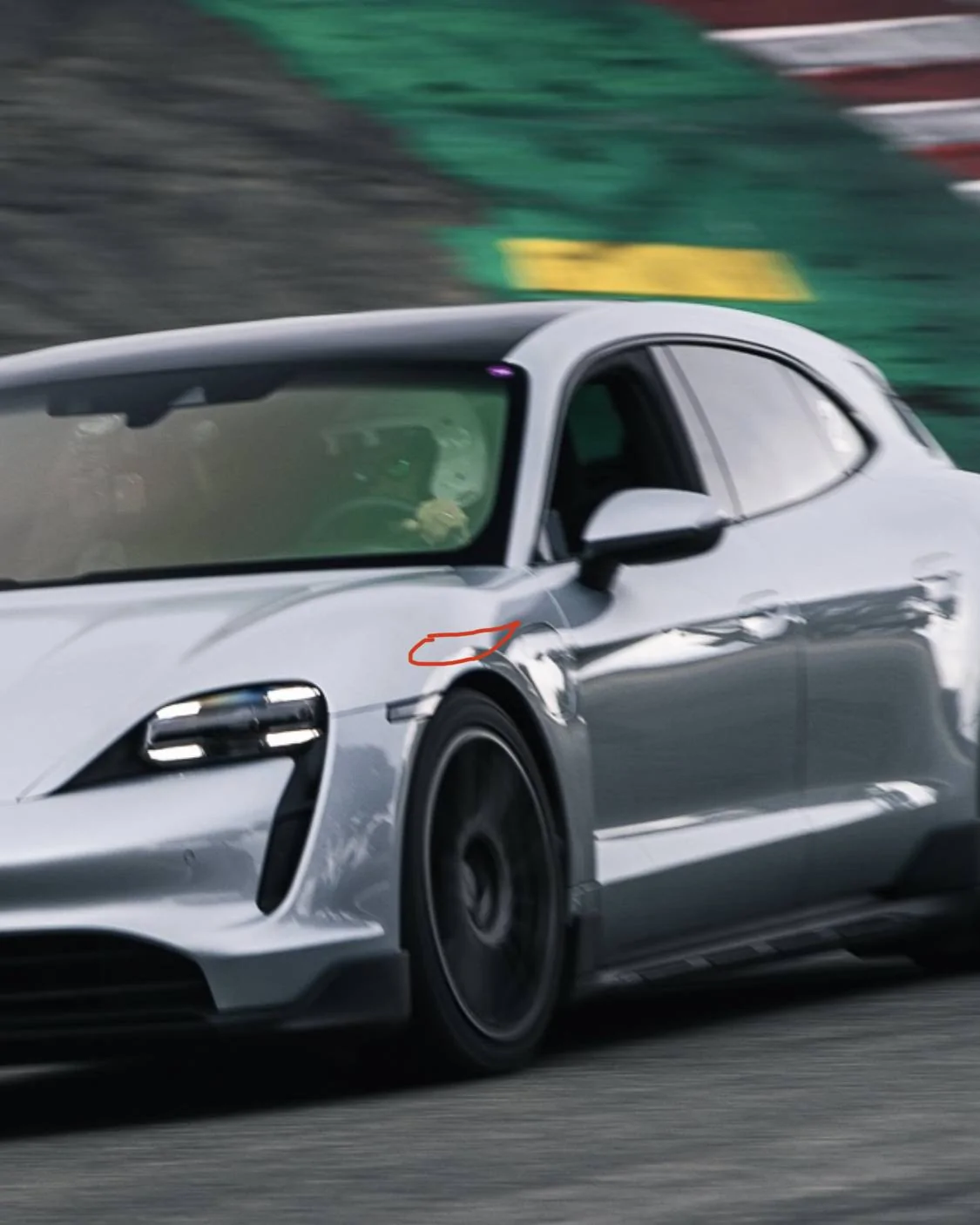
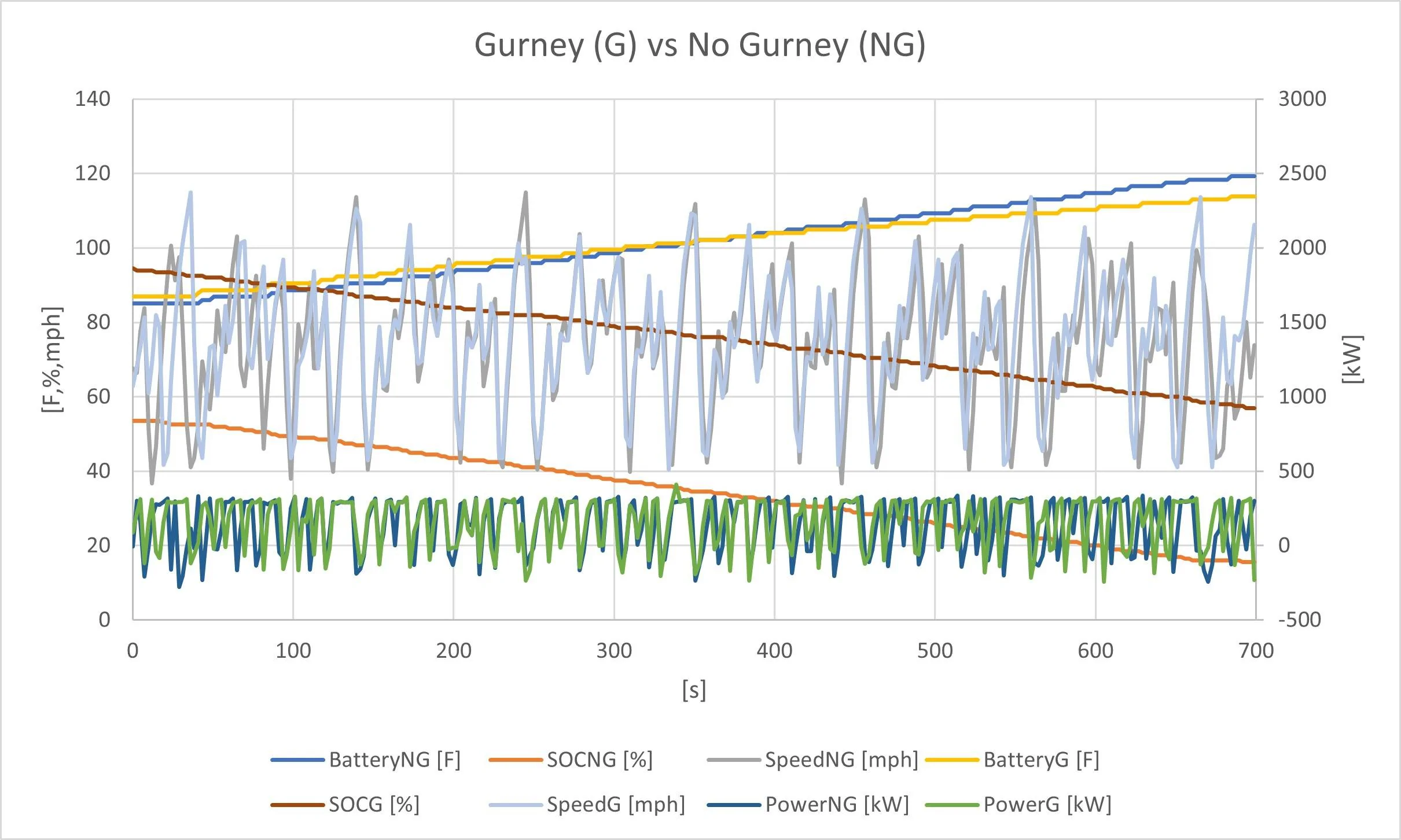
@rs38 Here's both sessions overlaid. The speed traces fall nearly on top of each other, so overall very consistent between 2 sessions. Power is also consistent from start to end - 10kW average lower on the no gurney test (2nd session).

Porsche Taycan Cooling Modifications Experiment for the Track: more air flow through radiators to keep battery temperature down gurney comparison
 

rs38

Well-Known Member
Joined
Nov 16, 2020
Threads
23
Messages
703
Reaction score
762
Location
Düsseldorf
Vehicles
Taycan,GT2,i8,Tesla
Country flag
thank you, much clearer now for me.
but the argument with increased amps on lower SoC is quite valid as amps stress heating a lot: https://en.wikipedia.org/wiki/Joule_heating

In the name of science :) , are you able to repeat the test vice versa, starting without Gurney at high SoC? or even better both stints with same SoC and batt temp?

 

f1eng

Well-Known Member
First Name
Frank
Joined
Aug 19, 2021
Threads
48
Messages
4,765
Reaction score
8,335
Location
Oxfordshire, UK
Vehicles
Taycan CT4S, Ferrari 355, Merc 500E, Prius PHV
Country flag
I have 30 years experience in the aero of Formula 1 cars and only 3 to 4 years brief experimentation with sportscats (for Le Mans and AMLS Lolas) but the device that had the most powerful effect on drawing air out from the wheel wells, which helps downforce a lot on racing cars and may achieve what you are trying on a high ride height car is the vane above the splitter on this 919.

Porsche Taycan Cooling Modifications Experiment for the Track: more air flow through radiators to keep battery temperature down 2014-porsche-919-hybrid-le-mans-prototype-race-car_100459091_h


I was sceptical it could do anything before I tried it because its aspect ratio is wrong for a wing and it has a tiny area, but what it does is to generate a vortex the low pressure of which draws air out of the wheelarch.
The wind tunnel data shows considerably more flow under the "front wing" so my guess is it would maybe increase cooler flow on the Taycan layout.


OP
OP
bsclywilly

bsclywilly

Well-Known Member
Joined
Aug 13, 2021
Threads
26
Messages
711
Reaction score
1,182
Location
San Jose
Vehicles
CT4
Country flag
I have 30 years experience in the aero of Formula 1 cars and only 3 to 4 years brief experimentation with sportscats (for Le Mans and AMLS Lolas) but the device that had the most powerful effect on drawing air out from the wheel wells, which helps downforce a lot on racing cars and may achieve what you are trying on a high ride height car is the vane above the splitter on this 919.

2014-porsche-919-hybrid-le-mans-prototype-race-car_100459091_h.webp


I was sceptical it could do anything before I tried it because its aspect ratio is wrong for a wing and it has a tiny area, but what it does is to generate a vortex the low pressure of which draws air out of the wheelarch.
The wind tunnel data shows considerably more flow under the "front wing" so my guess is it would maybe increase cooler flow on the Taycan layout.
Thanks for the insight on those canards. I remember when they became popularized (then regulated, I think) in the early 2000s after the pitch sensitive splitter and underbodies of LMP cars startled flipping them in the air. It was also a memorable aerodynamics class when we actually got to talk about race cars instead of planes, for a day.

They are a very popular device now on competition sports cars and are slightly more effective than the wheel well gurneys I used from the wind tunnel data I’ve seen, in terms of downforce. Both combined yield even better results for downforce. Another device that I’m starting to see more of is a winglet at the top of the wheel well using the low pressure underside to help lower wheel well pressure and provide some front end DF.
Porsche Taycan Cooling Modifications Experiment for the Track: more air flow through radiators to keep battery temperature down 563B45FF-9238-4505-A64A-ECA5CDEC5106


The gurney was an easy one to make as a starting point since I had a template from my removed plastic arches.

In the name of science :) , are you able to repeat the test vice versa, starting without Gurney at high SoC? or even better both stints with same SoC and batt temp?

Yes, and perhaps I can convince @daveo4EV to bring his turbo out too as any differences should be even more apparent with the higher power and heat gen. We have another local track to us that has fast chargers nearby.
 

f1eng

Well-Known Member
First Name
Frank
Joined
Aug 19, 2021
Threads
48
Messages
4,765
Reaction score
8,335
Location
Oxfordshire, UK
Vehicles
Taycan CT4S, Ferrari 355, Merc 500E, Prius PHV
Country flag
Thanks for the insight on those canards. I remember when they became popularized (then regulated, I think) in the early 2000s after the pitch sensitive splitter and underbodies of LMP cars startled flipping them in the air. It was also a memorable aerodynamics class when we actually got to talk about race cars instead of planes, for a day.
They have been used since the '70s I believe and were always regulated in terms of bodywork width (in those series with width rules which is probably all of them by now).
When I started in F1 the rules were on 3 or 4 pages of the FIA rule book which is A5 but fairly small print. There was no width limit until 1976 and some people made wide cars and some narrow.

On an open wheeled car successful aerodynamics is 50% avoiding and/or managing the damage due to the wheel wakes. The bodywork is much less important than is generally thought :)

On a road car the only work I have done shows a wind tunnel test without the moving ground and rotating wheels gives non-correctable errors because the flow field is completely changed. I don't remember which way round it was but in one test condition the air went through the radiator then under the car, in the other through the radiator then out of the wheel wells.

It means any drag figures quoted from a stationary floor wind tunnel test will be wrong, though I don't know by how much...
 

rs38

Well-Known Member
Joined
Nov 16, 2020
Threads
23
Messages
703
Reaction score
762
Location
Düsseldorf
Vehicles
Taycan,GT2,i8,Tesla
Country flag
BTW: to help the cooling outlet it would also make sense to use blade wheels (right/left different part number), wouldn't it?


f1eng

Well-Known Member
First Name
Frank
Joined
Aug 19, 2021
Threads
48
Messages
4,765
Reaction score
8,335
Location
Oxfordshire, UK
Vehicles
Taycan CT4S, Ferrari 355, Merc 500E, Prius PHV
Country flag
BTW: to help the cooling outlet it would also make sense to use blade wheels (right/left different part number), wouldn't it?
IME not really, the wheel doesn’t rotate fast enough to make a worthwhile amount of flow from blade shaped spokes.
There were wheels like this tried decades ago in racing by some mechanics but the engineering doesn’t stack up and they didn’t make a difference.
Maybe 21” wheels would be big enough with good spoke design, but the optimum blade shape and incidence is speed dependant.
 

Dee

Well-Known Member
First Name
Dee
Joined
Dec 14, 2018
Threads
78
Messages
3,508
Reaction score
4,050
Location
The Netherlands
Vehicles
A lot
Country flag
but the device that had the most powerful effect on drawing air out from the wheel wells, which helps downforce a lot on racing cars and may achieve what you are trying on a high ride height car is the vane above the splitter on this 919.
What about the louvres above the wheels?
The flow over these creates a relatively low pressure area and scavenges the "high pressure" in the wheel well as well, or maybe even for the most part (the Porsche 935/936 had these already in the 70's).
Or maybe it's in the combination of louvres and canards?
I can imagine it also highly depends on speed.
With road cars going just over 100-120 km/h the effect is not that of importance, it's just calculations in the margins.
 

f1eng

Well-Known Member
First Name
Frank
Joined
Aug 19, 2021
Threads
48
Messages
4,765
Reaction score
8,335
Location
Oxfordshire, UK
Vehicles
Taycan CT4S, Ferrari 355, Merc 500E, Prius PHV
Country flag
What about the louvres above the wheels?
They mainly kill the lift of the wheelarch shape and are super effective but I was trying to make practical suggestions of things to try on a track day on a road going Taycan.
Almost the whole of the top body of a sports car produces lift.
When I did the aero for the Le Mans MG the biggest gains in downforce were actually reducing lift by cutting away all the lift generating top bodywork that didn’t legally need to be there. It was a huge gain and everybody does it now.

One of my friends who was Niki Lauda’s F2 mechanic in the 1970s told me Niki loved scaring passengers in his 911 by quickly applying an armful of lock at high speed on the autobahn to demonstrate how much lift the car had - nothing happened apparently.
All those sports cars had aero by guesswork back then.
 
Last edited:

grahamsimmonds

Well-Known Member
First Name
Graham
Joined
Nov 18, 2019
Threads
5
Messages
154
Reaction score
336
Location
Portsmouth UK
Vehicles
Taycan Turbo S
Country flag
Yes lap times very consistent. Last session lap times ranged between 1:44.5-1:46.0. Last lap at 15% SoC was actually the fastest lap that session in case you were wondering whether there was a power decrease at low SoC.
First session range was 1:44.1-1:45.5 traffic had a minimal effect either session.

Recorded laps on SportChrono since my phone was logging CarScanner. Having trouble getting that downloaded from the car though…
I’ll update a graph later with both sessions overlaid.
Are you aware that any Taycan that has had the PCM 6.0 UPdate can now use Porsche's Track Precision App? The data it collects is impressive.
 
OP
OP
bsclywilly

bsclywilly

Well-Known Member
Joined
Aug 13, 2021
Threads
26
Messages
711
Reaction score
1,182
Location
San Jose
Vehicles
CT4
Country flag
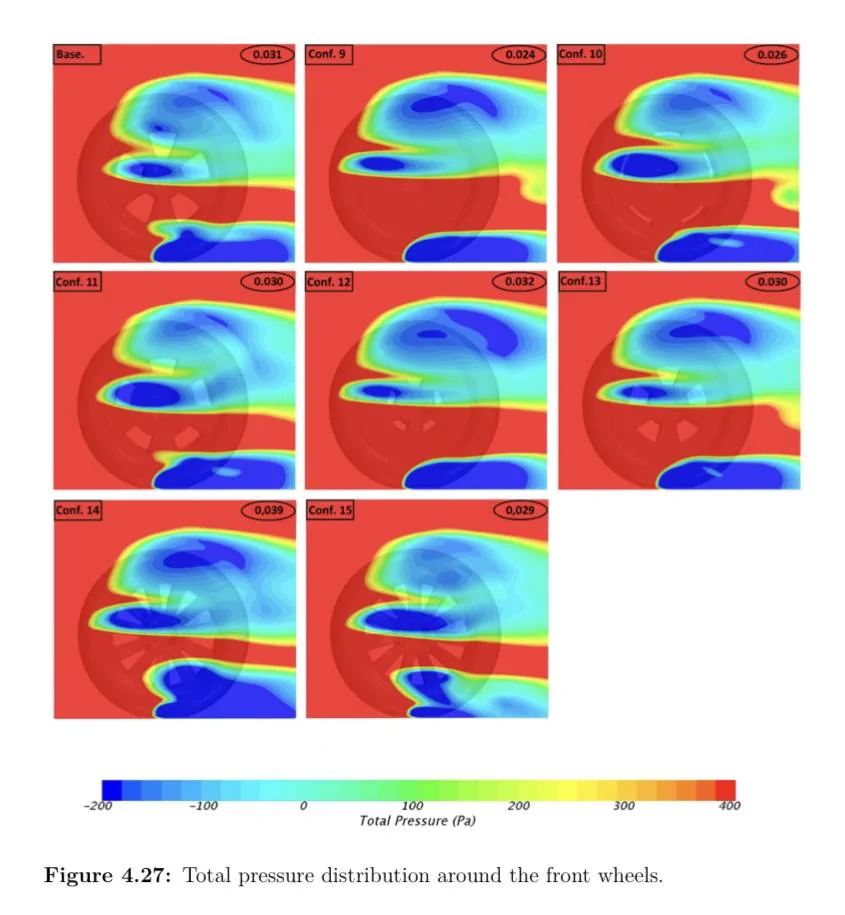
BTW: to help the cooling outlet it would also make sense to use blade wheels (right/left different part number), wouldn't it?
There is a CFD study by Chalmers, CAVUSOGLU that looked at this parameter. Fan wheels (14/15) appear to lower the pressure a bit.
Porsche Taycan Cooling Modifications Experiment for the Track: more air flow through radiators to keep battery temperature down 5D61DB01-BA20-440D-A9B4-D0F25A618CE0

Are you aware that any Taycan that has had the PCM 6.0 UPdate can now use Porsche's Track Precision App? The data it collects is impressive.
Yes. I think if you search track precision on this forum you’ll see many of my posts. Unfortunately I didn’t have enough phones on me to log both TP and CarScanner apps at the same time. It is impressive!
 

Dee

Well-Known Member
First Name
Dee
Joined
Dec 14, 2018
Threads
78
Messages
3,508
Reaction score
4,050
Location
The Netherlands
Vehicles
A lot
Country flag
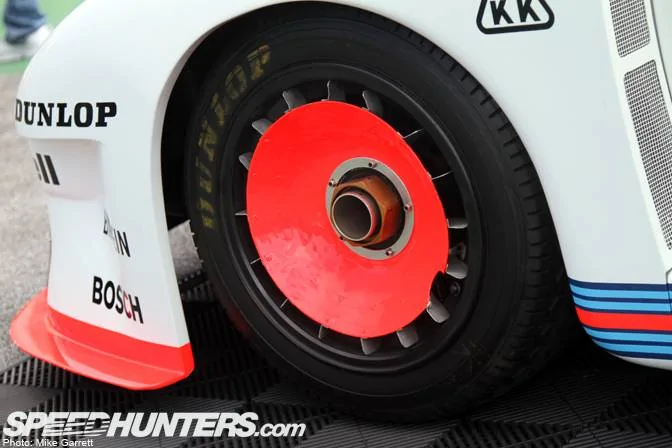
Fan wheels (14/15) appear to lower the pressure a bit.
Or something like this...

Porsche Taycan Cooling Modifications Experiment for the Track: more air flow through radiators to keep battery temperature down wheel13_0x9k_1


It was mainly for cooling the brakes (Porsche 935).
I think Rotiform has these wheels with aero disks if I'm not mistaken.
 
Last edited:
OP
OP
bsclywilly

bsclywilly

Well-Known Member
Joined
Aug 13, 2021
Threads
26
Messages
711
Reaction score
1,182
Location
San Jose
Vehicles
CT4
Country flag
Or something like this...

wheel13_0x9k_1.webp


It was mainly for cooling the brakes (Porsche 935).
I think Rotiform has these wheels with aero disks if I'm not mistaken.
Based on Franks comments, I’m sceptical how effective aero bits developed in the 70’s are. You don’t see fan wheels around in modern cars. The Rotiform disks are essentially just wheel covers and would be a detriment to brake cooling (lowest drag next to a completely closed off wheel though). I was seeing over 910C front brake temps which is super high already so covers would be a no go.

Great ideas from the group though. I’m thinking next time out at the track some combinations of canards, gurneys, wheel deflectors, as well as taping up the air curtains will be included. As well as comparing similar SoC.
Sponsored


Top