Sponsored

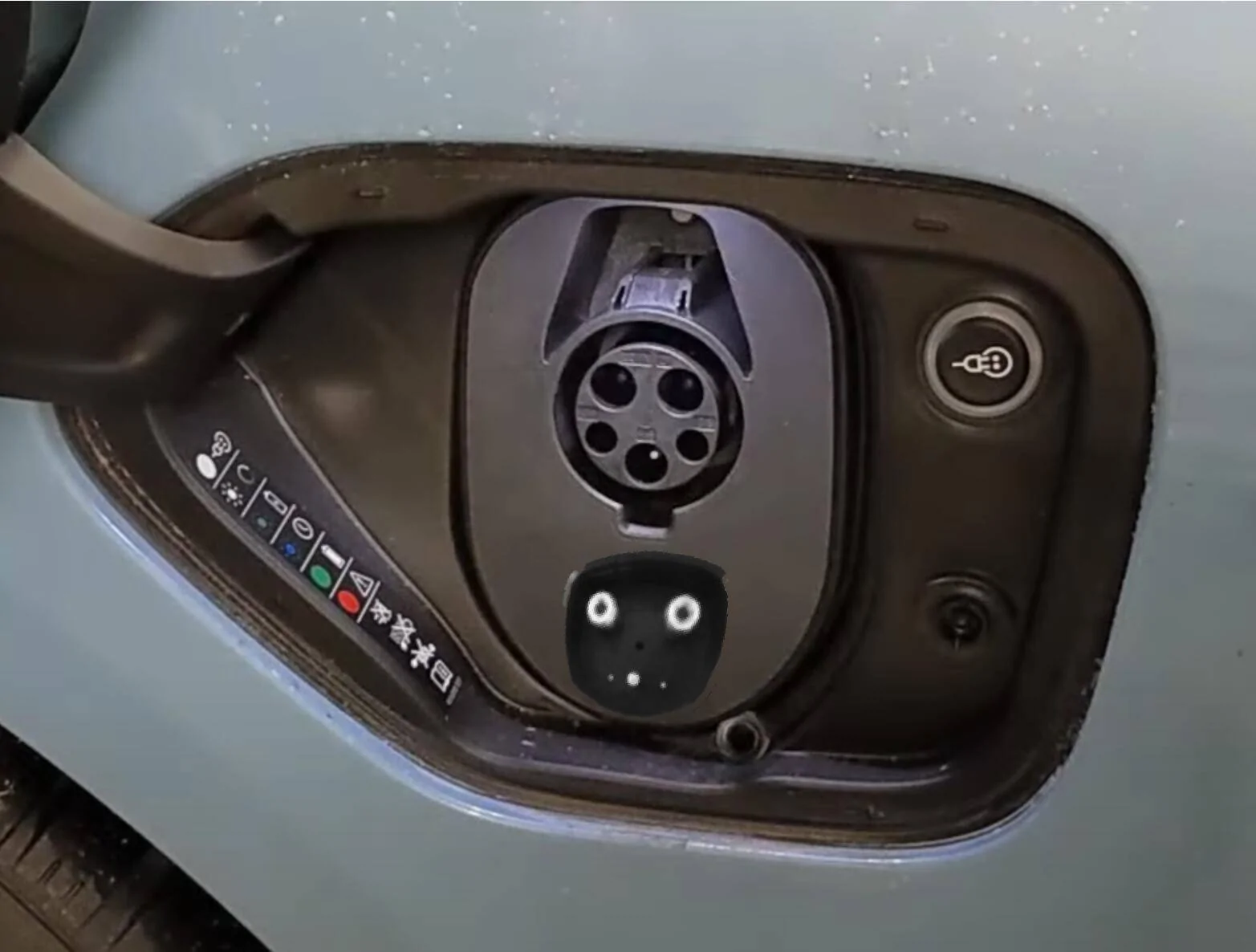
A modest proposal…NCAS port in North America on the driver's side…

OP
OP
daveo4EV

daveo4EV

Well-Known Member
First Name
David
Joined
Jan 28, 2019
Threads
192
Messages
7,007
Reaction score
10,478
Location
Santa Cruz
Vehicles
Cayenne Hybrid, 911(s) GT3/Convertable
Country flag
I believe Ford has "voted" on the process of attempting to "fix" EA and/or others…they have lots and lots of data from their "charging angels" - if there was a plausible way forward to improving the state of CCS in North America I don't believe Ford would be negotiating with Tesla. I doubt this was a quick/easy decision for Ford and it was carefully considered against other approaches…it speaks volumes that they decided to go this route.

some times the best approach is to pivot to the system that actually works.

Porsche and others have few if any problems with Supercharger support in Europe - this isn't a completely new thing.

Porsche fix EA? they can't even admit they shipped a 40 amp EVSE with a 32 amp power supply cable…and let's not forget their pursuit of eFuel so that they don't have to give up their ICE profit centers…waiting on Porsche to "fix" EA in North America is a fool's errand…
Sponsored

 
Last edited:

  • Like
Reactions: DRR
OP
OP
daveo4EV

daveo4EV

Well-Known Member
First Name
David
Joined
Jan 28, 2019
Threads
192
Messages
7,007
Reaction score
10,478
Location
Santa Cruz
Vehicles
Cayenne Hybrid, 911(s) GT3/Convertable
Country flag
North America's CCS's physical design is human hostile - it's too big to be easily managed by a whole range of people that should not have to "work" to plug in a cable…going forward there has to be a redesign if it's ever going to be useful and manageable for a wide range of people (young & old, weak and strong)…

https://www.taycanforum.com/forum/threads/old-man-takes-road-trip-and-survives.15968/#post-245473
As I am 86 and not very strong I had a little trouble wrestling with the CCS cable
I've watched this play out at numerous CCS charging sites on the west coast of North America - it' simply too big and too unwieldy for the general public - it needs a physical redesign…

NACS is proven to be more user friendly as a physical design exercise…

moving to Euro's plug design would be acceptable as an alternative IMHO to the North American design - but NACS is also an option. It should be one of those two - not another "new" CCS design.
 

whitex

Well-Known Member
Joined
Jul 30, 2021
Threads
87
Messages
8,219
Reaction score
7,253
Location
WA, USA
Vehicles
2023 Taycan TCT, 2024 Q8 eTron P+
Country flag
I suggested this in a thread somewhere on this forum couple of years ago - simply add NACS to the AC only side and have it support AC and DC charging. Ports are already interlocked, but for additional safety they may require some contactors only connecting one DC side at a time, and some AC isolation so you don't get 240V on the J1772 when NACS is connected, or 240 on NACK when J1772 is connected.
Porsche Taycan A modest proposal…NCAS port in North America on the driver's side… 1685599916085
 
Last edited:

whitex

Well-Known Member
Joined
Jul 30, 2021
Threads
87
Messages
8,219
Reaction score
7,253
Location
WA, USA
Vehicles
2023 Taycan TCT, 2024 Q8 eTron P+
Country flag
moving to Euro's plug design would be acceptable as an alternative IMHO to the North American design - but NACS is also an option. It should be one of those two - not another "new" CCS design.
Unless another CCS design utilizes NACS connector, even if it doesn't use the same protocol (but has a mechanism to switch protocols between Tesla and CCS). This way Tesla doesn't get to control the network, but the rest is mostly software (any hardware required by Tesla is already known today).
 

DRR

Well-Known Member
First Name
Don
Joined
Mar 13, 2019
Threads
1
Messages
96
Reaction score
68
Location
Pittsburgh PA
Vehicles
2022 Taycan 4S, 2021 Model Y Performance
Country flag
Some good technical details of CCS and NACS in car differences in this YouTube video:


OP
OP
daveo4EV

daveo4EV

Well-Known Member
First Name
David
Joined
Jan 28, 2019
Threads
192
Messages
7,007
Reaction score
10,478
Location
Santa Cruz
Vehicles
Cayenne Hybrid, 911(s) GT3/Convertable
Country flag
Some good technical details of CCS and NACS in car differences in this YouTube video:

interesting - NACS is 30% cheaper in terms of parts internal to the car for wiring from the port to the onboard charger/battery - less space and cheaper components to service NACS - less complex install in vehicle, less complex supply chain, lower cost to install/manufacture for vehicle assembly vs. CCS.

NACS is cheaper for the manufacturer _BY DESIGN_ CCS is bigger and more complex and requires more moving parts - so supply chain costs are higher - vehicle install/assembly is more complex vs. NACS.

Ford CEO on the call said they are "all in" on NACS - no dual ports CCS + NACS - NACS _ONLY_ better customer experience.

discussion of the cord design differences NACS is better ergonomics for people to handle it vs. unweildy/big/heavy CCS cord design

CCS more fragile on the cord, more prone to breaking, more moving parts on the station cable/plug- and when the cord brakes the entire station is offline - NACS design NO MOVING parts on the station cord/plug - so fewer things to go wrong/break across the entire life of the charging station - less likely to be broken…

NACS is a superior design to CCS as a physical design exercise - NACS is more elegant and offers superior ergonomics, manufacturing integration in vehicle, lower cost for the charging "assembly" in vehicle, superior reliability in that it smaller, denser, and fewer moving parts to break causing stations to be dysfunctional…

more sites, more stalls, greater reliability, proven effective (not theory), proven uptime, proven better user experience, easier to manufacture, easier to maintain, easier to assemble, existing adapter, more cost effective for the manufacturer - compared to data/experience we all have with CCS…hmmmm - really no excuse not to do it.

CCS is terrible, it needs to die, and consumers should demand a fast charging port design that works…

either bring the Euro plug to North America or adopt NACS - but North American CCS physical design as it stands is not EV friendly, user friendly, vehicle manufacturer friendly, less reliable by design, less ergonomically friendly, and doesn't work as well…as either the Euro standard or the NACS design…not sure why anyone is defending it.

seems like Ford is all in - GM/Dodge/Rivian/LucidAir your move…
 
Last edited:
OP
OP
daveo4EV

daveo4EV

Well-Known Member
First Name
David
Joined
Jan 28, 2019
Threads
192
Messages
7,007
Reaction score
10,478
Location
Santa Cruz
Vehicles
Cayenne Hybrid, 911(s) GT3/Convertable
Country flag

tchavei

Well-Known Member
Joined
Dec 3, 2022
Threads
33
Messages
1,302
Reaction score
1,369
Location
Portugal
Vehicles
Too many to list. Includes a MY23 Taycan RWD
Country flag
Knowing nothing about the American market, maybe a stupid question. Does the tesla charging network have any 800v chargers?

I can see your nacs plug being more robust, simple and smaller but does it support the same voltages/currents?

If superchargers "don't do 800v" and your side of the world shifting to the tesla network, you risk killing the other networks. Slowly but surely. No more 270kw charging?

Just the other day, I visited a charging station here (in Europe) that was 950v and was thinking what car supported that fully right now. It seems the tendency is going higher in voltage to keep current manageable.


OP
OP
daveo4EV

daveo4EV

Well-Known Member
First Name
David
Joined
Jan 28, 2019
Threads
192
Messages
7,007
Reaction score
10,478
Location
Santa Cruz
Vehicles
Cayenne Hybrid, 911(s) GT3/Convertable
Country flag
Knowing nothing about the American market, maybe a stupid question. Does the tesla charging network have any 800v chargers?

I can see your nacs plug being more robust, simple and smaller but does it support the same voltages/currents?

If superchargers "don't do 800v" and your side of the world shifting to the tesla network, you risk killing the other networks. Slowly but surely. No more 270kw charging?

Just the other day, I visited a charging station here (in Europe) that was 950v and was thinking what car supported that fully right now. It seems the tendency is going higher in voltage to keep current manageable.
NACS can handle 800V - we need to separate the charging protocol from the physical connector design

both CCS and NACS have 5 "wires/conductors" - wires don't care how much voltage they are carrying - and 800V is actually less current for same power…supercharger V3/V4 can already do 200+ kW @ 400 volts (existing today in service/production) so doing 270 kW @ 800 volts is less "stress/currrent" on the same wire/connector…

see this post - https://www.taycanforum.com/forum/threads/a-modest-proposal…ncas-port-in-north-america-on-the-drivers-side….15926/page-2#post-247022

all existing Tesla superchargers are 400V - but there is nothing preventing an 800V CCS station from shoving 800 volts through a NACS port/connector if the vehicle "negotiates" that connection…

it will all be fine…engineers will work it out…but CCS is horrible - and flawed - the protocol may be fine for elctrical signaling the physical plug design is holding things back…NACS _IS_ a better mousetrap in this case…

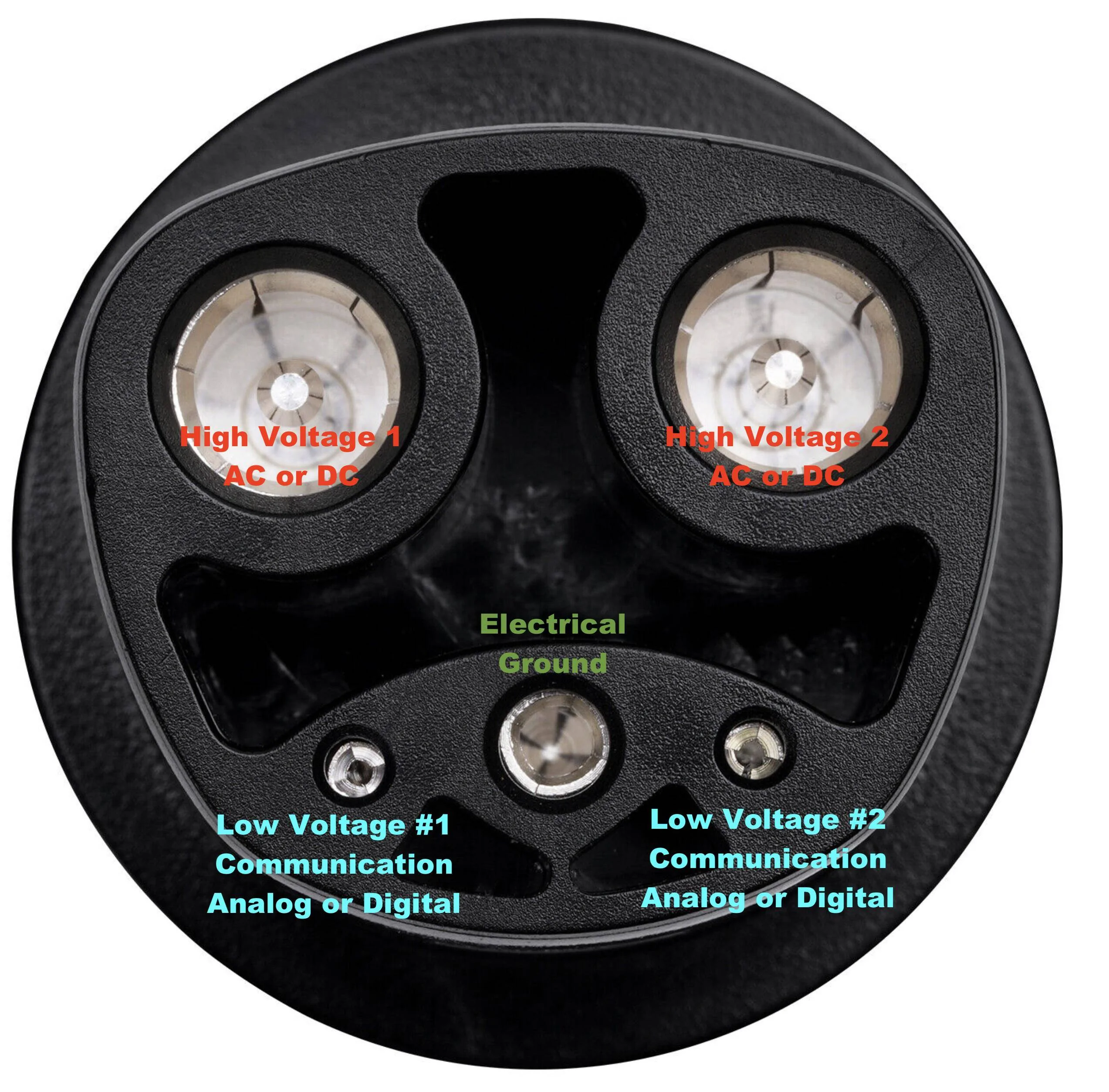
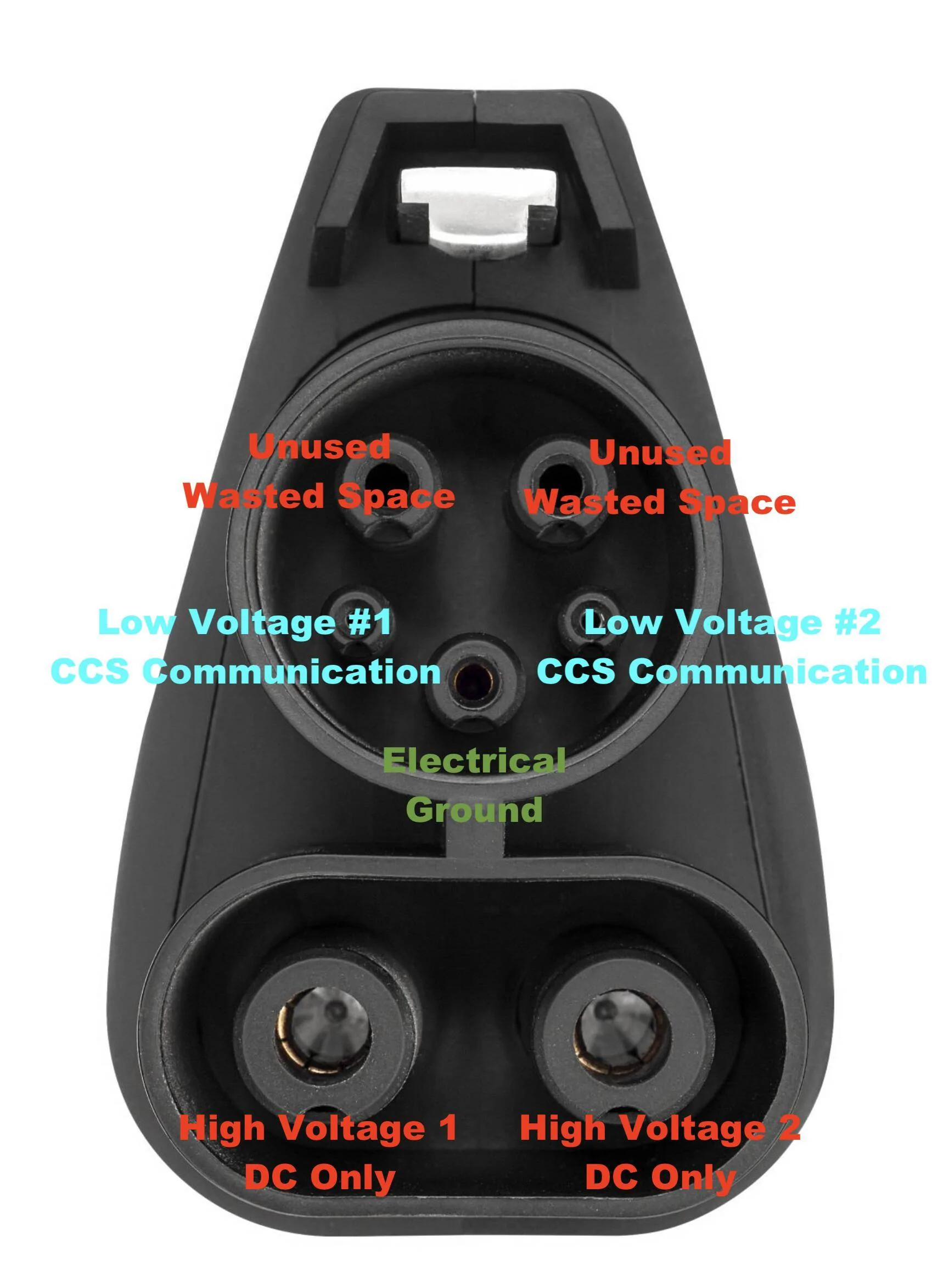
the five "wires" in both NACS and CCS are
  1. High Voltage 1
  2. High Voltage 2
  3. Communication 1 (analog or digital)
  4. Communication 2 (analog or digital)
  5. Electrical Ground
before _ANY_ voltage is passed along connections 1 & 2 - the vehicle communicates with pins/wires 3&4 - once it establishes communcation it can "know" what type of charger it's talking to and what to expect in terms of power/voltage/amps on pins/wires 1&2 - ground is always ground…

so the vehicle needs to be a little "clever" in that it can not assume any given protocol to "start" and must be "multi-lingual" in terms of types/protocols for communcation via pins/wires 3&4…this is easily and provenly already solved with in vehicle software…but yeah the software here has to be a bit more flexible, and the vehicle on board charger needs to adeptly handles switching between AC/DC power for the "input" connectors - clearly this can be done and done effectively since it's how Tesla's have worked for over a decade…
 
Last edited:

simcity

Well-Known Member
First Name
Sean
Joined
May 22, 2022
Threads
40
Messages
1,546
Reaction score
1,288
Location
Suffolk, UK
Vehicles
'23 Taycan Turbo
Country flag
NACS can handle 800V - we need to separate the charging protocol from the physical connector design

both CCS and NACS have 5 "wires/conductors" - wires don't care how much voltage they are carrying - and 800V is actually less current for same power…

all existing Tesla superchargers are 400V - but there is nothing preventing an 800V CCS station from shoving 800 volts through a NACS port/connector if the vehicle "negotiates" that connection…

it will all be fine…engineers will work it out…but CCS is horrible - and flawed - the protocol may be fine for elctrical signaling the physical plug design is holding things back…NACS _IS_ a better mousetrap in this case…

the five "wires" in both NACS and CCS are
  1. High Voltage 1
  2. High Voltage 2
  3. Communication 1 (analog or digital)
  4. Communication 2 (analog or digital)
  5. Electrical Ground
before _ANY_ voltage is passed along connections 1 & 2 - the vehicle communicates with pins/wires 3&4 - once it establishes communcation it can "know" what type of charger it's talking to and what to expect in terms of power/voltage/amps on pins/wires 1&2 - ground is always ground…

so the vehicle needs to be a little "clever" in that it can not assume any given protocol to "start" and must be "multi-lingual" in terms of types/protocols for communcation via pins/wires 3&4…this is easily and provenly already solved with in vehicle software…but yeah the software here has to be a bit more flexible, and the vehicle on board charger needs to adeptly handles switching between AC/DC power for the "input" connectors - clearly this can be done and done effectively since it's how Tesla's have worked for over a decade…
Neither NACS nor CCS1 can do three-phase AC there.

But I guess that not really a "thing" in the states as it is in Europe (and a little in the UK)
 
OP
OP
daveo4EV

daveo4EV

Well-Known Member
First Name
David
Joined
Jan 28, 2019
Threads
192
Messages
7,007
Reaction score
10,478
Location
Santa Cruz
Vehicles
Cayenne Hybrid, 911(s) GT3/Convertable
Country flag
here is a annotated picture of NACS vs. CCS - same number of "connections" radically different physical designs

NACS requires the vehicle to be "smarter" in terms of communication and not making assumptions about what it's talking to just because of the connector being used - this is solved by engineers and software - and once it's solved you don't need the physical space of the CCS connector or it's complexity…

the trick is for the vehicle to "talk" on the communication pins "first" - use that to determine what type of charging it's talking to - and then it knows what it can expect for the high voltage lines - but it's a software centric design vs. a mechanical engineering centric design - guess which one wins in the end…

NACS plug physics design and labels "connections"

Porsche Taycan A modest proposal…NCAS port in North America on the driver's side… Screenshot 2023-06-08 at 3.38.27 PM


North American CCS connection physical design and labeled "connections"

Porsche Taycan A modest proposal…NCAS port in North America on the driver's side… Screenshot 2023-06-08 at 3.43.14 PM
 
OP
OP
daveo4EV

daveo4EV

Well-Known Member
First Name
David
Joined
Jan 28, 2019
Threads
192
Messages
7,007
Reaction score
10,478
Location
Santa Cruz
Vehicles
Cayenne Hybrid, 911(s) GT3/Convertable
Country flag
Neither NACS nor CCS1 can do three-phase AC there.

But I guess that not really a "thing" in the states as it is in Europe (and a little in the UK)
not a thing for any EV charging standard in North America…so not required - and rare in general.
 

simcity

Well-Known Member
First Name
Sean
Joined
May 22, 2022
Threads
40
Messages
1,546
Reaction score
1,288
Location
Suffolk, UK
Vehicles
'23 Taycan Turbo
Country flag
not a thing for any EV charging standard in North America…so not required - and rare in general.
Didn't think so. What does your AC charging top out at there? Over here its generally 22 kW
 
OP
OP
daveo4EV

daveo4EV

Well-Known Member
First Name
David
Joined
Jan 28, 2019
Threads
192
Messages
7,007
Reaction score
10,478
Location
Santa Cruz
Vehicles
Cayenne Hybrid, 911(s) GT3/Convertable
Country flag
Didn't think so. What does your AC charging top out at there? Over here its generally 22 kW
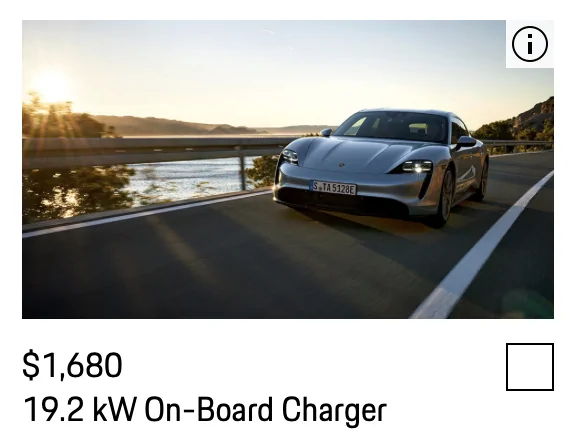
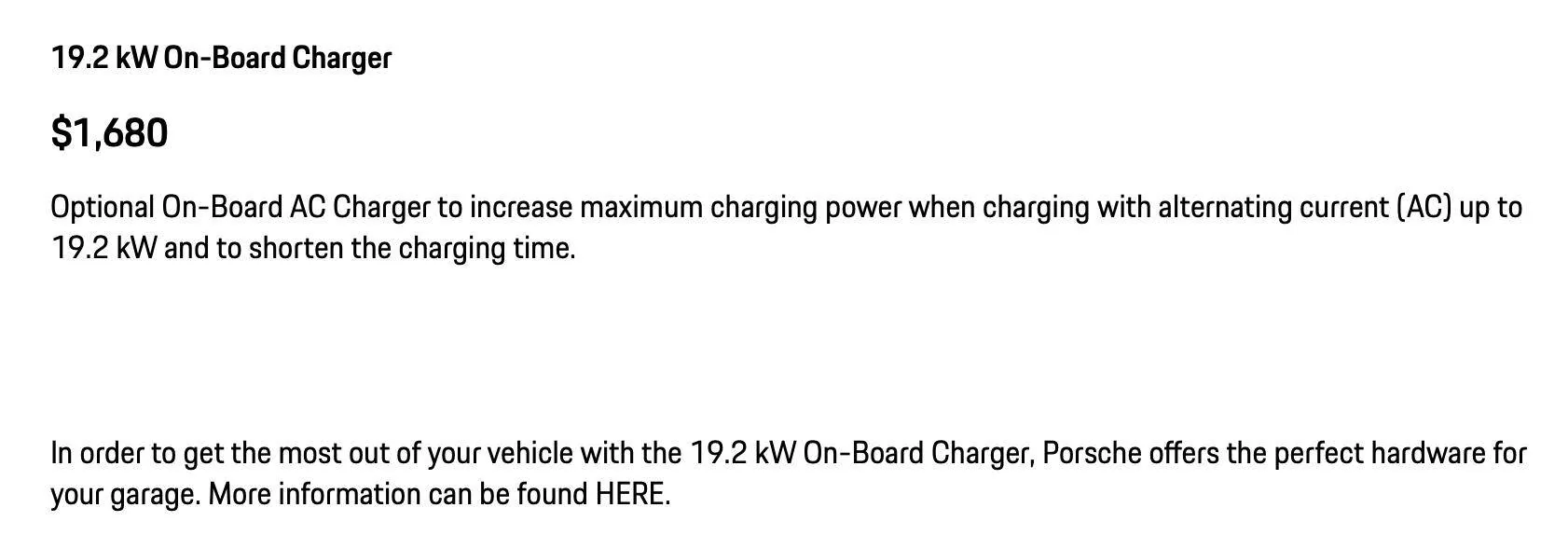
19.2 kW @ 240V - 80 amps on a 100 amp breaker

Porsche Taycan A modest proposal…NCAS port in North America on the driver's side… Screenshot 2023-06-08 at 4.01.54 PM


Porsche Taycan A modest proposal…NCAS port in North America on the driver's side… Screenshot 2023-06-08 at 4.04.06 PM


and NO Porsche does not offer the "perfect" hardware for this I the states - their 100/80 amp charger has awful compatibility problems with non-Porsche EV's so based on experience I'd recommend a non-porsche EVSE in North America for 19.2 kW charging.

https://www.taycanforum.com/forum/t...uide-to-the-porsche-evse-pmc-pmcc-pwcc.13886/
 

simcity

Well-Known Member
First Name
Sean
Joined
May 22, 2022
Threads
40
Messages
1,546
Reaction score
1,288
Location
Suffolk, UK
Vehicles
'23 Taycan Turbo
Country flag
19.2 kW @ 240V - 80 amps on a 100 amp breaker
Gotcha. Over here they'll spread 22 kW over 3-phases @ 32A per phase.

Domestically here the top rate on single phase is 7kW which is typically on either a 32A or 40A breaker. Apologies for the thread diversion.
Sponsored


Top