
Sponsored

Charging issues

Midzmerchant

Member
Joined
May 29, 2024
Threads
6
Messages
6
Reaction score
0
Location
Fort Worth, TX
Vehicles
2023 Porsche Taycan GTS
Country flag
Hey all,
I love my 2023 taycan GTS. I’ve had some issues wi the charging. I own a j1772 ChargePoint home flex charger that I have installed in my garage and it works great without any issues giving me 9.5 kWh charging capabilities.
I do also charge my car at work and I use a gen 2 Tesla wall mount charger (looks like the 100amp, 240v). There is no way for me to reduce/limit amp since it is with the hospital system. I used to have a 48amp Tesla to j1772 charging adapter which used to overhead and lead to charging error so I purchased a 80 amp converter (none that I saw that are 100amp to match the output of the wall charger). I’ve been recently getting the wall charger with 3 red blinking lights with green charging light which indicates overheating and limits the kWh charging capability to 4.5kwh. I usually have been getting 10-15kwh when I first plug it in. Does anyone have any solution to this? I still get the full 9-10kwh with my home ChargePoint flex (set at 50 amp output) but get overheating with the 100 amp output at work and there is no way for me to reduce that output. Any insight would be helpful! Thank you!
Sponsored
 

daveo4EV

Well-Known Member
First Name
David
Joined
Jan 28, 2019
Threads
192
Messages
7,003
Reaction score
10,473
Location
Santa Cruz
Vehicles
Cayenne Hybrid, 911(s) GT3/Convertable
Country flag
tldr; there is nothing you can do - everything is behaving as designed/expected when attempting to charge at 19.2 kW in 100F ambient outdoor temperatures probably in direct sunlight. Things are getting too hot and the vehicle and/or the EVSE is reducing the charge rate to avoid melting.

more details/thoughts below…

thoughts in no particular order:
  • if your vehicle is slowing the charge due to thermal stress then everything is behaving as designed - the vehicle or charger (EVSE) is limiting the max charging rate to avoid more dramatic problems due to thermal sensor detecting a thermal "threshold"
    • allowing the charge session to continue during high thermals will lead to physical damage to potentially both the EV charger and vehicle - this is to be avoided at all cost
    • it could also lead to electrical short circuit and potential fire
    • these safety systems are behaving exactly as designed and is why they are there - they are avoiding a much much more serious problem.
    • most/all EVSE's have thermal sensors embedded in the unit and charging cord and connector to avoid more serious problems cause by thermal overload
  • there is no 100 amp EV charger in North American - it refers to the breaker size 100 amps - but 80 amps is the correct and expected maximum charge rate for a 100 amp breaker.
    • EV chargers (EVSE's) always run at 80% of the breaker rating for safety and the fact that they run as "continous use" devices
    • this dichotomy is a common source of confusion - welcome to the EV world - since some time vendors refer to the breaker size, and other times they refer to the charge rate which is _ALWAYS_ 80% of the breaker size
      • 40 amp breaker - 32 amp max charge rate
      • 50 amp breaker - 40 amp max charge rate
      • 60 amp breaker - 48 amp max charge rate
      • 70 amp breaker - 56 amp max charge rate
      • 80 amp breaker - 64 amp max charge rate
      • 100 amp breaker - 80 amp max charge rate
        • 100 amp breaker w/80 amp charge rate _IS_ the North American maximum charge rate for L2 240V AC EV chargers (EVSE's).
    • the Tesla EVSE you're using at work is configured with a 100 amp breaker, but can only provide 80 amps of charge rate - this is by design, normal, and completely in line with expectations and mandated by electrical building codes
  • if you're getting 15 kW charge rate then it appears your Taycan has the 19.2 kW charging option
  • yeah you should've never used the 48 amp TeslaTap since your car is 19.2 kW (100/80 amp)
  • both the vehicle and most EVSE's have thermal sensors on the charging cords and connectors for this exact reason - if they are allowed to run "full pace" in hot ambient conditions then they will physically melt/fail
  • you'll probably get back to normal charging performance if/when ambient temperatures during your charging session are more moderate temperatures.
there is most likely nothing you can do since obviously the maximum charge rate is too much given ambient temperatures in your region - for safety/reliability the equipment is derating your charging session to avoid foreseeable thermally induced failure.

the _ONLY_ solution to this is to charge at a slower rate that avoids the thermal overload causing the derated session - it might be possible to dial back the Tesla charger at work in the summer season to a 60/70/80 amp breaker size - lowering the max charge rate - and therefore avoid thermal overload - very very few North american EV's can charge at a full 19.2 kW (most are capped at 40/48 amps) - it's unlikely lowering this setting on the Tesla wall charger at work would actually make any difference to most cars - but would allow the charger to operate at a higher charge rate for the few EV's that can/do operate above the nominal 40 amp charge rate allowed in most North American EV's…

since the EVSE is overheating it's effectively running at a slower rate already due to thermal stress - so lowering it's potential max output is no different that letting it run wild, overheating, and then derating the charging session…in either case you're getting a lower maximum output

I'd suggest a 60/70/80 amp breaker settings in the Tesla Wall charger at work for the summer months - it is perfectly safe/effective to run an EVSE below the maximum breaker size - there is no issue setting the Tesla charger at work to say a "70 amp breaker" setting on an actual 100 amp physical breaker - might make the whole system more reliable and consistent during the hot summer months - 90% of North American EV's that have a max charge rate of 32/40/48 amps will notice _NO_ difference - and the higher power vehicles may get improved reliability but a lower maximum rate charge session, but avoid thermal derating - it can be dialed back up to "max" once termperatures moderate in fall/winter/spring.

* - very very few cars actually support full 100/80 amp (19.2 kW) charge rate - you could discuss with the Tesla EV charger owner reducing it's output from the full 80 amps to 60/70 amps settings - all Tesla EVSE's are configurable - and lowering this setting would only affect a fraction of the vehicle's charging at this site and potentially avoid thermal limiting.

** - the correct solution is what Tesla has had for years in their vehicles - which is access to adjust the vehicle's maximum charge rate via the in-car software - if you were in a Tesla w/19.2 kW charging support - I'd suggest you dial down the max amps the car is requesting via the in-car main screen display to avoid the thermal overload.
 
Last edited:

daveo4EV

Well-Known Member
First Name
David
Joined
Jan 28, 2019
Threads
192
Messages
7,003
Reaction score
10,473
Location
Santa Cruz
Vehicles
Cayenne Hybrid, 911(s) GT3/Convertable
Country flag
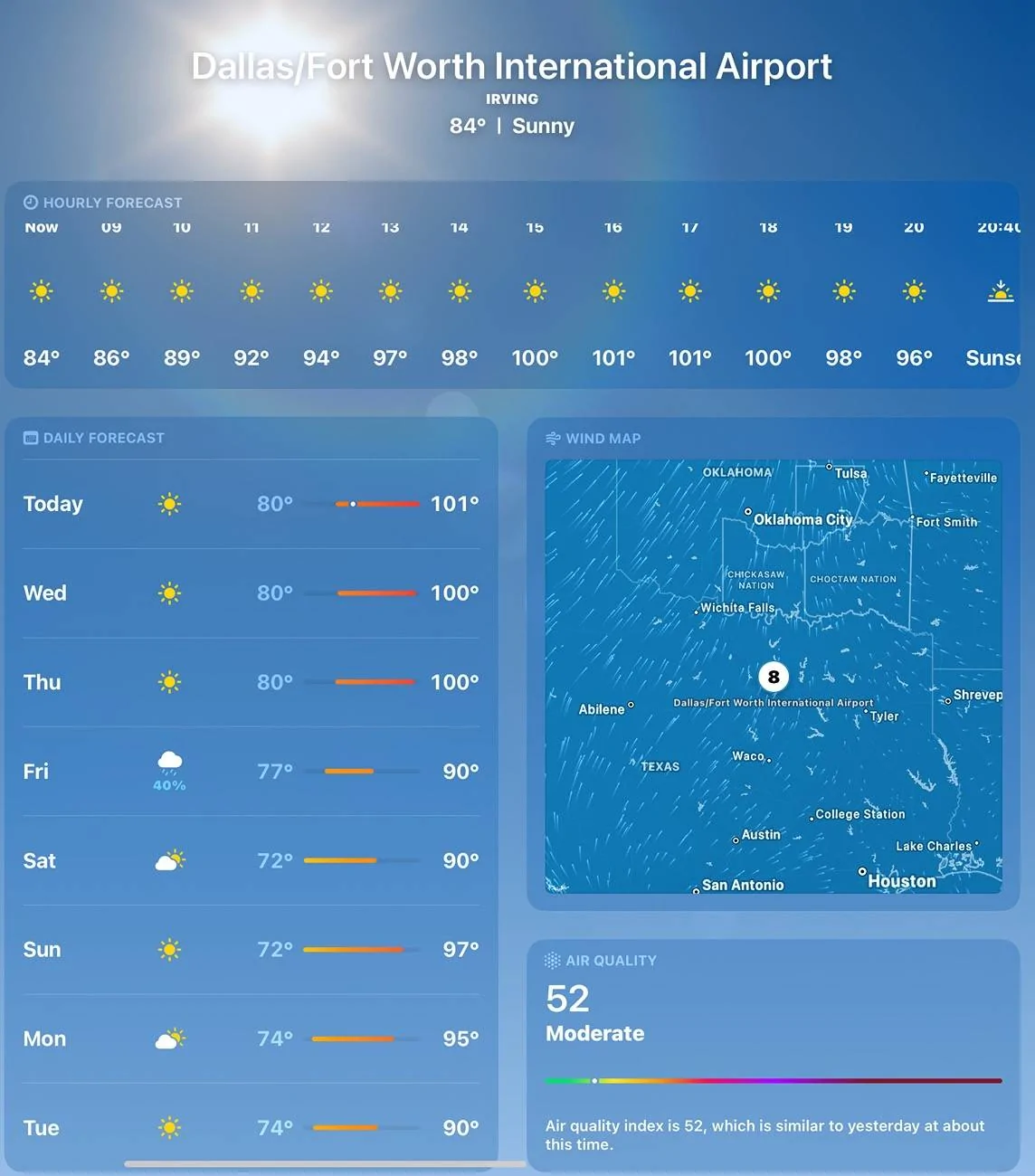
Ft. Worth/Dallas TX area right now is not condusive to 19.2 kW charge rates in direct sunlight between the hours of 10 am and 4 pm (max temperature during the day)

I'd suggest a combination of ambient weather conditions and expected thermal load from an 80 amp charging session is the "root cause" here - the only solution are:
  • lower the max output from this stations to achiever a lower but more consistent charge rate
  • cool the charging session (shade or fan) on the charging equipment and charging cord
  • wait for the weather to moderate during the day with lower nominal ambient conditions.
but yeah Dallas/Ft. Worth area appear to be hot for the next week…

I'm pretty sure in fall/winter/spring you'll have no issues charging at max rate due to lower ambient outside temperatures.

Porsche Taycan Charging issues IMG_2273
Sponsored


Top