
Sponsored

Scandinavian
Well-Known Member
- First Name
- Peter
- Joined
- Nov 3, 2019
- Threads
- 52
- Messages
- 3,904
- Reaction score
- 3,549
- Location
- France
- Vehicles
- Taycan T, Aston Martin DB9, Porsche 996 C4 Cab, i4

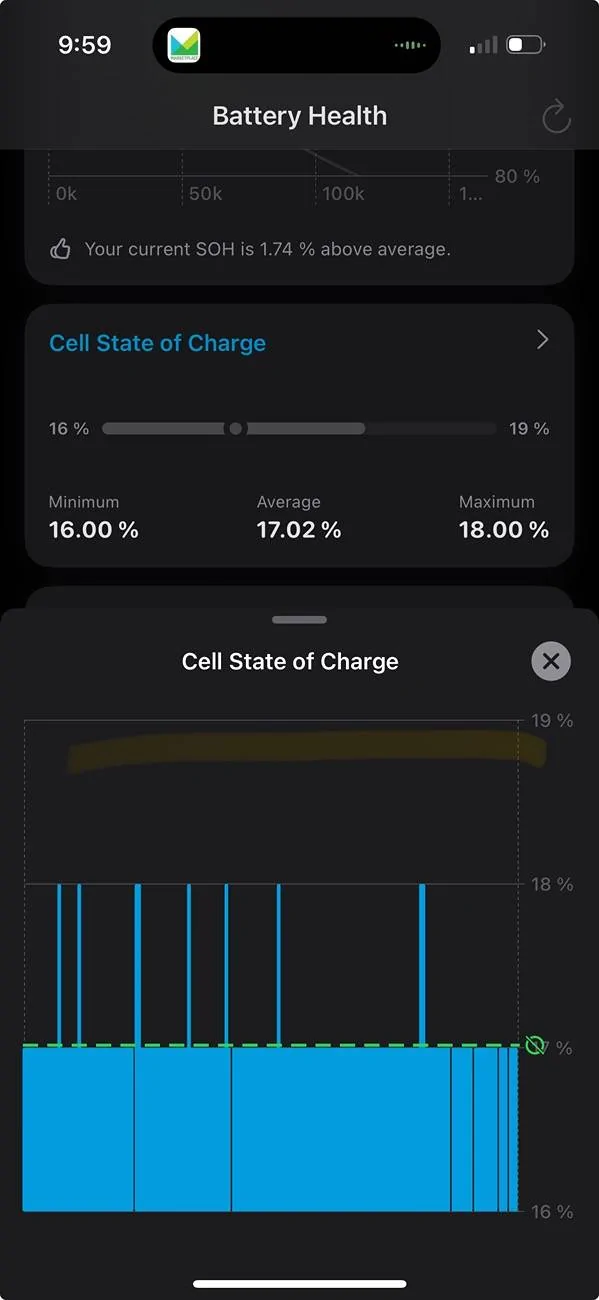
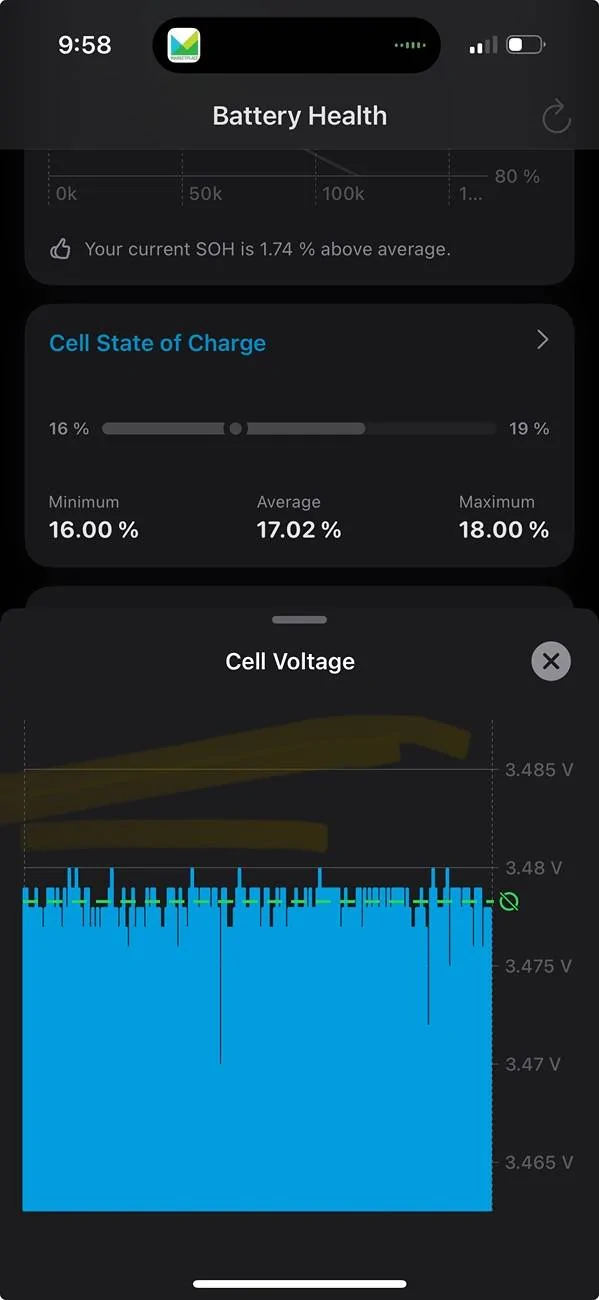
I also think it is fine since the scale is so enlarged.
Keep an eye on the value of the cell voltage deviation though. And perhaps try to do a rebalancing/ recalibration of the battery. Other threads here are outlining the process.

Keep an eye on the value of the cell voltage deviation though. And perhaps try to do a rebalancing/ recalibration of the battery. Other threads here are outlining the process.

Vercingetorix
Well-Known Member
Reminds me of the watch guys who pull out the loupe and find defects in their watches that aren’t visible with the naked eye. The solution is to put the loupe away.

VTaycan
Active Member
- Joined
- Apr 18, 2022
- Threads
- 5
- Messages
- 41
- Reaction score
- 17
- Location
- Columbus, OH
- Vehicles
- Taycan RWD, Audi S5, Volvo XC90

Curious what app you are using for this information? Looks helpful
Mohan Gopalakrishna
New Member
- First Name
- Mohan
- Joined
- Sep 6, 2024
- Threads
- 0
- Messages
- 3
- Reaction score
- 3
- Location
- Florida
- Vehicles
- Porsche Taycan 2023
What App is this on?I also think it is fine since the scale is so enlarged.
Keep an eye on the value of the cell voltage deviation though. And perhaps try to do a rebalancing/ recalibration of the battery. Other threads here are outlining the process.

Scandinavian
Well-Known Member
- First Name
- Peter
- Joined
- Nov 3, 2019
- Threads
- 52
- Messages
- 3,904
- Reaction score
- 3,549
- Location
- France
- Vehicles
- Taycan T, Aston Martin DB9, Porsche 996 C4 Cab, i4
Yes it is eFlow. Quite good but you have to look at the scales. It will also track your different attempts at logging your SoH over time and compare with other users of the app, I think.Looks like that new one that works with Taycan: EFLOW.
VTaycan
Active Member
- Joined
- Apr 18, 2022
- Threads
- 5
- Messages
- 41
- Reaction score
- 17
- Location
- Columbus, OH
- Vehicles
- Taycan RWD, Audi S5, Volvo XC90
Any recommendations on which OBD adapter to get?EFlow.
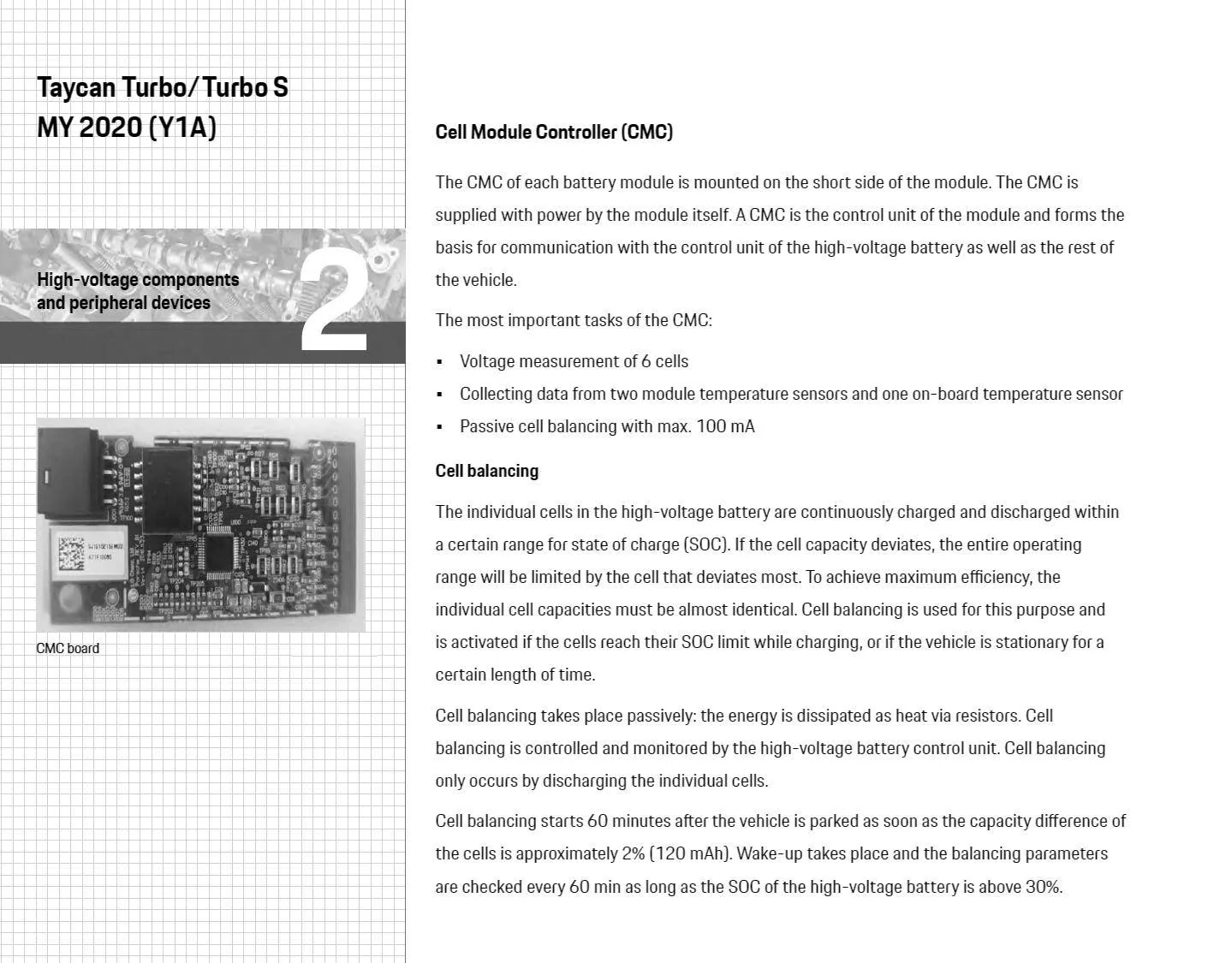

Dr Bob
Well-Known Member
- First Name
- Andy
- Joined
- Sep 16, 2023
- Threads
- 6
- Messages
- 123
- Reaction score
- 174
- Location
- Falkirk
- Vehicles
- Taycan Turbo

This is a very interesting document and rather intriguing. I'm no expert on electrical elecktrickerty but wonder if this is telling us the full story. It is basically saying that balancing is achieved byFyi, cell balancing kicks in ~120mAh difference, not sure what voltage (mV) that would be.

- draining high cells
- activating balancing when SoC gets to max
- OR (and I put that in capitals as that is a surprise) if you are over 30% SoC and the vehicle is turned off for over an hour.
The issue I have is how on earth are they using SoC as the trigger and balancing by SoC variation? You cannot measure SoC directly. There is no meter that measures SoC. If there is, I'd love to know. SoC is determined by charging a cell to a known value (ie either 100% or 0%) as determined by a voltage and then counting in or out the current flow – but this is not accurate give problems such Pueket's equation. SoC has always (in the past) been an estimation at best and that estimate goes astray quickly if you dont go back to the 100% SoC reference point often. Cell voltage is pretty useless between 30% and 80% SoC as you are on the voltage plateau.
Anyone know how they are measuring SoC on individual cells/modules or are they deriving it from voltage?
In the bullets above, it is therefore surprising they can balance at 31% SoC if the car has been off for an hour. It must be using data on voltage from the last time it got to over 4.1V per cell. I am struggling to get my head around that one.
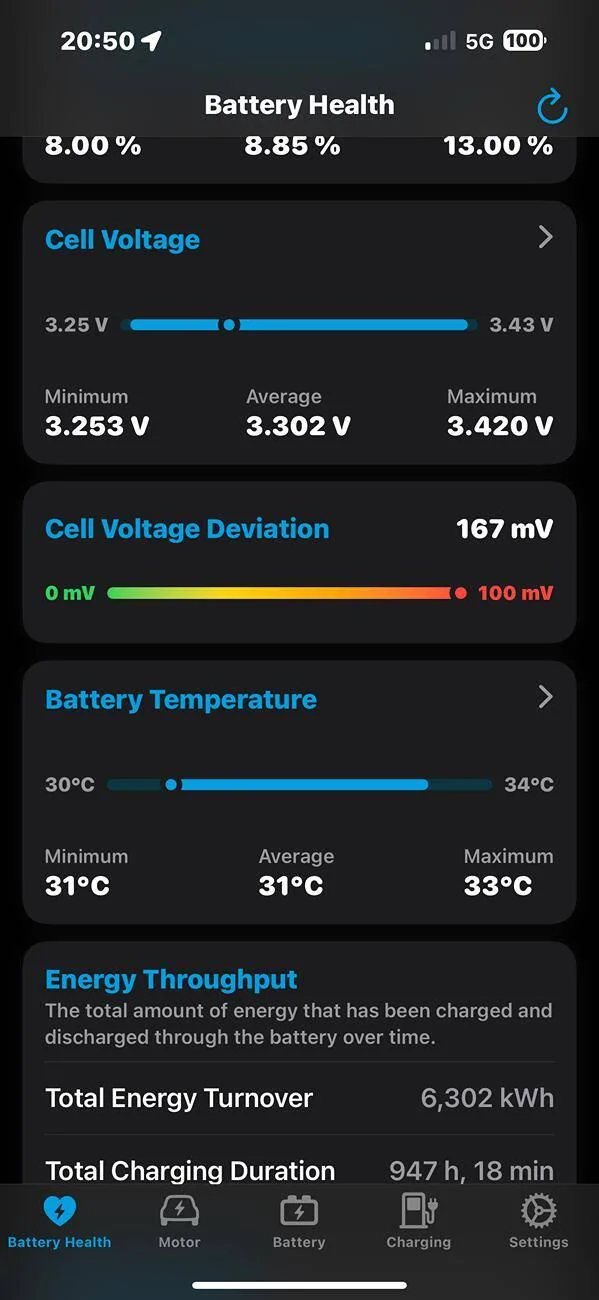
I was surprised to see the print out of the SoC variance in the EFlow app as I have always used voltage as the measure of charge in a cell. The OPs data says to me there is not an issue with his battery bank on voltage as he has only a 10mV cell delta from highest cell to lowest when in the bottom knee. I would start worrying when that gets to over 100mV as per Peter's data. As per everyone else, I have no clue how to equate a voltage delta to an SoC delta.
Anyone out there with the electrickerty expertise to fill me in?
You could probably measure the SOC by measuring the molar ratio of Lithium Ions compared to the NMC molar ratios on the cathode at any given time but that would need a pretty well equiped chemistry lab and there wouldnt be room on the back seat.
Scandinavian
Well-Known Member
- First Name
- Peter
- Joined
- Nov 3, 2019
- Threads
- 52
- Messages
- 3,904
- Reaction score
- 3,549
- Location
- France
- Vehicles
- Taycan T, Aston Martin DB9, Porsche 996 C4 Cab, i4
I am a bit worried about the large deviation, but it did reduce quite a lot and seems more normal now at 85% SoC on the display. That large deviation was at a very low SoC before I tried rebalancing/recalibration. I looked at this and could see the two new modules sticking out like a sore thumb. Their ability to hold energy capacity seem much larger than the older cells (which can be logic?). After my charging exercise it now deviates by 15 to 20 mV.I would start worrying when that gets to over 100mV as per Peter's data. As per everyone else, I have no clue how to equate a voltage delta to an SoC delta.

whitex
Well-Known Member
- Joined
- Jul 30, 2021
- Threads
- 87
- Messages
- 8,206
- Reaction score
- 7,240
- Location
- WA, USA
- Vehicles
- 2023 Taycan TCT, 2024 Q8 eTron P+
For NMC batteries, like in Taycan, the SoC is inferred from the voltage, which works fairly well. LFP batteries on the other hand have a very wide SoC range at almost the same voltage, so SoC estimate algorithms there are more complex and require often calibration, which is why manufacturers of EV's with LFB batteries recommend charging to 100% at least once a month to maintain range accuracy.Anyone know how they are measuring SoC on individual cells/modules or are they deriving it from voltage?
whitex
Well-Known Member
- Joined
- Jul 30, 2021
- Threads
- 87
- Messages
- 8,206
- Reaction score
- 7,240
- Location
- WA, USA
- Vehicles
- 2023 Taycan TCT, 2024 Q8 eTron P+
The 30% SoC is most likely to avoid draining the battery and bricking the car. At 30% SoC car enters battery-SoC-preservation mode, using as little battery as it can, even foregoing balancing.In the bullets above, it is therefore surprising they can balance at 31% SoC if the car has been off for an hour.
Sponsored


