Sponsored

Is this normal for cells?

whitex

Well-Known Member
Joined
Jul 30, 2021
Threads
87
Messages
8,206
Reaction score
7,239
Location
WA, USA
Vehicles
2023 Taycan TCT, 2024 Q8 eTron P+
Country flag
The OPs data says to me there is not an issue with his battery bank on voltage as he has only a 10mV cell delta from highest cell to lowest when in the bottom knee. I would start worrying when that gets to over 100mV as per Peter's data. As per everyone else, I have no clue how to equate a voltage delta to an SoC delta.
The voltage difference by itself will not tell you the SoC difference between cells. You need to know the actual voltages of each cell to tell the difference of SoC between them. At high and low SoC (or voltages), same mV variation will represent less SoC variation than in the middle SoC range (voltage vs. SoC is not a linear function).
Sponsored


Dr Bob

Well-Known Member
First Name
Andy
Joined
Sep 16, 2023
Threads
6
Messages
123
Reaction score
174
Location
Falkirk
Vehicles
Taycan Turbo
Country flag
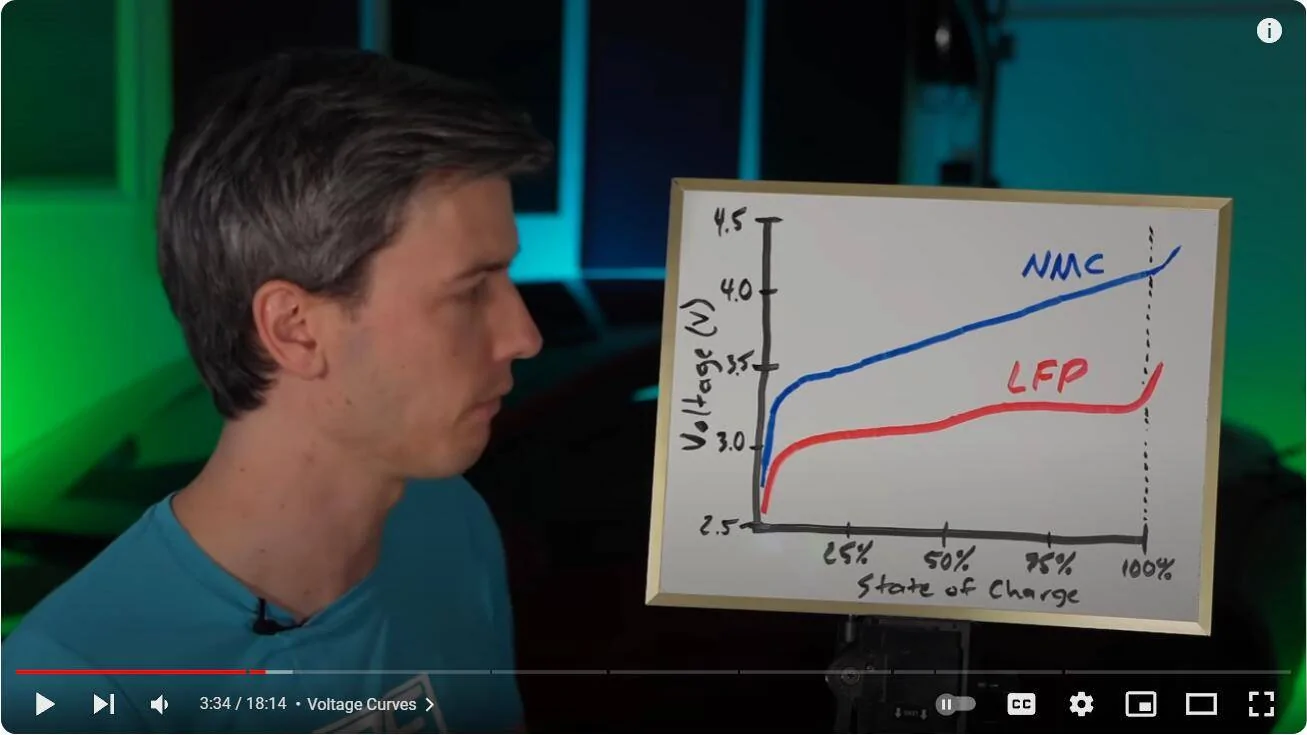
For NMC batteries, like in Taycan, the SoC is inferred from the voltage, which works fairly well. LFP batteries on the other hand have a very wide SoC range at almost the same voltage, so SoC estimate algorithms there are more complex and require often calibration, which is why manufacturers of EV's with LFB batteries recommend charging to 100% at least once a month to maintain range accuracy.
I am far from convinced you can get accurate SoC from voltage measurements as NMC cells still have a pretty flat plateau between 30 and 80% SoC. Estimating SoC in the top and bottom knees is far easier. I am very familiar with LFP's as that is what I have on my boat but NMCs are not that different in the plateau range. Predicting SoC from voltage in NMCs also requires you to ensure you have a firm SoC reference point - ie 100% - so we still need to take our batteries there.
One other significant point in determining SoC from voltage is "what is the voltage?" Voltage changes significantly when discharging (reduces) or charging (increases), hence 'voltage at rest' is a good way to get a pretty close estimation. Problem is, when are our battery voltages at rest? Rested voltage means no discharge/charge for 30 mins.
Question. If Porsche determine SoC from voltage and that is not that accurate, why use SOC to determine if a cell is bad. Surely you would use voltage? You have all the voltage data anyway.
 

Dr Bob

Well-Known Member
First Name
Andy
Joined
Sep 16, 2023
Threads
6
Messages
123
Reaction score
174
Location
Falkirk
Vehicles
Taycan Turbo
Country flag
The voltage difference by itself will not tell you the SoC difference between cells. You need to know the actual voltages of each cell to tell the difference of SoC between them. At high and low SoC (or voltages), same mV variation will represent less SoC variation than in the middle SoC range (voltage vs. SoC is not a linear function).
Yes, that is obvious - but not what I was on about.
I understand a 10mV delta in voltage from good to bad cell at the bottom 20% of SoC of a top balanced bank is ok whereas over 100mV is erring on the poor side. I have no idea how what 'width' of SoC this compares to ie is 2% delta between good and laggard cells bad?

It is obvious that voltage vs SoC is not a linear function. It is a plateau with knees at top and bottom as I have said many times.
 

whitex

Well-Known Member
Joined
Jul 30, 2021
Threads
87
Messages
8,206
Reaction score
7,239
Location
WA, USA
Vehicles
2023 Taycan TCT, 2024 Q8 eTron P+
Country flag
I am far from convinced you can get accurate SoC from voltage measurements as NMC cells still have a pretty flat plateau between 30 and 80% SoC. Estimating SoC in the top and bottom knees is far easier. I am very familiar with LFP's as that is what I have on my boat but NMCs are not that different in the plateau range. Predicting SoC from voltage in NMCs also requires you to ensure you have a firm SoC reference point - ie 100% - so we still need to take our batteries there.
There is calibration on NMC as well, but LFP curves are way worse, check out this video:
Porsche Taycan Is this normal for cells? 1726776838088-ly
One other significant point in determining SoC from voltage is "what is the voltage?" Voltage changes significantly when discharging (reduces) or charging (increases), hence 'voltage at rest' is a good way to get a pretty close estimation. Problem is, when are our battery voltages at rest? Rested voltage means no discharge/charge for 30 mins.
Actually from what I remember from working on phones and tablets few years ago, "open circuit" voltage was used. There were dedicated Lithium Ion controllers which provided this number back to software based on continuous monitoring and I'm sure some calculation, like calculating equivalent internal resistance by watching voltage/current curves. One you have internal resistance, you can calculate OC voltage even when battery is under load.

Your comment about "rested" is valid, but the open circuit voltage does not change that much between rested and recently used. However, it is possible to see that effect sometimes, for example on my Teslas, sometimes I would park them and few minutes later I would see my SoC jump by 1%. I'm sure there was some rounding errors involved (I parked at 70.4% and the voltage jumped just enough to bring it to 70.6% estimation), but I think it demonstrated the effect you are talking about.

Question. If Porsche determine SoC from voltage and that is not that accurate, why use SOC to determine if a cell is bad. Surely you would use voltage? You have all the voltage data anyway.
If by "cell is bad" you mean out of balance, it makes perfect sense to use SoC as the unit of imbalance rather than voltage, since voltage to SoC is not a linear function (at different points in the curve the same SoC difference will measure different voltages).
 

Dr Bob

Well-Known Member
First Name
Andy
Joined
Sep 16, 2023
Threads
6
Messages
123
Reaction score
174
Location
Falkirk
Vehicles
Taycan Turbo
Country flag
If by "cell is bad" you mean out of balance, it makes perfect sense to use SoC as the unit of imbalance rather than voltage, since voltage to SoC is not a linear function (at different points in the curve the same SoC difference will measure different voltages).
Why does it make perfect sense? If as you say SoC is derived directly from voltage. The voltages are known (hence accurate). The SoC's are calculated from voltage so are estimates.


whitex

Well-Known Member
Joined
Jul 30, 2021
Threads
87
Messages
8,206
Reaction score
7,239
Location
WA, USA
Vehicles
2023 Taycan TCT, 2024 Q8 eTron P+
Country flag
Why does it make perfect sense? If as you say SoC is derived directly from voltage. The voltages are known (hence accurate). The SoC's are calculated from voltage so are estimates.
Because they are trying to find cell imbalance of capacity (SoC), rather than voltage. That voltage difference between two cells will vary depending on the absolute SoC. So if one cell is at 30% and another at 32%, their voltage difference will be higher than if they were 60% and 62% instead. If they want to trigger balancing on SoC, they'd need to trigger balancing at different voltage variation at different absolute SoC. Furthermore, the voltage to SoC is continuously calibrated through the life of the car, so an older car may trigger at different voltage differences at the same SoC, whatever the computer will determine is above some mAh threshold, for the current state of the battery (age, temperature, load).
 

Svenson

Member
First Name
Sven
Joined
Sep 15, 2024
Threads
0
Messages
16
Reaction score
3
Location
Germany
Website
geteflow.app
Vehicles
Porsche Taycan Turbo S
Country flag
Curious what app you are using for this information? Looks helpful
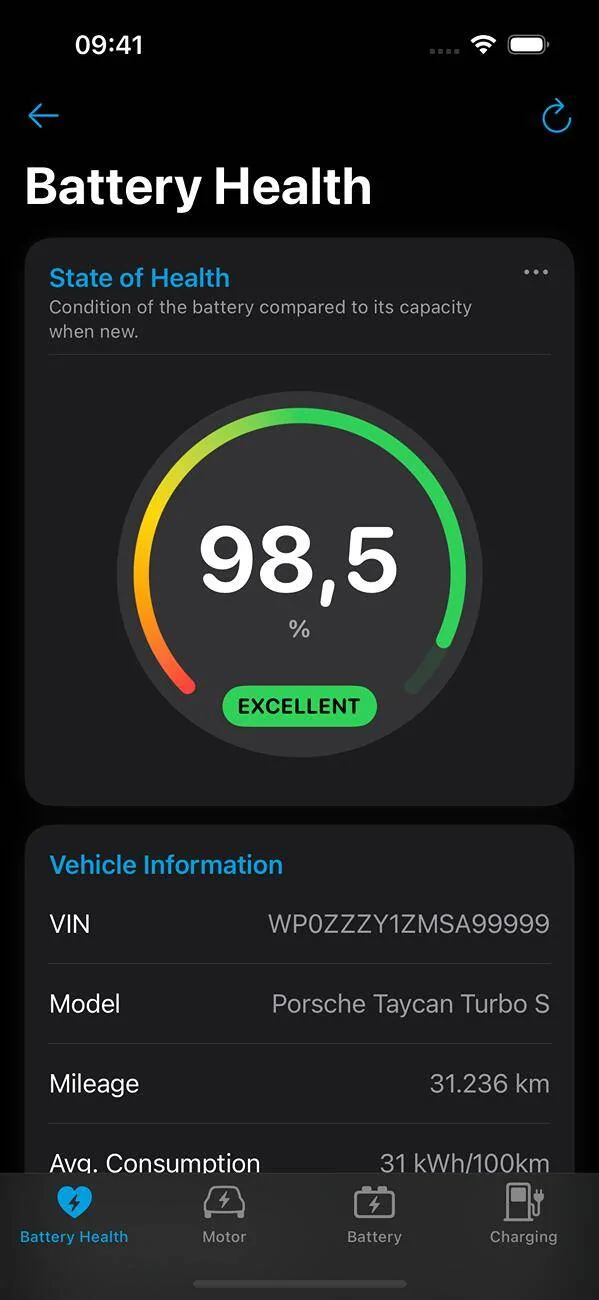
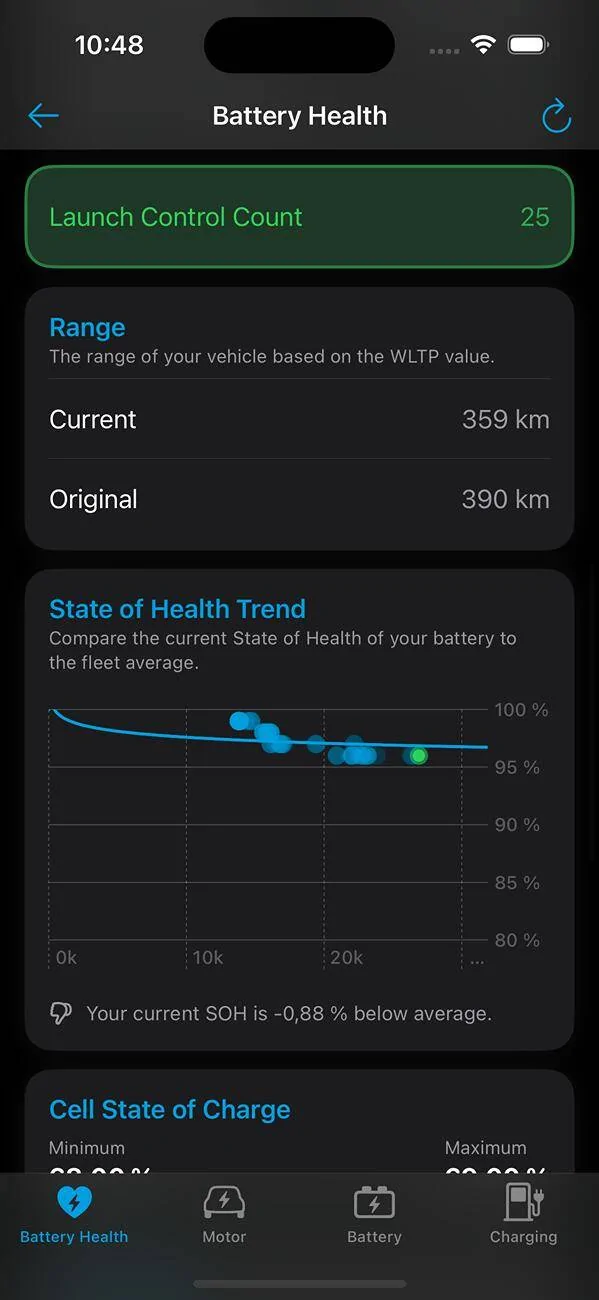
Hi VTaycan, this is the eFlow app (for transparency: we've developed it).

It’s great for tracking your battery’s SOH and comparing it with the fleet average.
You can check it out here: https://geteflow.app

Feel free to share your feedback with us here in the forum or contact us directly.

Porsche Taycan Is this normal for cells? eFlow - Porsche Taycan - State of Health - Battery Check
Porsche Taycan Is this normal for cells? eFlow - Porsche Taycan - Battery Health Trend - Battery Check
 

Svenson

Member
First Name
Sven
Joined
Sep 15, 2024
Threads
0
Messages
16
Reaction score
3
Location
Germany
Website
geteflow.app
Vehicles
Porsche Taycan Turbo S
Country flag
Any recommendations on which OBD adapter to get?
Any ELM327-compatible OBD adapter will work. Personally, I am quite happy with the UniCarScan UCSI-2100 due to its ease of use and its broad compatibility with other models and apps.


Art

Well-Known Member
First Name
Arto
Joined
Jan 16, 2022
Threads
4
Messages
129
Reaction score
76
Location
Finland
Vehicles
Trashcan 4S, 997 C4, Willys MB + MBT, 628 CSiA, ST4S, 750 Paso, AJS, Condor ..
Country flag
Any estimates when the Android version could be available?
I'm not that willing to use that other software from russia, Nowherestreet, Rostov-on-don.
 

VTaycan

Active Member
Joined
Apr 18, 2022
Threads
5
Messages
41
Reaction score
17
Location
Columbus, OH
Vehicles
Taycan RWD, Audi S5, Volvo XC90
Country flag
Hi VTaycan, this is the eFlow app (for transparency: we've developed it).

It’s great for tracking your battery’s SOH and comparing it with the fleet average.
You can check it out here: https://geteflow.app

Feel free to share your feedback with us here in the forum or contact us directly.

eFlow - Porsche Taycan - State of Health - Battery Check.jpg
eFlow - Porsche Taycan - Battery Health Trend - Battery Check.jpg
Thanks for the information. I will get an OBD adapter and try it out. Does it also track the mi/kwh and other metrics that are in the Porsche app?
 

VTaycan

Active Member
Joined
Apr 18, 2022
Threads
5
Messages
41
Reaction score
17
Location
Columbus, OH
Vehicles
Taycan RWD, Audi S5, Volvo XC90
Country flag
Any ELM327-compatible OBD adapter will work. Personally, I am quite happy with the UniCarScan UCSI-2100 due to its ease of use and its broad compatibility with other models and apps.
Does the adapter need to be wi-fi or bluetooth or would either work?
 

Svenson

Member
First Name
Sven
Joined
Sep 15, 2024
Threads
0
Messages
16
Reaction score
3
Location
Germany
Website
geteflow.app
Vehicles
Porsche Taycan Turbo S
Country flag
Thanks for the information. I will get an OBD adapter and try it out. Does it also track the mi/kwh and other metrics that are in the Porsche app?
You’ll get average consumption, but eFlow focuses more on values that aren’t available through the Porsche app or instrument cluster, such as cell voltages, total energy throughput or – more for fun – the launch control count.

Feel free to share any feedback on values you feel are missing!
 

Svenson

Member
First Name
Sven
Joined
Sep 15, 2024
Threads
0
Messages
16
Reaction score
3
Location
Germany
Website
geteflow.app
Vehicles
Porsche Taycan Turbo S
Country flag
Does the adapter need to be wi-fi or bluetooth or would either work?
Both Wi-Fi and Bluetooth adapters will work, as long as they are ELM327 compatible.
 

Kainlow

Active Member
Joined
Sep 11, 2024
Threads
4
Messages
41
Reaction score
13
Location
USA
Vehicles
2020 Taycan 4$
Country flag
Any ELM327-compatible OBD adapter will work. Personally, I am quite happy with the UniCarScan UCSI-2100 due to its ease of use and its broad compatibility with other models and apps.
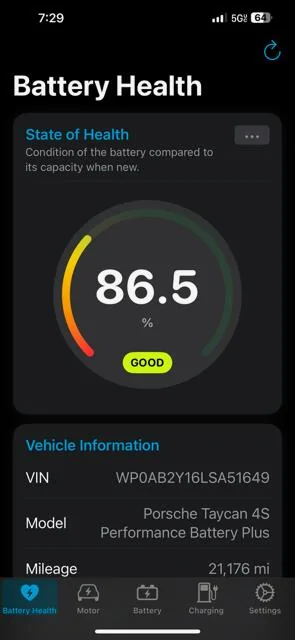
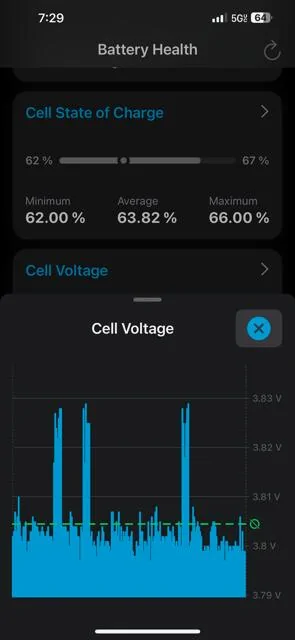
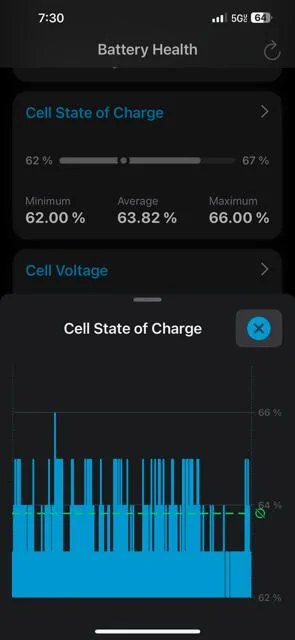
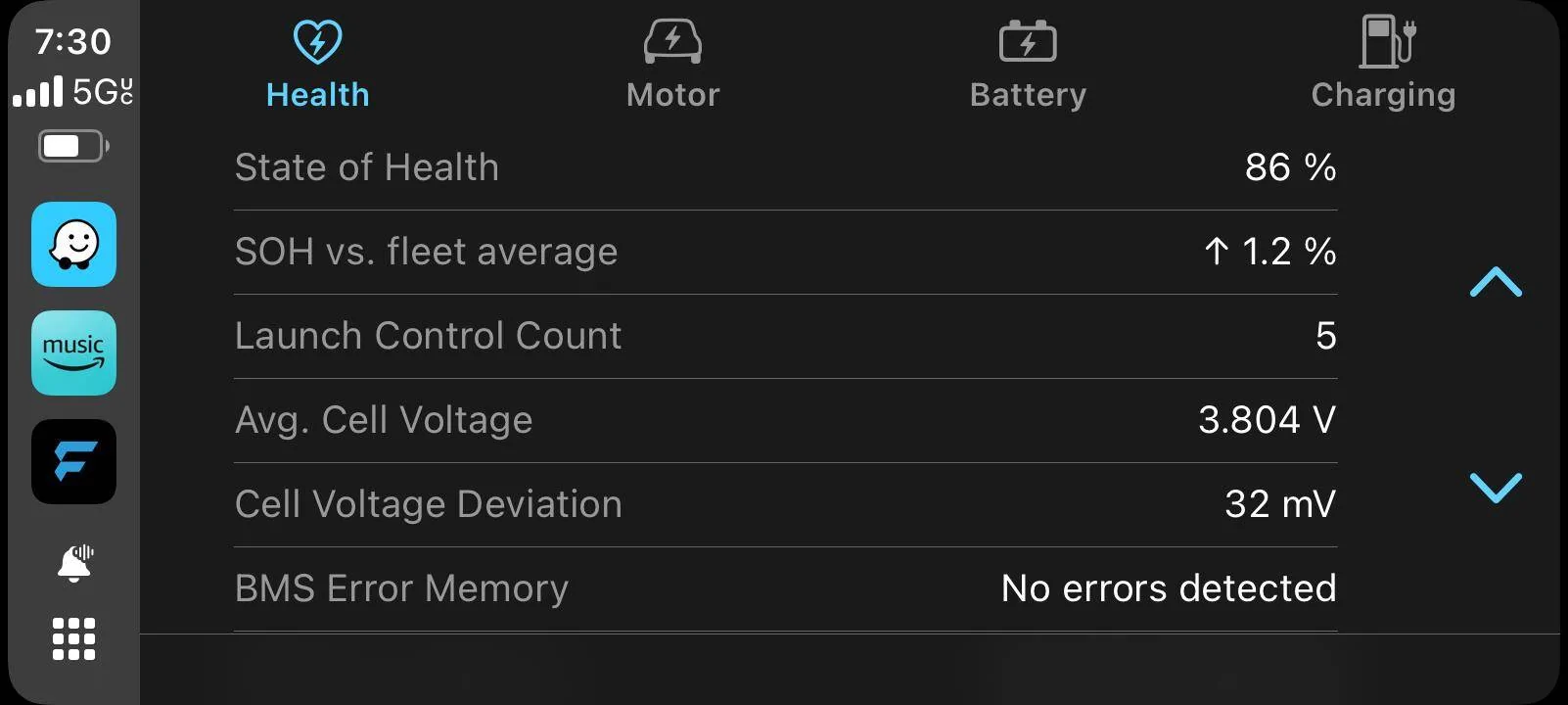
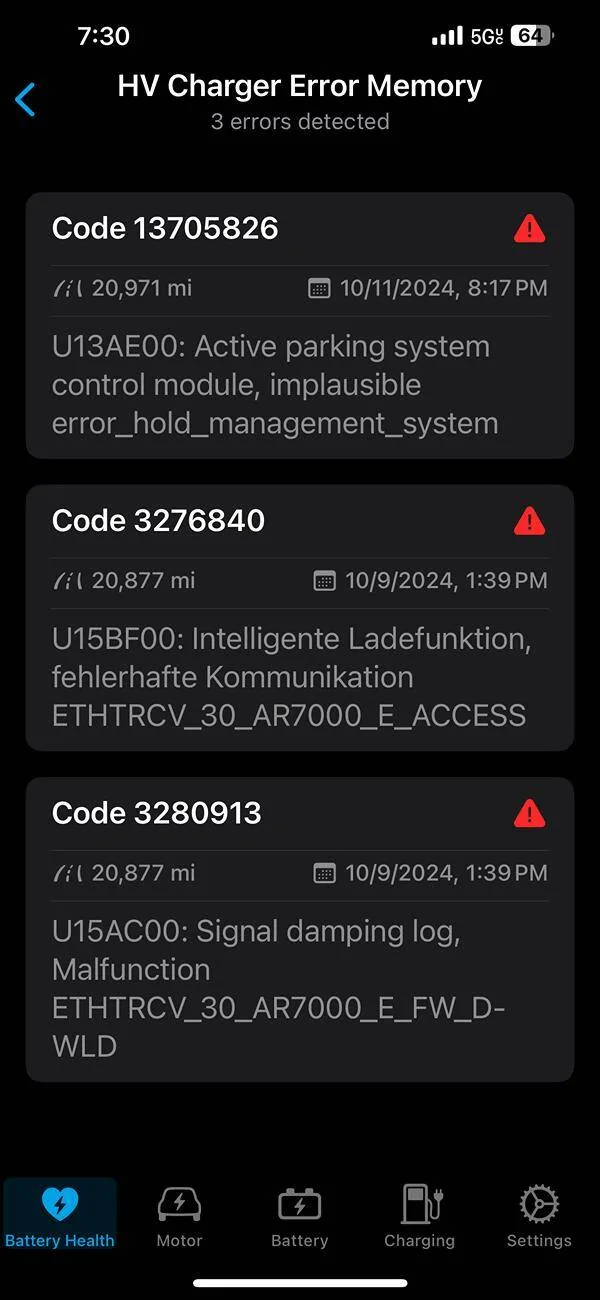
Downloaded the app yesterday, here's what I got. My '20 4S just had the cell module repair, and from what I gather the result is quite poor. I'm still reading up on how to interpret SOC and SOH, so any insight on these values would be really great.
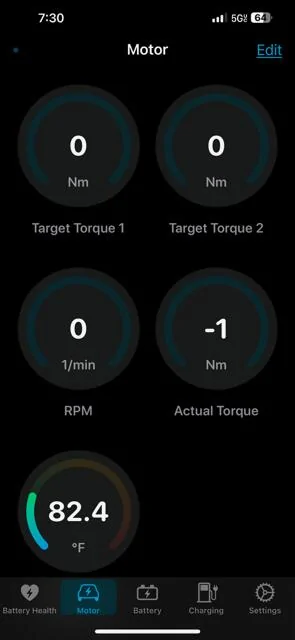
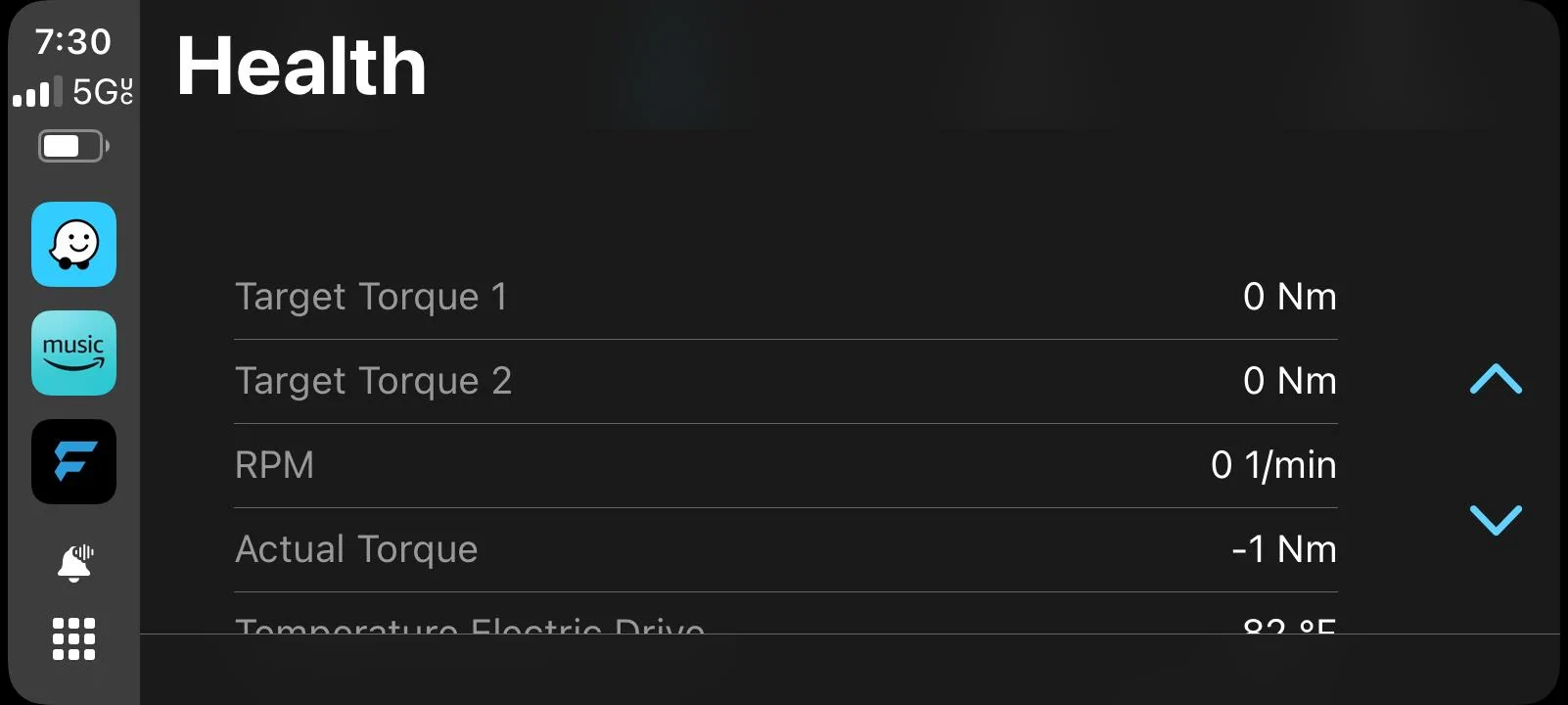
Also, on the app there are two "Target Torque" values. Only Target One fluctuates during acceleration. Are these readings coming from the front and rear motors respectively?

Porsche Taycan Is this normal for cells? image0


Porsche Taycan Is this normal for cells? image1


Porsche Taycan Is this normal for cells? image3


Porsche Taycan Is this normal for cells? image6


Porsche Taycan Is this normal for cells? image7


Porsche Taycan Is this normal for cells? image8


Porsche Taycan Is this normal for cells? image5
 

Svenson

Member
First Name
Sven
Joined
Sep 15, 2024
Threads
0
Messages
16
Reaction score
3
Location
Germany
Website
geteflow.app
Vehicles
Porsche Taycan Turbo S
Country flag
Hi @Kainlow ,

Thanks for sharing! The two “Target Torque” values represent the front and rear motors. Under more load, you should see both values change.

EDIT: Although both torque values are available as request endpoints, only one is populated by the control unit, while the other simply returns 0, no matter how sporty you drive.

The cell voltage deviation is crucial here—the lower the deviation between cells, the better. A higher deviation can indicate that something isn’t quite right with one or more cells, affecting overall health and performance.

To improve the accuracy of your readings, you might want to recalibrate, as described here: https://www.taycanforum.com/forum/threads/how-to-recalibrate-your-soh.21096/

After that you might measure again.

Hope this helps!
Sponsored

 
Last edited:


Top