OP
OP
Avantgarde
Well-Known Member
- First Name
- Eugene
- Joined
- Apr 4, 2022
- Threads
- 8
- Messages
- 368
- Reaction score
- 466
- Location
- Ann Arbor, MI
- Vehicles
- 22' Taycan RWD PB+, 21' X5 Xdrive45e, 09' Cayman

- Thread starter
- #16
I have the car till Wednesday, will try it out with TC turned off tomorrow and we shall see. I am not ruling your theory out.Not impossible but I doubt it, personally. Electric motors do have a wide and smooth power curve though and it isn't "fixed" like in an IC engine, it depends on acceptable temperature so is time as well as rpm linked.
Vehicle stability control can be very much more precisely controlled and much faster acting with an electric motor than it ever could be with a piston engine and with the exception of the conditions you mentioned probably acts entirely transparently to the driver.
Try switching it off and measure it again. Not impossible but I doubt it, personally. Electric motors do have a wide and smooth power curve though and it isn't "fixed" like in an IC engine, it depends on acceptable temperature so is time as well as rpm linked.
Vehicle stability control can be very much more precisely controlled and much faster acting with an electric motor than it ever could be with a piston engine and with the exception of the conditions you mentioned probably acts entirely transparently to the driver.
Try switching it off and measure it again.
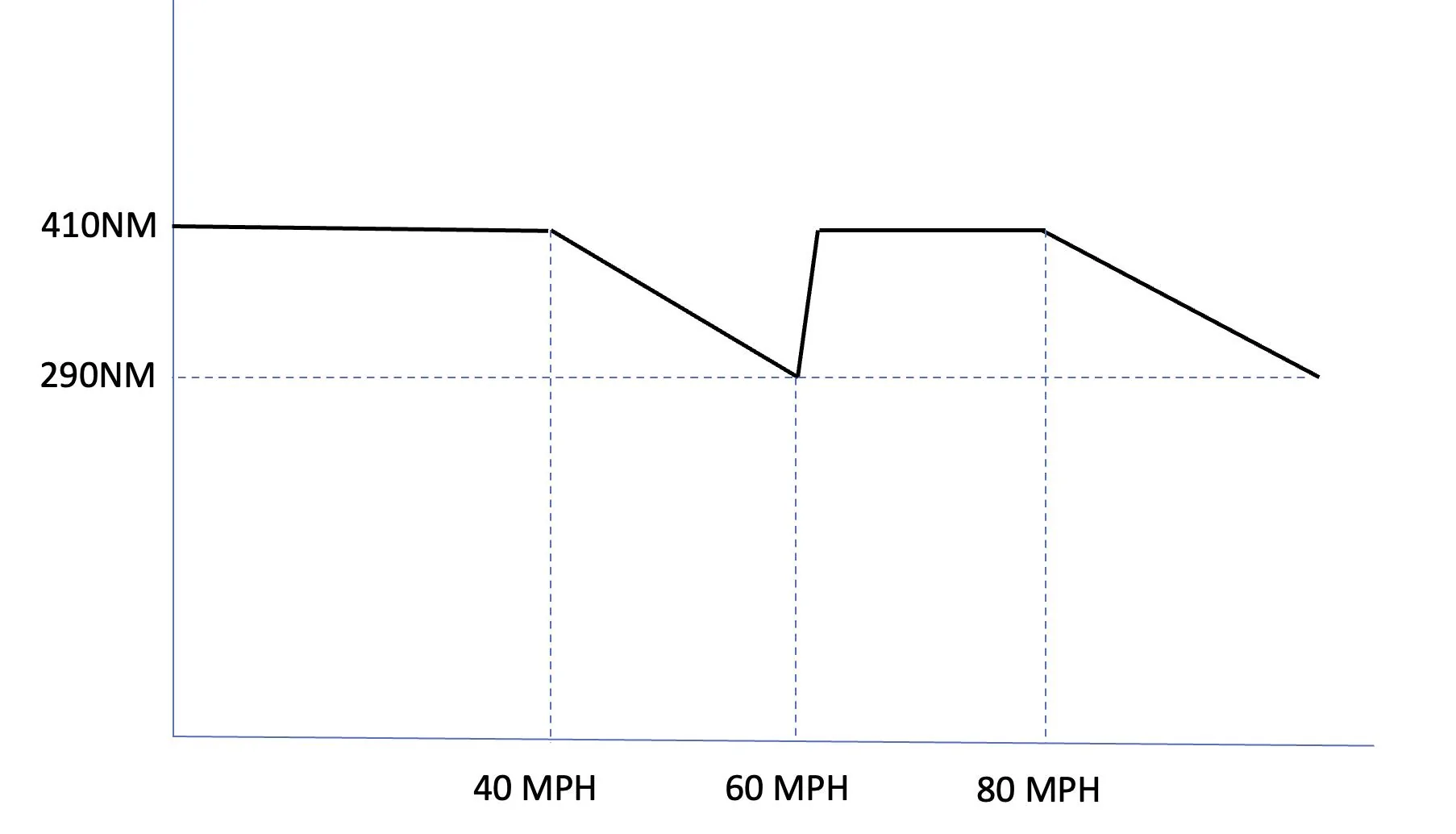
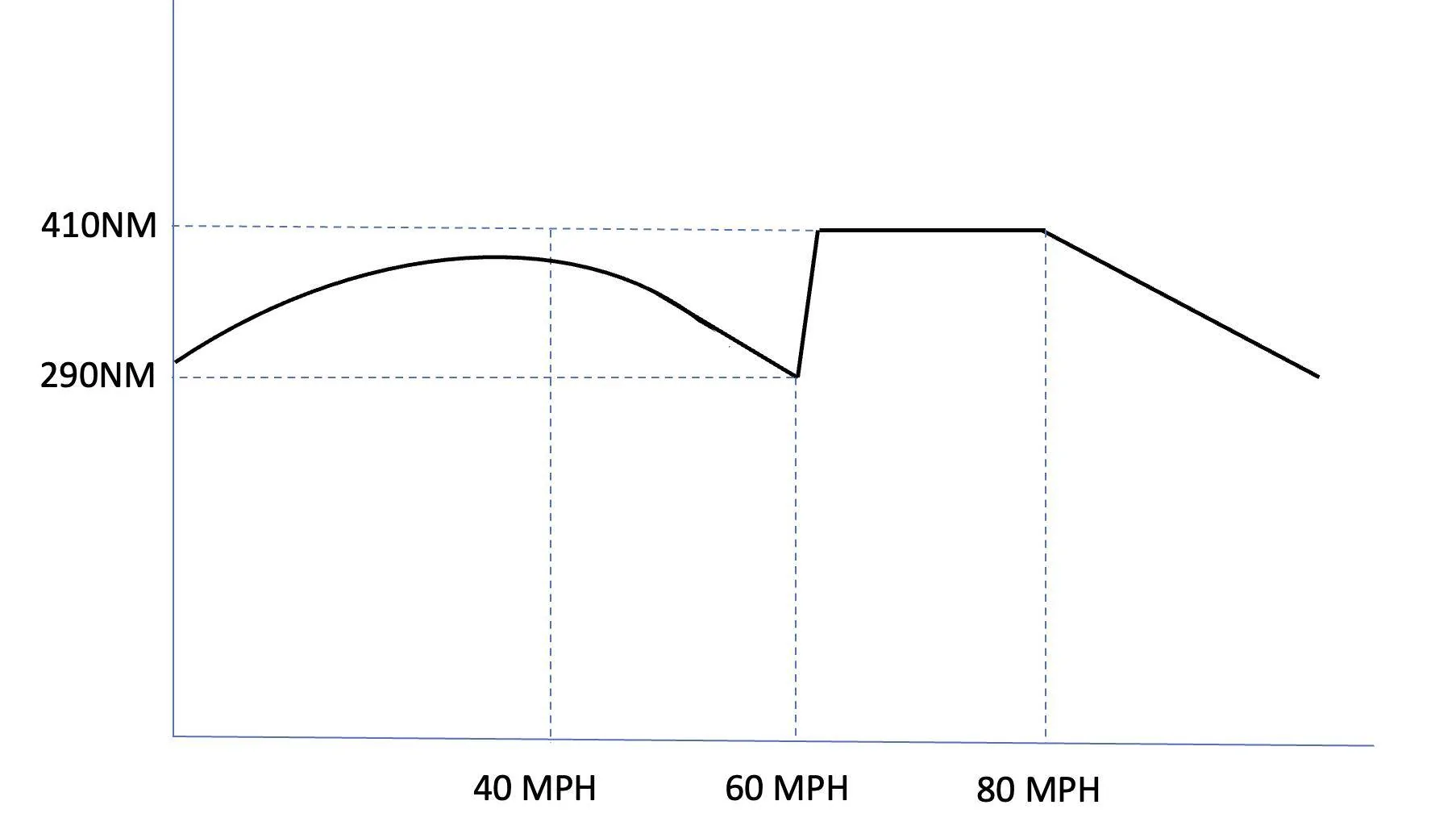
The difference in torque peak between with and without LC is interesting, the initial wiggles are probably vehicle stability control interventions and the ramp down probably to match thrust force at the gear shift point to reduce shock load in transmission and jerkiness in the cockpit.
The problem with using torque as a measure is that without knowing the gear ratio you don't know the tyre forces.
I don't know about now but at the Ferrari F1 team back when my mate was chief engineer they, as all teams do, got a total overload of applicants for engineering places and those that got as far as the interview were ususally very well qualified but they still were rejected if they got the wrong answer to the first question "what is more important power or torque?"
The difference in torque peak between with and without LC is interesting, the initial wiggles are probably vehicle stability control interventions and the ramp down probably to match thrust force at the gear shift point to reduce shock load in transmission and jerkiness in the cockpit.
The problem with using torque as a measure is that without knowing the gear ratio you don't know the tyre forces.
I don't know about now but at the Ferrari F1 team back when my mate was chief engineer they, as all teams do, got a total overload of applicants for engineering places and those that got as far as the interview were ususally very well qualified but they still were rejected if they got the wrong answer to the first question "what is more important power or torque?"
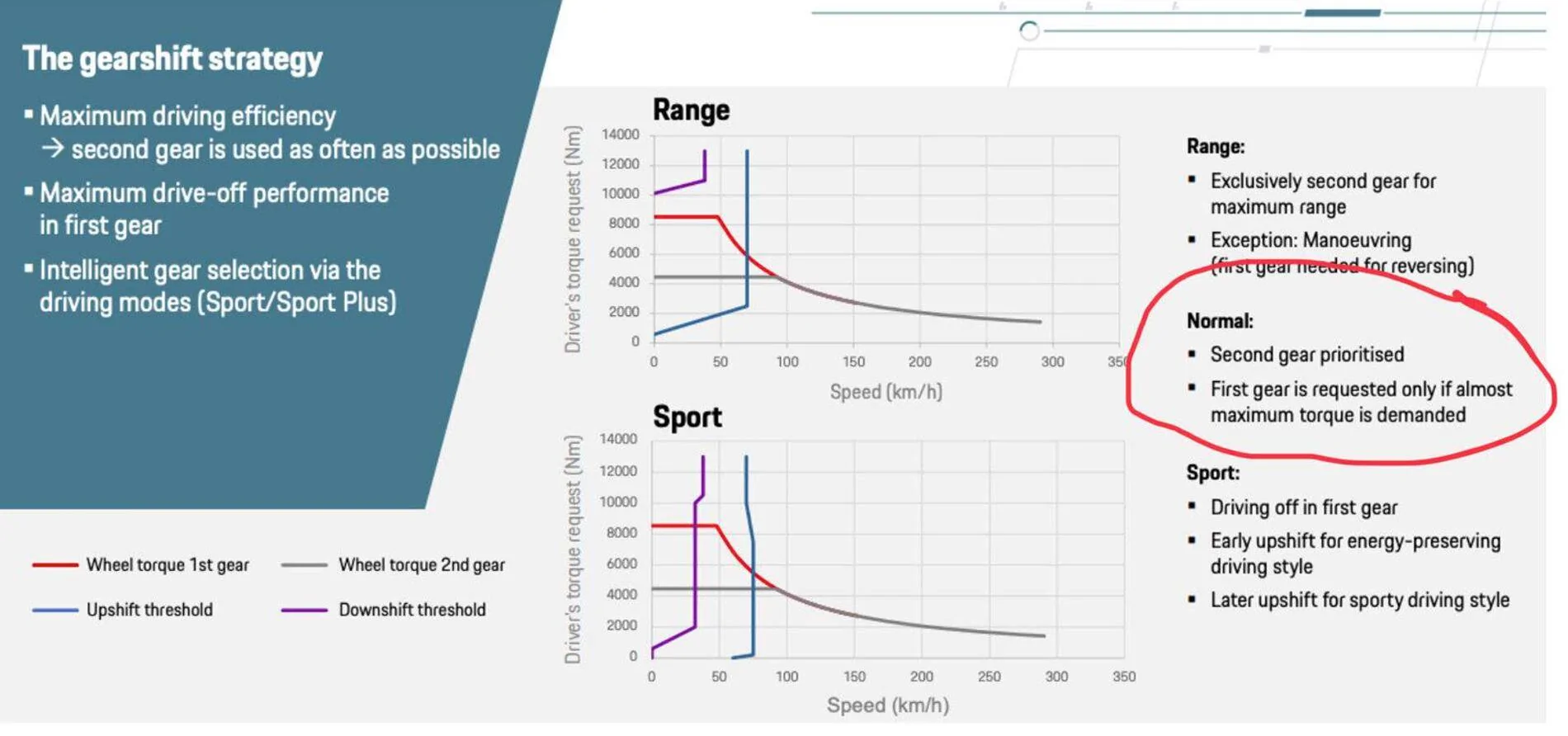
One thing to keep in mind with Gen2 is all rear motors are the now the same physical unit across the range. So RWD’s max torque and power has to be artificially limited and not necessarily a function of usual electric motor hardware limits.
Also respectfully I know the difference between Power and Torque
i might have misspoken by saying “limiting the power” above, i have been talking about the torque the entire time. I do think the linear drop in torque curve after 45 mph in first gear is just car keeping the power constant at max HP (otherwise the MAX HP would be breached given you are above 10K rpm at the point). (Attaching a video of the LC run)
Btw Gear ratios are known for taycan (believe its around 16:1 for first gear). Website also has the max wheel torque for each model.
Anyways i will test your theory and report back. I will take a video so we can see.
Sponsored
Last edited: