Sponsored

High consumption after first start

lcarron

Well-Known Member
First Name
Laurent
Joined
Jun 16, 2021
Threads
47
Messages
467
Reaction score
248
Location
USA
Vehicles
Cross Turismo 4S
Country flag
Hi,
I observe that the consumption is always much higher within the first 6-10 kilometers even with high battery temps like 25-30 after the first start. I made this observation with different outside and battery temps. It’s always very high in the beginning.. After first 5-7 kilometers consumption always decreases in the city or highway?
Do you know why??
If it is cold the 10kw water heater is the culprit. If the ambient temperature is over 10c then I don’t know.


CAGCTG

Well-Known Member
First Name
Stephen
Joined
Jan 26, 2023
Threads
4
Messages
64
Reaction score
36
Location
Solana Beach
Vehicles
2016 GTS, 1997 Carrera, 2023 Taycan GTS
Country flag
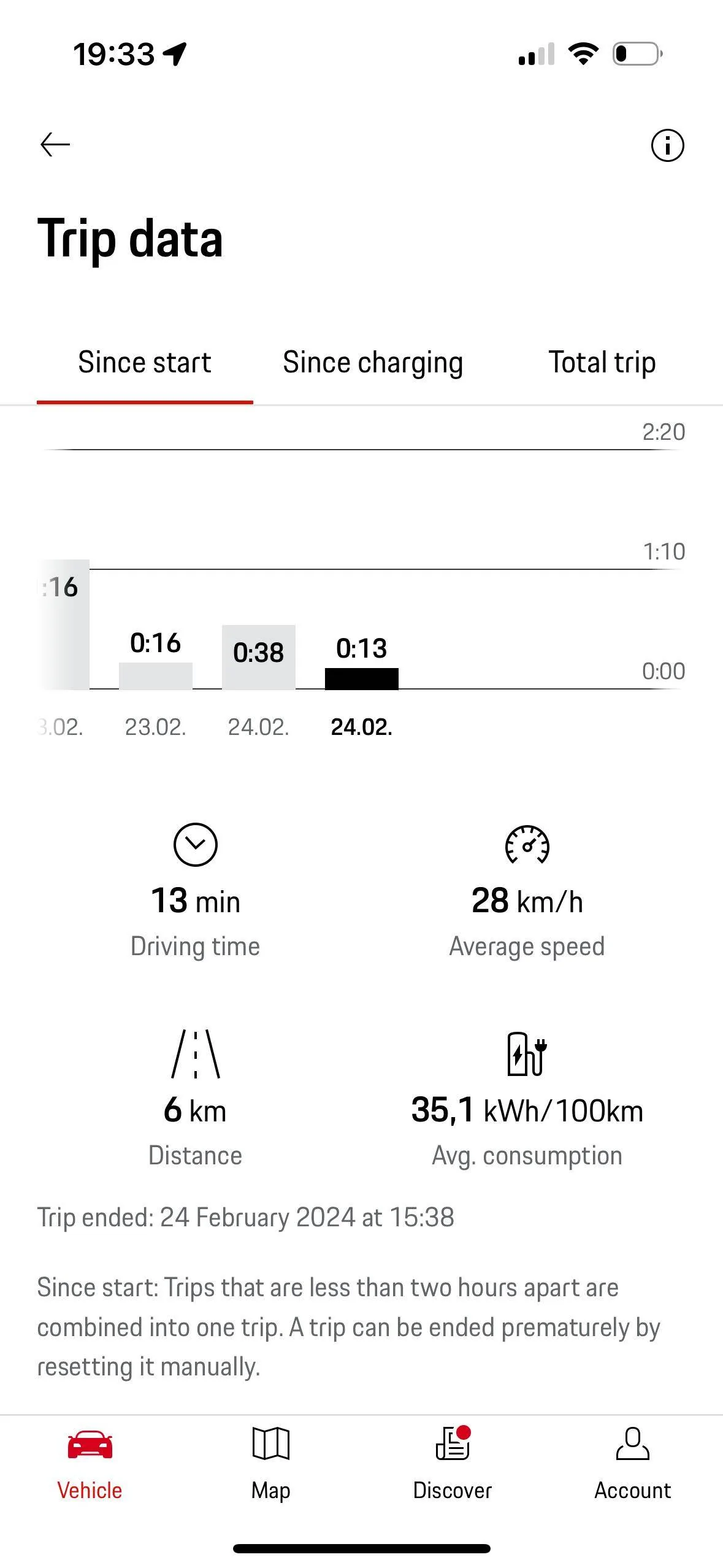
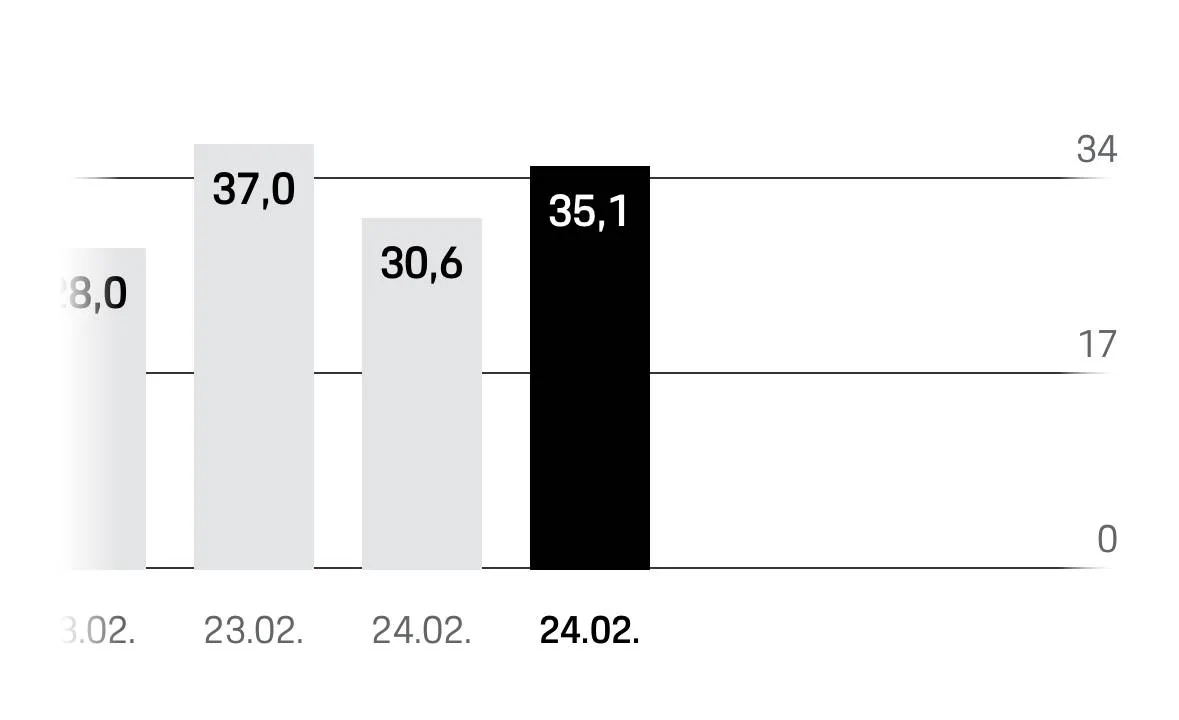
For example, here are my trips -

IMG_2152.jpeg
IMG_2153.jpeg

The contributing factor here is cold cabin (I only preheat for 5 minutes most of the time unless it’s freezing cold).
Off topic, but I never achieve those efficiencies. in my Taycan GTS/21"wheels. The best I can get, other than a long downhill, is 34 kwh/100 miles an that's at a constant 70 mph on level ground. When I start up in the morning the efficiency meter reads >80 kwh/100 and gradually gets to 40+ after 10 miles. I wish my Taycan was more efficient.
 

rim23

Well-Known Member
Joined
Feb 14, 2023
Threads
13
Messages
322
Reaction score
260
Location
Finland, Helsinki
Vehicles
BMW i5M60
Country flag
Off topic, but I never achieve those efficiencies. in my Taycan GTS/21"wheels. The best I can get, other than a long downhill, is 34 kwh/100 miles an that's at a constant 70 mph on level ground. When I start up in the morning the efficiency meter reads >80 kwh/100 and gradually gets to 40+ after 10 miles. I wish my Taycan was more efficient.
Is it a joke? 34kwh/100 miles is about 21kwh/100km. My data is in kWh/100km.

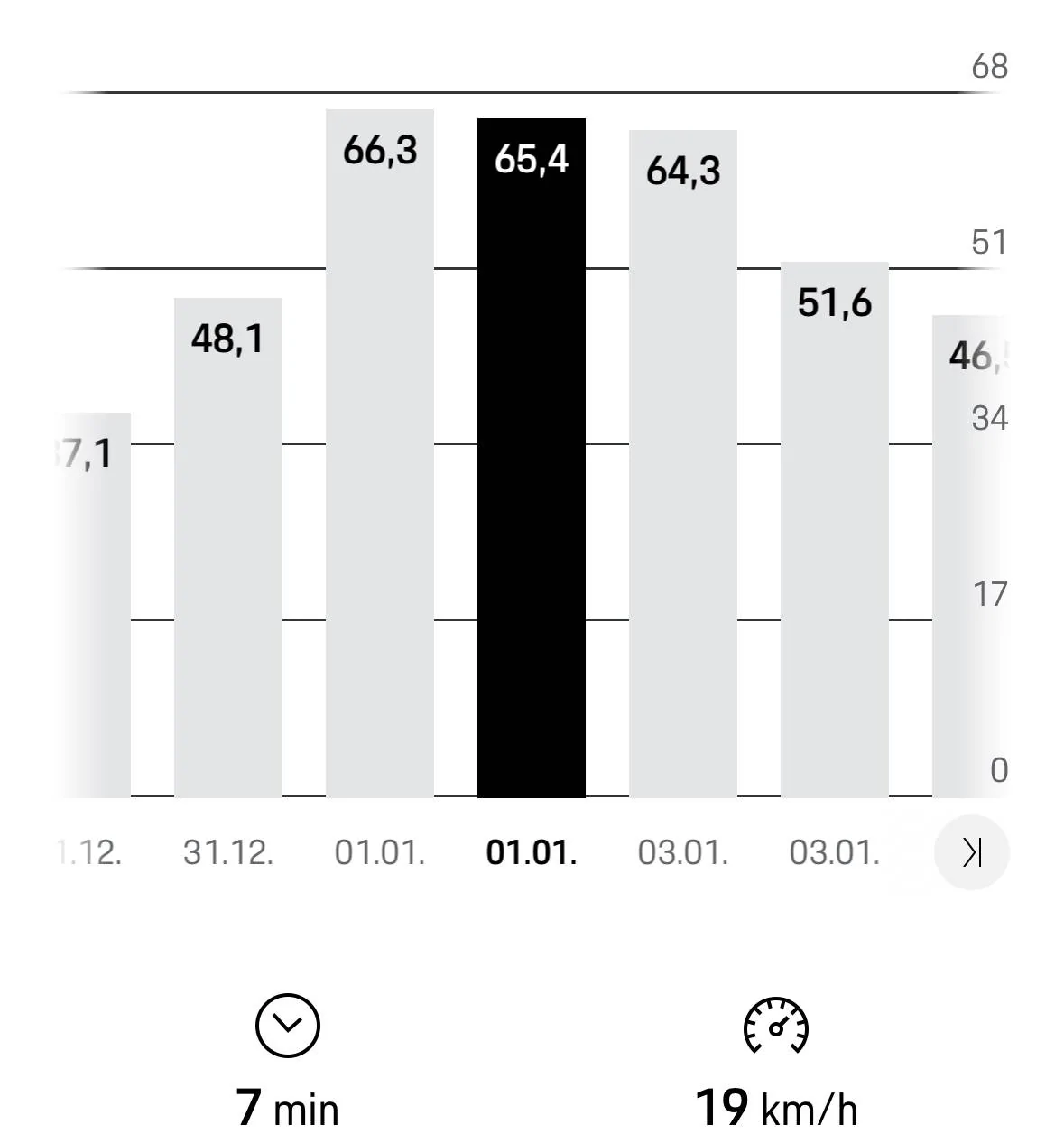
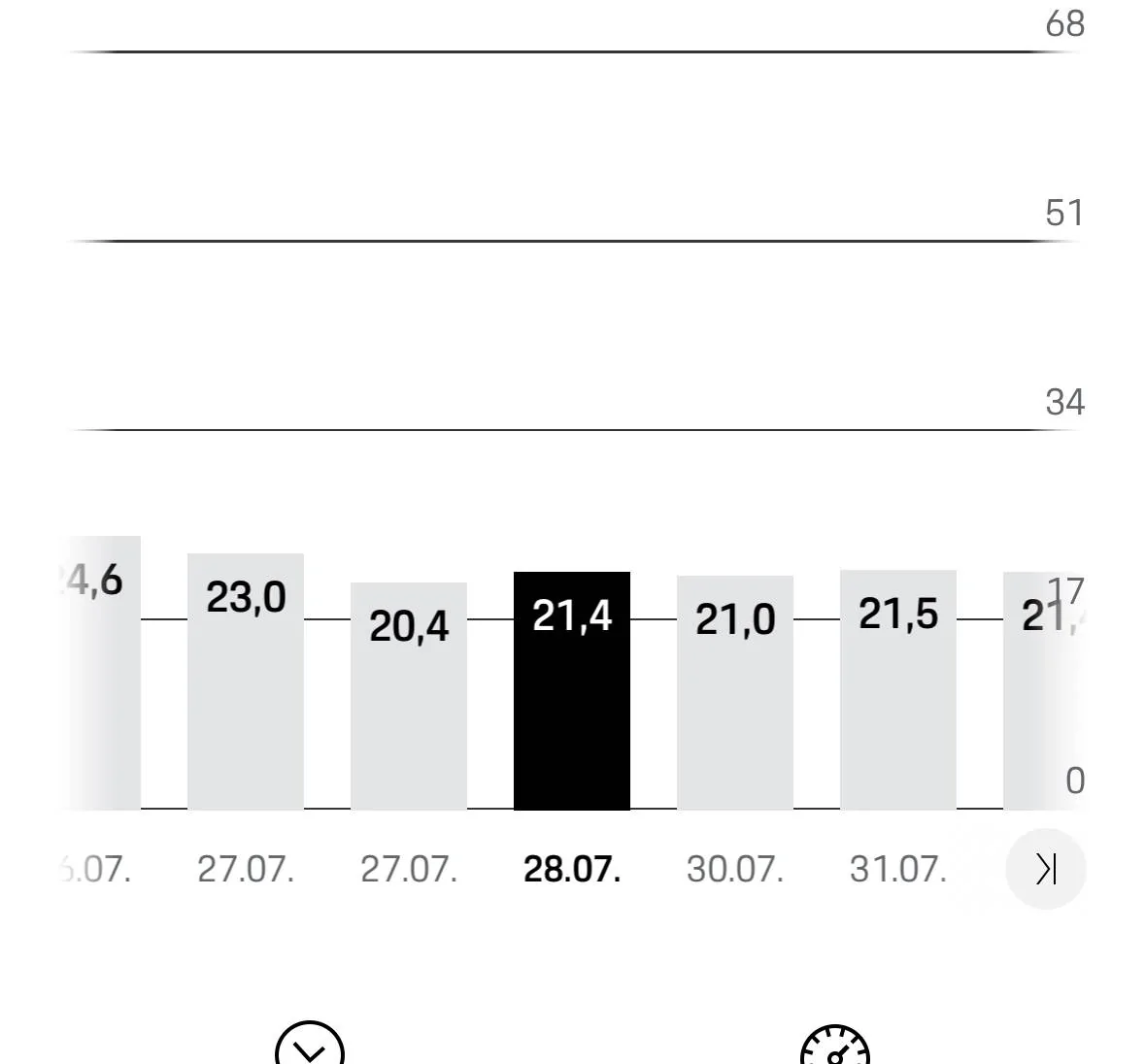
Here is how short travel in -20 and some travels in +20-25 look like on my 4S With 20” turbo wheels -

Porsche Taycan High consumption after first start IMG_2159


Porsche Taycan High consumption after first start IMG_2160
 
OP
OP
Kaan34

Kaan34

Well-Known Member
First Name
Kaan
Joined
Jun 9, 2023
Threads
10
Messages
92
Reaction score
15
Location
Istanbul
Vehicles
Taycan 4S
Country flag
Off topic, but I never achieve those efficiencies. in my Taycan GTS/21"wheels. The best I can get, other than a long downhill, is 34 kwh/100 miles an that's at a constant 70 mph on level ground. When I start up in the morning the efficiency meter reads >80 kwh/100 and gradually gets to 40+ after 10 miles. I wish my Taycan was more efficient.
This is exactly the question; Why does your consumption decrease from 80/100 to 40/100 after 10 miles??Why does consumption decrease after first start?


Ross

Well-Known Member
First Name
Ross
Joined
Oct 27, 2021
Threads
17
Messages
655
Reaction score
861
Location
Lancashire
Vehicles
Taycan GTS - Audi Etron
Country flag
It is overwhelmingly down to one simple factor.
Battery temperature.

The car (battery) needs to warm up to operating temperature much like an ICE vehicle.
Even when I occasionally hypermile my GTS with 21s in summer (3.4 miles per KWH is my best) the low consumption takes a few miles to kick in even when driving very gently!

Optimum battery operating temperature is 20 something degrees centigrade ( I apologise I can’t remember what it is. Watch TeslaBjorn or Out of Spec Kyle do range testing)
Even on a summers day in UK the battery will probably have cooled to 10 degrees overnight.

If you preheat your car with the 1 hr preconditioning from mains this makes it much better as it does not show as consumption.
So does charging immediately before setting off. Or a combo of the 2.

If you try and heat a freezing car cabin with HVAC after you set off this will make it worse.

On a cold morning in winter when I have forgotten to preheat for my 2.8 mile journey to work I have seen consumption of over 2kw per mile!

Much the same as a 911 will do 5mpg for the first 2 miles on a cold morning.

Regeneration as I have said many times is almost irrelevant. Benefits are undetectable on the road. Coasting, reading the road ahead and minimal braking is the only way to get high range and low consumption. Every time you hit the brakes you are losing MUCH more KWs of kinetic energy than you are gaining from recuperation. It’s just science.

To benefit from the epic regeneration available in a Taycan you have to boot it up to high speeds and brake heavily which of course defeats the object as you will use many more electrons getting up to speed than you could ever recuperate. Those expecting their new Taycan ranges to magically increase when the discs have bedded in and recuperation starts will always be disappointed.

Electricity consumption is high on a cold morning even if you never touch your brakes.
 

whitex

Well-Known Member
Joined
Jul 30, 2021
Threads
87
Messages
8,198
Reaction score
7,236
Location
WA, USA
Vehicles
2023 Taycan TCT, 2024 Q8 eTron P+
Country flag
I have observed a similar behaviour after the car has been standing for some time. I have thought that it was due to explanations above. But I have also heard another thought on this.

You can see that the Taycan has extremely low Phantom drain when the car is parked for a few days or even a week. The charge level is nearly not changing at all. But once you drive off things change quite quickly?

So the thinking here was that the high consumption at the beginning is due to taking the not displayed change in SoC into account and calculate the consumption that way?? Not sure how valid this is though?

It is clear that the car will consume some power since the 12 volt battery gets topped up while standing, but with a limited number of cycles. The fact that the car can communicate the SoC and react to remote commands means it is online at some stage. Maybe not all the time but in regular intervals. And then it depends on how many ECU’s are alive at that stage as well.
We have a Taycan and a Q8 eTron. Charge them both and leave in the driveway for a couple of days, the eTron will show lower SoC, Taycan is solid at whatever you left it. When I leave the Taycan parked at the airport for few days, same story, SoC does not budge. The first miles have higher consumption the longer the car was parked. So I came to a conclusion that the Taycan just hides its vampire drain in the first few miles after.
 
Last edited:

whitex

Well-Known Member
Joined
Jul 30, 2021
Threads
87
Messages
8,198
Reaction score
7,236
Location
WA, USA
Vehicles
2023 Taycan TCT, 2024 Q8 eTron P+
Country flag
I wonder if anyone with ultra low mileage (e.g. I saw a one year old Taycan at a dealership this week with 860 miles on it) who also keeps track of electricity provided to the car, would be able to provide overall numbers - how many KWh does it take for a Taycan to live for 1 year and drive 860 miles for example. Divide the number per mile, then compare against what the car's app is showing.
 
OP
OP
Kaan34

Kaan34

Well-Known Member
First Name
Kaan
Joined
Jun 9, 2023
Threads
10
Messages
92
Reaction score
15
Location
Istanbul
Vehicles
Taycan 4S
Country flag
We have a Taycan and a Q8 eTron charge them both and leave in the driveway for a couple of days, the eTron will show lower SoC, Taycan is solid at whatever you left it. When I leave the Taycan parked at the airport for few days, same story, SoC did not budge. The first miles have higher consumption the longer the car was parked. So I came to a conclusion that the Taycan just hides its vampire drain in the first few miles after.
Maybe that also explains soc decreaslng quickly after flrst start?
 

or1

Well-Known Member
First Name
O
Joined
Apr 27, 2019
Threads
10
Messages
290
Reaction score
545
Location
Norway
Vehicles
Taycan GTS ST
Country flag
It is overwhelmingly down to one simple factor.
Battery temperature.

The car (battery) needs to warm up to operating temperature much like an ICE vehicle.
Even when I occasionally hypermile my GTS with 21s in summer (3.4 miles per KWH is my best) the low consumption takes a few miles to kick in even when driving very gently!

Optimum battery operating temperature is 20 something degrees centigrade ( I apologise I can’t remember what it is. Watch TeslaBjorn or Out of Spec Kyle do range testing)
Even on a summers day in UK the battery will probably have cooled to 10 degrees overnight.

If you preheat your car with the 1 hr preconditioning from mains this makes it much better as it does not show as consumption.
So does charging immediately before setting off. Or a combo of the 2.

If you try and heat a freezing car cabin with HVAC after you set off this will make it worse.

On a cold morning in winter when I have forgotten to preheat for my 2.8 mile journey to work I have seen consumption of over 2kw per mile!

Much the same as a 911 will do 5mpg for the first 2 miles on a cold morning.

Regeneration as I have said many times is almost irrelevant. Benefits are undetectable on the road. Coasting, reading the road ahead and minimal braking is the only way to get high range and low consumption. Every time you hit the brakes you are losing MUCH more KWs of kinetic energy than you are gaining from recuperation. It’s just science.

To benefit from the epic regeneration available in a Taycan you have to boot it up to high speeds and brake heavily which of course defeats the object as you will use many more electrons getting up to speed than you could ever recuperate. Those expecting their new Taycan ranges to magically increase when the discs have bedded in and recuperation starts will always be disappointed.

Electricity consumption is high on a cold morning even if you never touch your brakes.
Most probably a combination of factors, where both battery temp, cabin temp and the entire cooling/heating infrastructure temp count. Vampire drain accounting method too, it matches what I experience.

I agree that we should not expect the world from recuperation, and that keeping constant speed, looking ahead and driving softly is most efficient. But when we can’t (or won’t) do that, recuperation is not insignificant. With good efficiency in the generator-charger-battery chain, around 80% of reduction in kinetic energy should end up in the battery. I test drove a BMW i4 M50 a few weeks ago, it displays regenerated energy fed into the battery. It could be between 10% and 20% of consumption on a twisty road.
 
OP
OP
Kaan34

Kaan34

Well-Known Member
First Name
Kaan
Joined
Jun 9, 2023
Threads
10
Messages
92
Reaction score
15
Location
Istanbul
Vehicles
Taycan 4S
Country flag
Most probably a combination of factors, where both battery temp, cabin temp and the entire cooling/heating infrastructure temp count. Vampire drain accounting method too, it matches what I experience.

I agree that we should not expect the world from recuperation, and that keeping constant speed, looking ahead and driving softly is most efficient. But when we can’t (or won’t) do that, recuperation is not insignificant. With good efficiency in the generator-charger-battery chain, around 80% of reduction in kinetic energy should end up in the battery. I test drove a BMW i4 M50 a few weeks ago, it displays regenerated energy fed into the battery. It could be between 10% and 20% of consumption on a twisty road.
Good point ?
 

Ross

Well-Known Member
First Name
Ross
Joined
Oct 27, 2021
Threads
17
Messages
655
Reaction score
861
Location
Lancashire
Vehicles
Taycan GTS - Audi Etron
Country flag
Most probably a combination of factors, where both battery temp, cabin temp and the entire cooling/heating infrastructure temp count. Vampire drain accounting method too, it matches what I experience.

I agree that we should not expect the world from recuperation, and that keeping constant speed, looking ahead and driving softly is most efficient. But when we can’t (or won’t) do that, recuperation is not insignificant. With good efficiency in the generator-charger-battery chain, around 80% of reduction in kinetic energy should end up in the battery. I test drove a BMW i4 M50 a few weeks ago, it displays regenerated energy fed into the battery. It could be between 10% and 20% of consumption on a twisty road.
I agree if you are ‘on it’, heavy acceleration and heavy braking recuperation is significant. It probably extends range for a full charge on a track day by 10%. From 100 miles to 110.

When people talk about extending range they want high range when road tripping and cruising. The range people want is getting near to 300 miles as (im)possible.

To achieve these maximum ranges recuperation is (almost) entirely irrelevant. It is completely a false hope that new Taycan drivers will experience a huge leap in range once the discs and pads have bedded in and recuperation starts.

The best example for me is driving up a mountain. It takes way more electric energy going up than can be recuperated from the potential energy of altitude coming down.

As an experiment I drove up an Alpine Rd from Grenoble to a ski station. I hardly touched the brakes. I used 20%.

35k 22 miles - 1300 metre 4000 ft

I coasted down the mountain and hardly touched the accelerator. I recuperated 4%. I had optimistically charged to only 80% in the ski station hoping for a load of free energy. I was disappointed

Although of course my battery had to heat up as it was morning, cold and not preheated. On the way up the mountain my battery was purring away at optimal temperature as we had cruised from Dijon to Grenoble. 300k.

It is battery temperature that is the key. Cabin temperature is directly link to battery temperature as this is where the heat is scavenged from.

You must of course have a Heat Pump to have any chance of good consumption and range in the cold.
This is not standard everywhere although surprisingly is in UK where Porsche are much meaner than in USA with ‘freebies’
Sponsored


Top