Throb
Well-Known Member
- Joined
- Apr 30, 2022
- Threads
- 8
- Messages
- 528
- Reaction score
- 658
- Location
- NL & UK
- Vehicles
- Audi R8 V10, Cayenne EV (on order), BMW iX3 (on order), MB C-Class, Renault R5

- Thread starter
- #1
Last night my family and I took our first, of what will be regular, long-distance trips across Europe. As it's my first EV, I was obviously keen to find out how the 3-week-old car would handle the mission, and to see how reliable the charging would be.
We set off from our home in the Netherlands at 21:15, with a full charge, and I pre-heated the car. When we departed, the predicted charge at our first intermediate destination (the Channel Tunnel at Calais) was 20%. This was good. I thought I may have had to drop in to the Ionity at the Belgium/France border, but if we arrived with 20% at Calais, I would comfortably be able to delay the charge until we got to the UK at the other side of the Channel Tunnel, where there is an Ionity a few miles after leaving the train.
For the first 90 minutes of the journey, the weather was dry and pleasant. I was really enjoying the air suspension, and the quiet, relaxing ambience. The predicted arrival SoC at Calais remained around 20%, only occasionally dropping to 19%. However, after passing Ghent, it started to rain quite hard, and it carried on raining until we arrived at Calais. The range really took a hit due to the 21" RS Spyder rims not liking the standing water, and it gradually dropped over the next 90 minutes to a predicted SoC at Calais of 10%. I had a choice to make. Do I maintain the current speed and risk cutting the arrival SoC too close, or do I nip into the Ionity for a quick top up at Veurne, just before the French border? I decided to reduce my speed progressively from the 120km/h I was cruising at down to an eventual 90km/h, and avoid having to stop at Veurne. I had a bit of time in my pocket to allow the reduction in speed. Sure enough, we got to the Channel Tunnel with around an 8% SoC, and a range of 25 km. The Ionity after we deboard was about 12 km from the exit of the train.
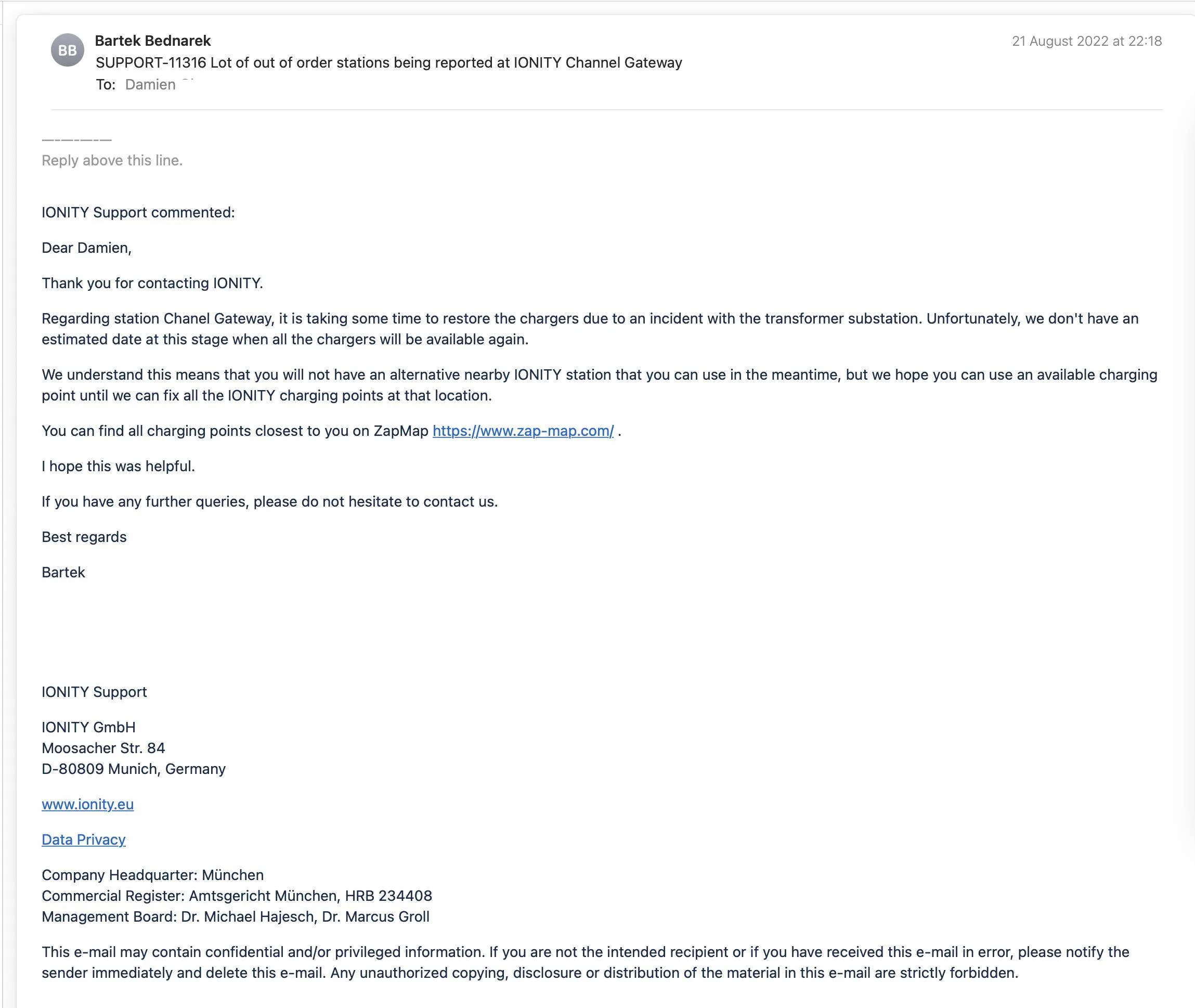
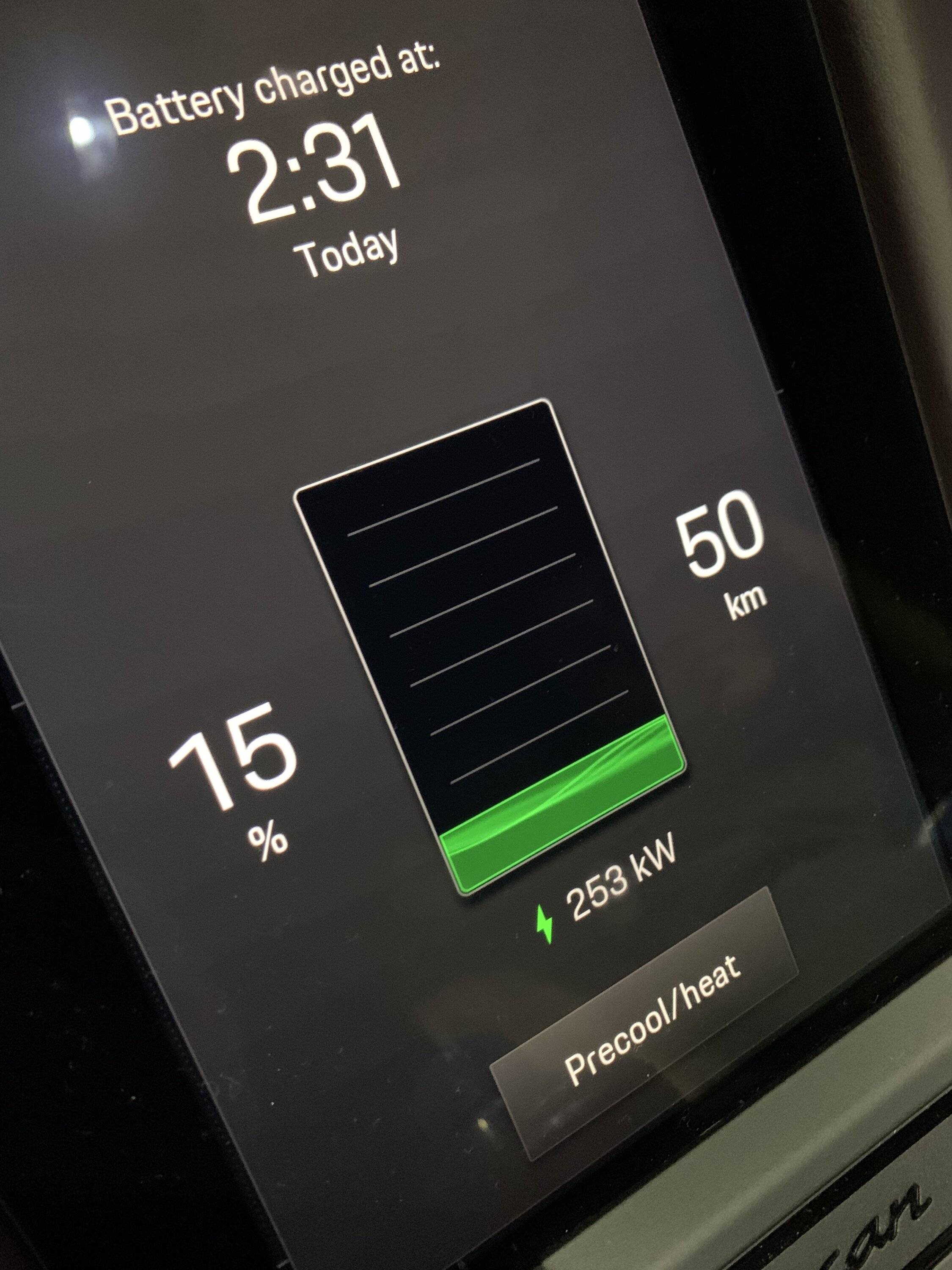
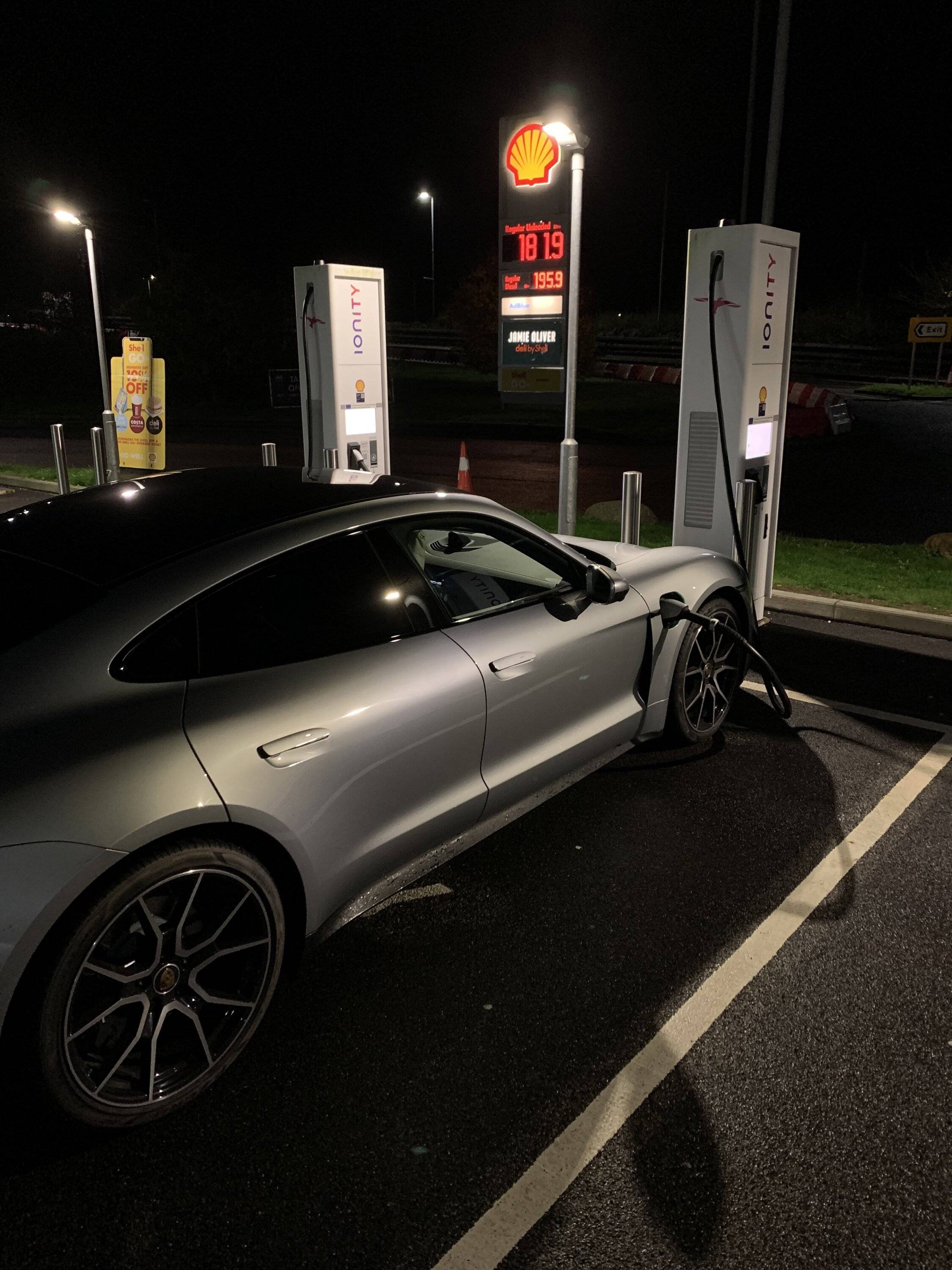
While on the train, I read up on Zap Map the feedback on the Ionity at Folkestone Services, and it wasn't good. Lots of recent reports of the chargers being out of order. I wasn't too concerned as there was also a Gridserve charger on the same site, so I would use that in an emergency. We left the train on time, and made it to the Ionity chargers with a SoC of 4% and a range of 12 km. I was perfectly comfortable with this. I pulled up to the four Ionity units, two of which were clearly out of order. The one I did choose became out of order once I tried to activate it. So that left me one. Luckily that worked fine, and I started charging via Plug and Charge within 30 seconds of inserting the cable. After around one minute, the power ramped-up to just over 250 KW, and it maintained this until around 50%, where it gradually tapered. My target km was to be around 270 km, as this would allow us to get to our flat in Surrey, and then continue our journey a few days later to the North of England, where I plan to stop at Ionity Milton Keynes.
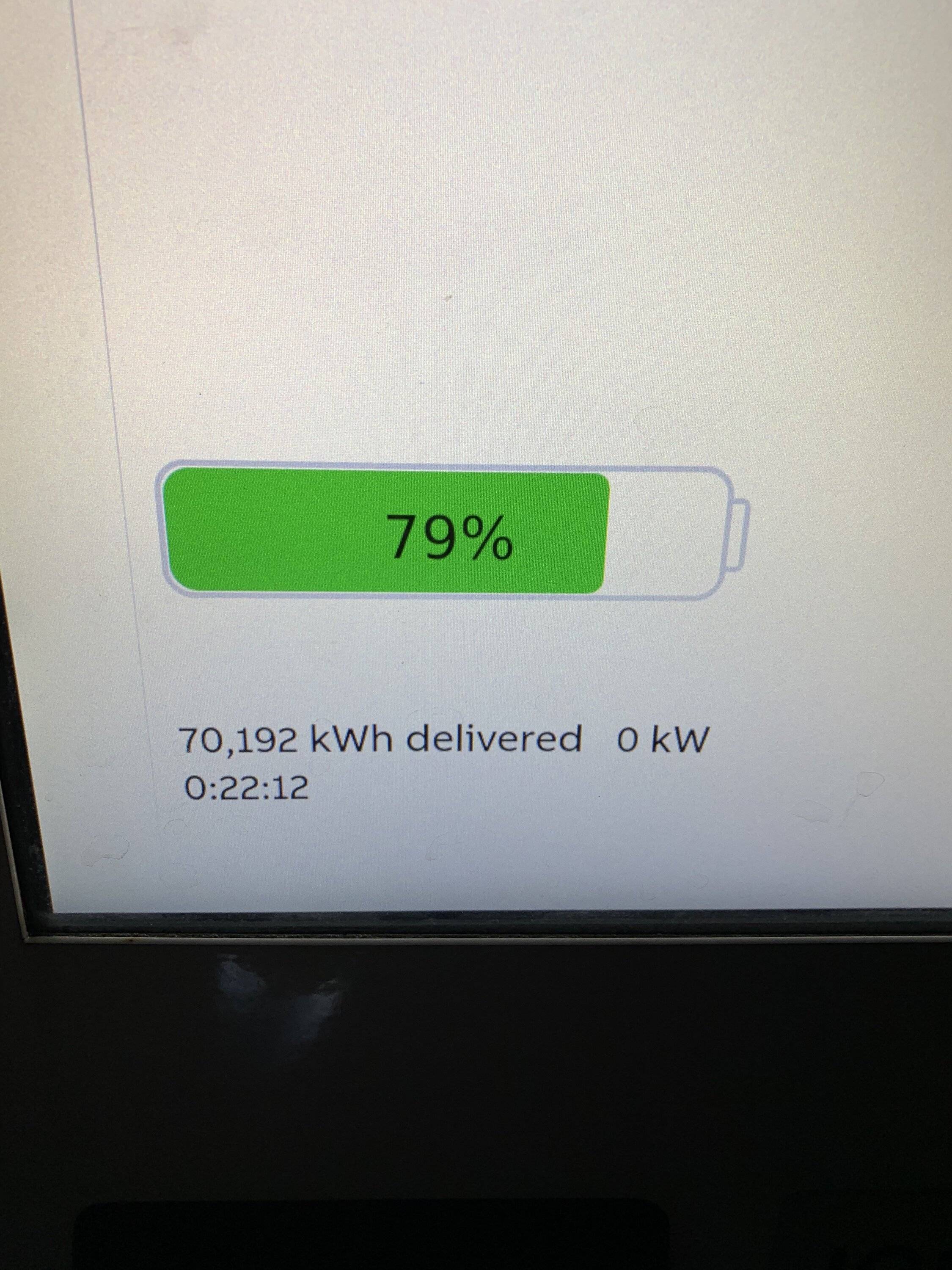
After 22 mins I got to a SoC of 79% and a range of 274 km. I was impressed with this. In total, we'd travelled 337.3 km and arrived with 4% SoC, which would give a predicted range of around 351 km. I think this is the worst case scenario; in winter, standing water, new car. In the future I will expect more. I was also happy with the Ionity charger. We added 70.19 kWh in 22 mins, which is an average power of 191.4 kW, and meant we added around 12 km range every minute.
Interestingly, as we got to around 60 km range, just one cup holder light went out in order to save energy. I thought it was a faulty light, but then it came back on when I charged in Folkestone. The rest of the ambient lights went off with around 30 km range, and with it the climate control.


We set off from our home in the Netherlands at 21:15, with a full charge, and I pre-heated the car. When we departed, the predicted charge at our first intermediate destination (the Channel Tunnel at Calais) was 20%. This was good. I thought I may have had to drop in to the Ionity at the Belgium/France border, but if we arrived with 20% at Calais, I would comfortably be able to delay the charge until we got to the UK at the other side of the Channel Tunnel, where there is an Ionity a few miles after leaving the train.
For the first 90 minutes of the journey, the weather was dry and pleasant. I was really enjoying the air suspension, and the quiet, relaxing ambience. The predicted arrival SoC at Calais remained around 20%, only occasionally dropping to 19%. However, after passing Ghent, it started to rain quite hard, and it carried on raining until we arrived at Calais. The range really took a hit due to the 21" RS Spyder rims not liking the standing water, and it gradually dropped over the next 90 minutes to a predicted SoC at Calais of 10%. I had a choice to make. Do I maintain the current speed and risk cutting the arrival SoC too close, or do I nip into the Ionity for a quick top up at Veurne, just before the French border? I decided to reduce my speed progressively from the 120km/h I was cruising at down to an eventual 90km/h, and avoid having to stop at Veurne. I had a bit of time in my pocket to allow the reduction in speed. Sure enough, we got to the Channel Tunnel with around an 8% SoC, and a range of 25 km. The Ionity after we deboard was about 12 km from the exit of the train.
While on the train, I read up on Zap Map the feedback on the Ionity at Folkestone Services, and it wasn't good. Lots of recent reports of the chargers being out of order. I wasn't too concerned as there was also a Gridserve charger on the same site, so I would use that in an emergency. We left the train on time, and made it to the Ionity chargers with a SoC of 4% and a range of 12 km. I was perfectly comfortable with this. I pulled up to the four Ionity units, two of which were clearly out of order. The one I did choose became out of order once I tried to activate it. So that left me one. Luckily that worked fine, and I started charging via Plug and Charge within 30 seconds of inserting the cable. After around one minute, the power ramped-up to just over 250 KW, and it maintained this until around 50%, where it gradually tapered. My target km was to be around 270 km, as this would allow us to get to our flat in Surrey, and then continue our journey a few days later to the North of England, where I plan to stop at Ionity Milton Keynes.
After 22 mins I got to a SoC of 79% and a range of 274 km. I was impressed with this. In total, we'd travelled 337.3 km and arrived with 4% SoC, which would give a predicted range of around 351 km. I think this is the worst case scenario; in winter, standing water, new car. In the future I will expect more. I was also happy with the Ionity charger. We added 70.19 kWh in 22 mins, which is an average power of 191.4 kW, and meant we added around 12 km range every minute.
Interestingly, as we got to around 60 km range, just one cup holder light went out in order to save energy. I thought it was a faulty light, but then it came back on when I charged in Folkestone. The rest of the ambient lights went off with around 30 km range, and with it the climate control.
Sponsored
Last edited: