Sponsored

Recommended Charger

Flying ace

Well-Known Member
First Name
Mike
Joined
Mar 24, 2024
Threads
41
Messages
1,290
Reaction score
987
Location
SF CA
Vehicles
GTS ST, 997.1 GT3, 991.1 GT3
Country flag
chargepoint Flex can not do 80 amp charging - only 50 amp charging on a 70 amp breaker - Porsche Wall Charger is only 100/80 amp North American EVSE right now to my knowledge - Enphase/Clippercreek no longer list their 100/80 amp EVSE for sale which is a great loss.

Charge point flex is a good choice if you don't want or can handle a 100 amp circuit.

the next best choice in my opinion is the 80/64 amp Enphase/Clipper creek EVSE https://enphase.com/store/ev-charge...7V*MTcyMjAxNDQ4NC4xLjAuMTcyMjAxNDQ4NC4wLjAuMA..

https://enphase.com/store/ev-charge...7V*MTcyMjAxNDQ4NC4xLjAuMTcyMjAxNDQ4NC4wLjAuMA..

it's also a good choice because you can have "share2" feature where enPhase EVSE's can share a single circuit split between 2 enphase eVSE's
Chargepoint flex can be hardwired for 80A
https://store.chargepoint.com/product/home-flex-hardwired
Sponsored
 

daveo4EV

Well-Known Member
First Name
David
Joined
Jan 28, 2019
Threads
192
Messages
7,003
Reaction score
10,473
Location
Santa Cruz
Vehicles
Cayenne Hybrid, 911(s) GT3/Convertable
Country flag

Flying ace

Well-Known Member
First Name
Mike
Joined
Mar 24, 2024
Threads
41
Messages
1,290
Reaction score
987
Location
SF CA
Vehicles
GTS ST, 997.1 GT3, 991.1 GT3
Country flag

ShiftyWolf

Well-Known Member
Joined
Nov 16, 2023
Threads
12
Messages
524
Reaction score
656
Location
Central Florida
Vehicles
2021 Porsche Taycan 4S, 2017 Audi Q5 PP
Country flag
My instructions for the Flex says it can be hardwired for 100a/80a.
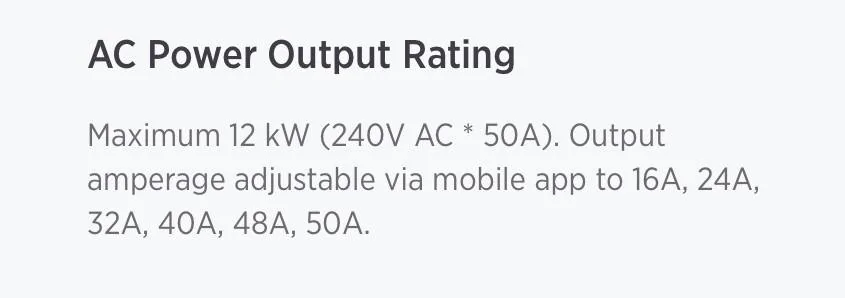
Yes (up to 80A circuit), but the Chargepoint is still limited to 50A output, regardless of the circuit breaker you choose. That's also listed in the install guide.

Chargepoint manual
 

daveo4EV

Well-Known Member
First Name
David
Joined
Jan 28, 2019
Threads
192
Messages
7,003
Reaction score
10,473
Location
Santa Cruz
Vehicles
Cayenne Hybrid, 911(s) GT3/Convertable
Country flag
Charepoint Flex is _NOT_ a 19.2 kW EVSE - it is maximum of 12 kW (which is still awesome) but it is not a full 100/80 amp 19.2 kW EVSE…

right there in black and white - you can have a bigger breaker it’s still safe - but maximum output is capped at 12 kw - or 50 amps - 50 amp charge rate would technically requires 62.5 amp breaker - but don’t sell/manufacture breakers that size - so you use a 70/80/90/100 amp breaker - but max output is still 12 kw - not 19.2 kw

clipper creek, ford pro, and porsche wall chargers are only 19.2kw EVSE i’m aware of right now in north america - there may be others.
 
Last edited:


Flying ace

Well-Known Member
First Name
Mike
Joined
Mar 24, 2024
Threads
41
Messages
1,290
Reaction score
987
Location
SF CA
Vehicles
GTS ST, 997.1 GT3, 991.1 GT3
Country flag
Charepoint Flex is _NOT_ a 19.2 kW EVSE - it is maximum of 12 kW (which is still awesome) but it is not a full 100/80 amp 19.2 kW EVSE…

right there in black and white - you can have a bigger breaker it’s still safe - but maximum output is capped at 12 kw - or 50 amps - 50 amp charge rate would technically requires 62.5 amp breaker - but don’t sell/manufacture breakers that size - so you use a 70/80/90/100 amp breaker - but max output is still 12 kw - not 19.2 kw

clipper creek, ford pro, and porsche wall chargers are only 19.2kw EVSE i’m aware of right now in north america - there may be others.
Ah thanks for the clarification. Odd they advertise the Flex, very misleading. Basically, it can be hardwired, it can be on a 100a breaker, but it still only charges at max 50a. That's too bad, I thought my Flex was future proofed, though that's not the main reason I purchased it. I'm also courting a pre-owned car with the 19.2, and liked the idea to convert to 80a, though my use case for needing the 5.5 hr charge time at home is limited.

On plug share, I've noted very limited destination type public chargers that output 19.2-22kw.
 

daveo4EV

Well-Known Member
First Name
David
Joined
Jan 28, 2019
Threads
192
Messages
7,003
Reaction score
10,473
Location
Santa Cruz
Vehicles
Cayenne Hybrid, 911(s) GT3/Convertable
Country flag
Ah thanks for the clarification. Odd they advertise the Flex, very misleading. Basically, it can be hardwired, it can be on a 100a breaker, but it still only charges at max 50a. That's too bad, I thought my Flex was future proofed, though that's not the main reason I purchased it. I'm also courting a pre-owned car with the 19.2, and liked the idea to convert to 80a, though my use case for needing the 5.5 hr charge time at home is limited.

On plug share, I've noted very limited destination type public chargers that output 19.2-22kw.
19.2 kW is "rare" in North America - it's the maximum J-1772 standard L2 AC charge rate - there are few if any "public" 19.2 kW EVSE's in the wild you'll encounter - and 90% of the one's you will encounter are Tesla Destination chargers so you'll need an 100/80 amp TeslaTap (no big deal). If you can fine a native J-1772 100/80 amp EVSE in the wild that is a rare rare bird indeed - you're much much more likely to find 19.2 kW Tesla Destination chargers - and maybe the "odd" 19.2 kW Porsche wall charger.

22 kW charging is "not a thing" in North America - it's a European L2/AC charging standard but there are NO J-1772 EVSE's that will do 22 kW - and there are no J-1772 vehicle's that would do 22 kW…it' would be "unrecognized" as a valid option/parameter in the J-1772 vehicle EVSE communications interface - 22 kW charging is 91.6 amps @ 240V - so it would require a 115 amp breaker - not sure they make 115/120 amp breakers - so you'd be rocking a 125 amp breaker to support 22 kW charging following the 80% rule - 92 amp is not a "legal" value for an EVSE to report via the J-1772 protocol to the vehicle - 80 amps the maximum allowed value for J-1772

the primary/only reason to get 19.2 kW option is if you _KNOW_ you'll have access to these chargers in your: home, work, or perhaps travel destination that you frequent - for example near me in Santa Cruz, CA is Seascape Resort in Aptos, CA - they have 4 Tesla Gen1 chargers and they are full 80 amp 19.2 kW EVSE's - so if your ever visit Seascape in Aptos, CA the underground parking garage Tesla EVSE's are full 19.2 kW unit - bring your 80 amp TeslaTap and you're good to go.

19.2 kW is are hard option to recommend for North America given the lack of infrastructure - and the lack of any growth opportunities - investment is all in FastDC chargers so it's not like 19.2 kW charging is a "growth opportunity"…

it _IS_ a fantastic option when you _KNOW_ you'll have 19.2 kW EVSE's that you'll encounter.

but to my point - across the Street from Seascape Resort are 4 EA 150 kW charging stations - so 6 hours @ Seascape or 40 minutes at the EA stations across the street at a full 175 kW…19.2 kW charging is only an option in my opinion if you personally know you'll have access to EVSE's that can do more than 48 amps - which are few/far between in North America.
 
Last edited:

daveo4EV

Well-Known Member
First Name
David
Joined
Jan 28, 2019
Threads
192
Messages
7,003
Reaction score
10,473
Location
Santa Cruz
Vehicles
Cayenne Hybrid, 911(s) GT3/Convertable
Country flag
Ah thanks for the clarification. Odd they advertise the Flex, very misleading. Basically, it can be hardwired, it can be on a 100a breaker, but it still only charges at max 50a. That's too bad, I thought my Flex was future proofed, though that's not the main reason I purchased it. I'm also courting a pre-owned car with the 19.2, and liked the idea to convert to 80a, though my use case for needing the 5.5 hr charge time at home is limited.

On plug share, I've noted very limited destination type public chargers that output 19.2-22kw.
yeah the whole breaker size thing is confusing…

EVSE's are allows to use a maximum of 80% of the rated breaker size - so for a 50 amp breaker you can only use 40 amps to continuously charge your vehicle…

100 amp breaker - 80 amp max charge current.

But there is no problem oversizing the breaker - you can run a 16 amp EVSE charge rate on a 125 amp breaker - no problem - it's safe, it's effective it's no problem.

the "safety" factor that is being managed is NOT the EVSE or the vehicle - the safety factor being managed is the thermal load on the wire between the circuit breaker and the device drawing the power - too much current will overheat the metal/copper/aluminum wire and when it gets too hot not only can the wire fail, but it may cause the plastic insulation to melt and allow the wires inside the plastic to touch each other - causing a short/spark/fire…

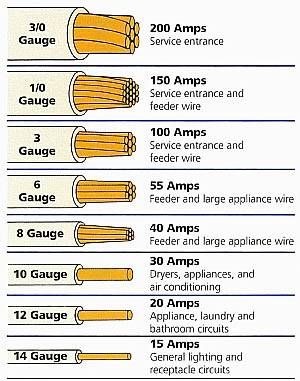
the circuit breaker size and length of run dictates the minimum wire gauge expected for that amount of electrical current…so the circuit breakers are indicative of the expected wire gauge in the wall - which is expected to be an appropriate thickess to handle the maximum load - the circuit breaker is supposed to trip offline if the current load is too high for too long - because if it allowed it to continue the wire could melt/fail/short/spark/catch-fire - which is bad

you can run 80 amps of 240v load across 16 gauge wire - but not for very long before the wire would physically melt/fail…

vice versa you can run 16 amps of load on 4 gauge wire basically indefinitely with virtually no thermal stress…

the breaker isn't about the device - it's about the wire gauge and protecting it from melting/overheating/failing causing a fire.

this is why you can pull 4 gauge wire, and slap a 40 amp EVSE on it - cause it's OVER spec - 4 gauge can handle 80 amps of load - so a 40 amp load is trivial…

this is also why ChargePoint says you can install their 50 amp EVSE on a 70/80/90/100 amp breaker - cause 70 amps it he size _REQUIRED_ to support 50 amps of load - so going bigger is no harm and actually beneficial because it's an even greater safety margin…a 50 amp EVSE charging load on a 100 amp breaker and 2 gauge wire is very very safe and trivial thermal load given the current capacity of 2 AWG wire…

you match he breaker to the wire gauge and the wire gauge to the breaker - that's the safety factors being managed by building codes - if the device you're attaching to the wire/breaker is at or below the thresholds of the breaker and the wire - it's all good…running a 16 amp EVSE on 3 gauge wire (rated for 100 amps) is very very safe and virtually no impact on wire thermals. Running 12 kW 50 amp load on 12 gauge wire would probably cause the wire to fail and has a real danger of failing with fire - unless there is a 20 amp breaker on the wire to prevent that exact scenario.

it took me years to realize that circuit breakers are not like surge protecters - Circuit breakers protect the wire from failing due to continuous loads that are too high for the wire rating/gauge - they are not about protecting the devices on the circuit…they protect the wire from failing and should always be matched - appropriate sized breaker matching minimum required gauge wire.

Porsche Taycan Recommended Charger Wire Gauge Table
Sponsored

 
Last edited:


Top