Sponsored

New Charger-related recall (for the 240 V cable) (NHTSA ID 23V-841)

daveo4EV

Well-Known Member
First Name
David
Joined
Jan 28, 2019
Threads
192
Messages
7,003
Reaction score
10,473
Location
Santa Cruz
Vehicles
Cayenne Hybrid, 911(s) GT3/Convertable
Country flag
when 'sizing' an EV charger (EVSE) one needs to distinguish between the breaker size and the actual charge rate - EVSE vendors all list their EVSE capacities differently…

some list their breaker size requirements/capabilities
other's list the actual charge rate

example:

vendor A: may list their eVSE as a "50 amp" EVSE which requires a 50 amp breaker
vendor B: may list their EVSE as a 40 amp EVSE providing a 9.6 kW charge rate

in the case listed above the 40 amp EVSE will charge your Taycan at the exact same rate as the 50 amp EVSE because they are listing two differnt aspects of the EVSE's capacity…

why?

when installing an EVSE in North America they are consider "continuous use" devices and therefore must run at 80% of the rated circuit load…to avoid overloading/over-heating/melting the wiring associated with a breaker of that size…

a 50 amp circuit breaker/circuit can only support 40 amps worth of charging "load" (math 50 * 80% = 40 amps)
a 60 amp circuit breaker/circuit can only support 48 amps worth of charging "load"
etc…(math here also)

the maximum raw charging load from _ANY_ plugbased (NEMA 14-50 or 6-50) mobile EVSE is 40 amps or 9.6 kW…which requires a 50 amp breaker/wire gauge/circuit load.

any/all 9.6 kW EVSE's require a 50 amp breaker to match circuit load requirements

if you want more than 9.6 kW - in North American your EVSE must be hardwired and therefore not moble.

common EVSE breaker sizes and their equivalent raw charge rates are listed below @ 240 Volts

20 amp breaker = 16 amp EVSE raw charge rate = 3.84 kW
30 amp breaker = 24 amp EVSE raw charge rate = 5.76 kW
40 amp breaker = 32 amp EVSE raw charge rate = 7.68 kW
50 amp breaker = 40 amp EVSE raw charge rate = 9.6 kW
----- hardwired only listed below this line -----
60 amp breaker = 48 amp EVSE raw charge rate = 11.52 kW <--- max charge rate for a "standard Taycan
80 amp breaker = 64 amp EVSE raw charge rate = 15.36 kW
100 amp breaker = 80 amp EVSE raw charge rate = 19.2 kW

the PMC+/PMCC are 50 amp devices (NEMA 14-50/6-50) and therefore are 40 amp 9.6 kW EVSE's (until they overheat or you reduce their loads to avoid the overheating).

summary: your 50 amp EVSE from 'vendor a' may in fact be identical in raw charge capacity to vendor "b"'s 40 amp EVSE - depending on which capacity they are listing in their specification sheets - one vendor is listing the breaker size - and the other vendor is listing the raw charging capacity - you need to normalize the specifications to determine if one EVSE is in fact offering more capacity than the other…

hint: there are very very few actual 50 amp raw charge rate EVSE's - that would require a very odd 63 amp circuit breaker to have an actual 50 amp EV raw charge rate (12 kW)

Update: ChargePoint flex _IS_ an actual honest to god 50 amp charge rate EVSE - but to achieve this rate it must be hardwired and installed with a 70 amp breaker - but if you want an actual host 50 amp North American EVSE - installed a 70 amp breaker with appropriate gauge wire and purchase the excellent Chargepoint flex EVSE.

hint: they probably are not - most EVSE's come in common 4 sizes: 30 amp breaker, 40 amp breaker, 50 amp breaker, 60 amp breaker - but they play with which number they highlight in the brochure.

another hint: the raw charge rate is _NOT_ what you will see from your Taycan inside your vehicle while it's charging - Porsche does not display the "raw" charge rate your Taycan is receiving - it shows the effective charge rate the battery is receiving - so for example a raw 9.6 kW (50 amp breaker/40 amp charge rate) charge session may only show 8.86 kW on the center display in the vehicle - this normal and appropriate given losses due to AC/DC conversions and other charging overhead - my 48 amp charge rate (11.5 kW raw) in my 2020 Taycan turbo shows about 10.48 kW on the lower center display when charging - as noted this is normal and appropriate given industry standard electrical overhead for this type of battery charging.
Sponsored

 
Last edited:
KLHubb

Well-Known Member
First Name
Kent
Joined
Jan 15, 2024
Threads
4
Messages
506
Reaction score
385
Location
New York
Vehicles
Taycan 4S 2009 911S 2012 Cayenne
Country flag
I may be the odd person out here, but I must confess that I have had no problems with the Porsche Charge that came with my 2020 4S. Admittedly, the charger-to-vehicle cable gets a bit warm, but not particularly worrisome. i would rather simply have Porsche replace the existing cables with ones that have larger conductors, and keep the charger. What am I missing?
 

KLHubb

Well-Known Member
First Name
Kent
Joined
Jan 15, 2024
Threads
4
Messages
506
Reaction score
385
Location
New York
Vehicles
Taycan 4S 2009 911S 2012 Cayenne
Country flag
when 'sizing' an EV charger (EVSE) one needs to distinguish between the breaker size and the actual charge rate - EVSE vendors all list their EVSE capacities differently…

some list their breaker size requirements/capabilities
other's list the actual charge rate

example:

vendor A: may list their eVSE as a "50 amp" EVSE which requires a 50 amp breaker
vendor B: may list their EVSE as a 40 amp EVSE providing a 9.6 kW charge rate

in the case listed above the 40 amp EVSE will charge your Taycan at the exact same rate as the 50 amp EVSE because they are listing two differnt aspects of the EVSE's capacity…

why?

when installing an EVSE in North America they are consider "continuous use" devices and therefore must run at 80% of the rated circuit load…to avoid overloading/over-heating/melting the wiring associated with a breaker of that size…

a 50 amp circuit breaker/circuit can only support 40 amps worth of charging "load" (math 50 * 80% = 40 amps)
a 60 amp circuit breaker/circuit can only support 48 amps worth of charging "load"
etc…(math here also)

the maximum raw charging load from _ANY_ plugbased (NEMA 14-50 or 6-50) mobile EVSE is 40 amps or 9.6 kW…which requires a 50 amp breaker/wire gauge/circuit load.

any/all 9.6 kW EVSE's require a 50 amp breaker to match circuit load requirements

if you want more than 9.6 kW - in North American your EVSE must be hardwired and therefore not moble.

common EVSE breaker sizes and their equivalent raw charge rates are listed below @ 240 Volts

20 amp breaker = 16 amp EVSE raw charge rate = 3.84 kW
30 amp breaker = 24 amp EVSE raw charge rate = 5.76 kW
40 amp breaker = 32 amp EVSE raw charge rate = 7.68 kW
50 amp breaker = 40 amp EVSE raw charge rate = 9.6 kW
----- hardwired only listed below this line -----
60 amp breaker = 48 amp EVSE raw charge rate = 11.52 kW <--- max charge rate for a "standard Taycan
80 amp breaker = 64 amp EVSE raw charge rate = 15.36 kW
100 amp breaker = 80 amp EVSE raw charge rate = 19.2 kW

the PMC+/PMCC are 50 amp devices (NEMA 14-50/6-50) and therefore are 40 amp 9.6 kW EVSE's (until they overheat or you reduce their loads to avoid the overheating).

summary: your 50 amp EVSE from 'vendor a' may in fact be identical in raw charge capacity to vendor "b"'s 40 amp EVSE - depending on which capacity they are listing in their specification sheets - one vendor is listing the breaker size - and the other vendor is listing the raw charging capacity - you need to normalize the specifications to determine if one EVSE is in fact offering more capacity than the other…

hint: there are very very few actual 50 amp raw charge rate EVSE's - that would require a very odd 63 amp circuit breaker to have an actual 50 amp EV raw charge rate (12 kW)

hint: they probably are not - most EVSE's come in common 4 sizes: 30 amp breaker, 40 amp breaker, 50 amp breaker, 60 amp breaker - but they play with which number they highlight in the brochure.

another hint: the raw charge rate is _NOT_ what you will see from your Taycan inside your vehicle while it's charging - Porsche does not display the "raw" charge rate your Taycan is receiving - it shows the effective charge rate the battery is receiving - so for example a raw 9.6 kW (50 amp breaker/40 amp charge rate) charge session may only show 8.86 kW on the center display in the vehicle - this normal and appropriate given losses due to AC/DC conversions and other charging overhead - my 48 amp charge rate (11.5 kW raw) in my 2020 Taycan turbo shows about 10.48 kW on the lower center display when charging - as noted this is normal and appropriate given industry standard electrical overhead for this type of battery charging.
Thanks for this great explanation....I have a 50 amp breaker on a 100 amp 240V 2 phase service installed in my garage, and it yields 8.6 amps to the vehicle, reduced when one approaches 90-100% charge.
I have many large woodworking tools in the garage/shop, and have often thought about upgrading to 3 phase 240V service. How would I take advantage of this when charging my vehicle? I assume that I would have to install a 100 amp breaker and an upgraded Porsche charger, both in the garage and in the vehicle.
 

daveo4EV

Well-Known Member
First Name
David
Joined
Jan 28, 2019
Threads
192
Messages
7,003
Reaction score
10,473
Location
Santa Cruz
Vehicles
Cayenne Hybrid, 911(s) GT3/Convertable
Country flag
I may be the odd person out here, but I must confess that I have had no problems with the Porsche Charge that came with my 2020 4S. Admittedly, the charger-to-vehicle cable gets a bit warm, but not particularly worrisome. i would rather simply have Porsche replace the existing cables with ones that have larger conductors, and keep the charger. What am I missing?
we dont' know what Porsche is doing for the new cable - the ONLY announced change is the addition of a thermal sensor - it's not clear they are addressing the "conductor size" in the new cable - they appear to be doubling down on the smaller physical size wire gauge, but adding a thermal sensor to prevent "melting"…that approach is sloppy engineering.

for some of us the "what your are missing" aspect is simply: it doesn't have to run that hot to achieve the same 9.6 kW charging rate.

Porsche is shipping a $3,200 EVSE (that's parts cost for a 2nd unit from suncoast porsche) that has a nominal operating temperature in excess of 160F - so they can save $7 or less on copper wire in a 14" inch power supply cable.

there are several 9.6 kW EVSE's on the North american market that do not have nominal operating temperature of 160F or more in normal use and all are high quality, run cooler, and in some cases cost less than $300

it's kind of an Electrical Engineering 101 level thing that porsche has botched, and rather than fixing it - they seem to be doubling down on a bad design and not addressing the core issue - it doesn't have to run that hot to do the job - and their solution is not to make it run cooler (like EVERY OTHER EVSE on the market) but rather add a thermal sensor which will reduce the charging speed or simply shut down the charging session when it detects a problem.

I understand your point of view, honestly I do - but it's simply sloppy engineering, there is clear and demonstrable alternative solution, and they've taken 4 years to even admit they have a problem…

a well designed product doesn't cause the power socket they are using to "melt" - Porsche's "blame" the victim approach here doesn't land well with some of us for a premium brand known for engineering

their EVSE runs hot, it does't have to run that hot, the fix is simple, and Porsche seems to be resisting it and doubling down on a bad design and was remiss to even admit they had a problem when notified about it over 3 years ago.
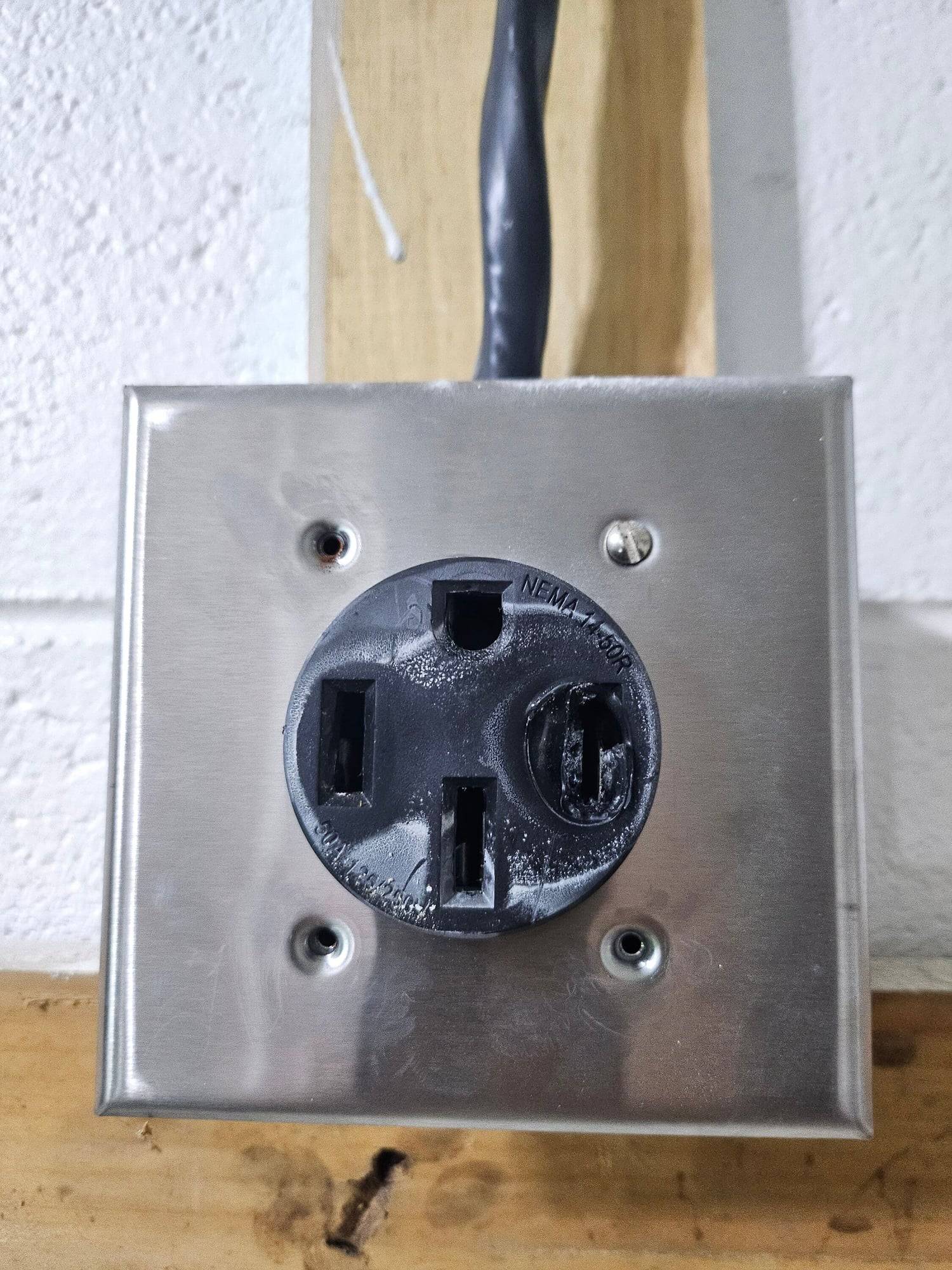
Porsche Taycan New Charger-related recall (for the 240 V cable) (NHTSA ID 23V-841) IMG_2077
 

daveo4EV

Well-Known Member
First Name
David
Joined
Jan 28, 2019
Threads
192
Messages
7,003
Reaction score
10,473
Location
Santa Cruz
Vehicles
Cayenne Hybrid, 911(s) GT3/Convertable
Country flag
Thanks for this great explanation....I have a 50 amp breaker on a 100 amp 240V 2 phase service installed in my garage, and it yields 8.6 amps to the vehicle, reduced when one approaches 90-100% charge.
I have many large woodworking tools in the garage/shop, and have often thought about upgrading to 3 phase 240V service. How would I take advantage of this when charging my vehicle? I assume that I would have to install a 100 amp breaker and an upgraded Porsche charger, both in the garage and in the vehicle.
to my knowledge there are no "3 phase" AC EVSE's for the North American market - they may exist but they are not common - and no North American EV vehicle's support 3 phase AC EV charging to my know ledge.

AC charging in North America is governed by the J-1772 L1/L2 charging standard. So all EV manufactures only produce vehicle's compatible with the specs from that standard. The J-1772 standard only covers 120V and 240V charging - and only documents the standard for charge rate of upto 80 amps (100 amp breaker). So while it's theoretically possible to charge at a faster rate with AC - no one makes a vehicle or EVSE that offers support for anything beyond 240V @ 80 amps (100 amp breaker) - which is 19.2 kW…

charge rates in excess of 19.2 kW tend to require FastDC CCS standards which covers charge rates from about 10 kW all the way upto 350 kW @ 400/800 volts DC

AC 240V charging - 19.2 kW 240V 100 amp breaker is kinda it for any retail product
DC 200/400/800V charging is the realm of commercial non-residential charging - and covers upto 350 kW charge rates…

your Taycan supports two types of charging:
  1. AC charging - both ports on either side of the vehicle via the J-1772 port
  2. DC charging - passenger side port via the CCS1 port for fastDC charging
AC charging support is limited to 240V - and max charging speed for _ANY_ North American EV is 19.2 kW (100 amp breaker/80 amp raw charge rate)

You would need the Porsche Wall Charger or Enphase/Clippercreek 100 amp EVSE on a 240V 100 amp breaker
and
the optional 19.2 kW onboard charger installed in your Taycan to achieve 19.2 kW raw charge rate.

if money is no object you coudl install a commercial FastDC charger in your workshop - and use a CCS1 EVSE to charge your Taycan at 20 kw or more depending on how big of a electrical circuit/feed you could muster…but this is both expensive and not good for daily charging because there are no timers/or battery SOC limits w/FastDc charging

the "best" you can do in terms of charging hardware is a normal 100 amp 240V circuit with appropriate 100/80 amp EVSE - that will given you a 19.2 kw raw charge rate and if you have an EV that can take it that is the fastest AC charging rate for ANY EV in North America (Tesla, GM Humbmer, Ford F150 EV, Lucid Air, Rivian, Taycan)
 
Last edited:


KLHubb

Well-Known Member
First Name
Kent
Joined
Jan 15, 2024
Threads
4
Messages
506
Reaction score
385
Location
New York
Vehicles
Taycan 4S 2009 911S 2012 Cayenne
Country flag
Thanks for this explanation. I am tempted to leave my installation as is for the time being since it has functioned without incident for 3.5 years, I use it nearly exclusively to charge, having used DC charging just 3 times. I also generally charge for relatively short times, say from 40-75/85% I occasionally charge to 100% when I travel to nearby cities.
 

KLHubb

Well-Known Member
First Name
Kent
Joined
Jan 15, 2024
Threads
4
Messages
506
Reaction score
385
Location
New York
Vehicles
Taycan 4S 2009 911S 2012 Cayenne
Country flag
to my knowledge there are no "3 phase" AC EVSE's for the North American market - they may exist but they are not common - and no EV vehicle's support 3 phase EV charging to my know ledge.

AC charging in North America is governed by the J-1772 L1/L2 charging standard. So all EV manufactures only product vehicle's compatible with the specs from that standard. The J-1772 standard only covers 120V and 240V charging - and only documents the standard for charge rate of upto 80 amps (100 amp breaker). So while it's theoretically possible to charge at a faster rate with AC - no one makes a vehicle or EVSE that offers support for anything beyond 240V @ 80 amps (100 amp breaker) - which is 19.2 kW…

charge rates in excess of 19.2 kW tend to require FastDC CCS standards which covers charge rates from about 10 kW all the way upto 350 kW @ 400/800 volts DC

AC 240V charging - 19.2 kW 240V 100 amp breaker is kinda it for any retail product
DC 200/400/800V charging is the realm of commercial non-residential charging - and covers upto 350 kW charge rates…

your Taycan supports two types of charging:
  1. AC charging
  2. DC charging
AC charging support is limited to 240V - and max charging speed for _ANY_ North American EV is 19.2 kW (100 amp breaker/80 amp raw charge rate)

You would need the Porsche Wall Charger or Enphase/Clippercreek 100 amp EVSE on a 240V 100 amp breaker
and
the optional 19.2 kW onboard charger installed in your Taycan to achieve 19.2 kW raw charge rate.

if money is no object you coudl install a commercial FastDC charger in your workshop - and use a CCS1 EVSE to charge your Taycan at 20 kw or more depending on how big of a electrical circuit/feed you could muster…but this is both expensive and not good for daily charging because there are no timers/or battery SOC limits w/FastDc charging

the "best" you can do in terms of charging hardware is a normal 100 amp 240V circuit with appropriate 100/80 amp EVSE - that will given you a 19.2 kw raw charge rate and if you have an EV that can take it that is the fastest AC charging rate for ANY EV in North America (Tesla, GM Humbmer, Ford F150 EV, Lucid Air, Rivian, Taycan)
I am thinking that I will reconsider my options, if/when the Cayman E becomes available. I plan to sell my 997.2S and go all electric at that time. Perhaps the battery and charging technology will warrant an upgrade at that time, Thanks,
 

daveo4EV

Well-Known Member
First Name
David
Joined
Jan 28, 2019
Threads
192
Messages
7,003
Reaction score
10,473
Location
Santa Cruz
Vehicles
Cayenne Hybrid, 911(s) GT3/Convertable
Country flag
request for checked submitted with requested documentation - we'll see how this goes - eMail submission

2020 Taycan Turbo
2021 Cayenne TurboS eHybrid

Tesla Universal Wall Chargers - on order
 
Last edited:


ciaranob

Well-Known Member
Joined
Jul 3, 2021
Threads
83
Messages
3,547
Reaction score
2,639
Location
Houston, TX
Vehicles
CT4S 2022 Mini Cooper S 2024 Electric in 2025/6
Country flag
request for checked submitted with requested documentation - we'll see how this goes

2020 Taycan Turbo
2021 Cayenne TurboS eHybrid

Tesla Universal Wall Chargers - on order
Emailed mine in yesterday - should be interesting!
 

KLHubb

Well-Known Member
First Name
Kent
Joined
Jan 15, 2024
Threads
4
Messages
506
Reaction score
385
Location
New York
Vehicles
Taycan 4S 2009 911S 2012 Cayenne
Country flag
Do you think that one can simply as for a service voucher, without a receipt for a charger?
 

daveo4EV

Well-Known Member
First Name
David
Joined
Jan 28, 2019
Threads
192
Messages
7,003
Reaction score
10,473
Location
Santa Cruz
Vehicles
Cayenne Hybrid, 911(s) GT3/Convertable
Country flag
Do you think that one can simply as for a service voucher, without a receipt for a charger?
doesn't hurt to try - but honestly given how new the recall is no one knows.
 

agurkas

Well-Known Member
Joined
Dec 10, 2023
Threads
17
Messages
150
Reaction score
176
Location
MA, USA
Vehicles
'23 CT4S, Volvo XC90, BMW X3
Country flag
the "best" you can do in terms of charging hardware is a normal 100 amp 240V circuit with appropriate 100/80 amp EVSE - that will given you a 19.2 kw raw charge rate and if you have an EV that can take it that is the fastest AC charging rate for ANY EV in North America (Tesla, GM Humbmer, Ford F150 EV, Lucid Air, Rivian, Taycan)
So sounds like for under grand max one can get is 12kW from ChargePoint Home Flex hardwired as long as it is on 70 or 80amp circuit (https://www.chargepoint.com/drivers/home/installation/flex/)
ClipperCreek claims 15.4kW on 80A circuit (https://enphase.com/store/ev-charge...s/clippercreek-hcs-80-ev-charger-hardwired-64) but that is $1100
 

daveo4EV

Well-Known Member
First Name
David
Joined
Jan 28, 2019
Threads
192
Messages
7,003
Reaction score
10,473
Location
Santa Cruz
Vehicles
Cayenne Hybrid, 911(s) GT3/Convertable
Country flag
So sounds like for under grand max one can get is 12kW from ChargePoint Home Flex hardwired as long as it is on 70 or 80amp circuit (https://www.chargepoint.com/drivers/home/installation/flex/)
ClipperCreek claims 15.4kW on 80A circuit (https://enphase.com/store/ev-charge...s/clippercreek-hcs-80-ev-charger-hardwired-64) but that is $1100
that's my read also - Tesla's Universal Wall charger is 11.5 kW for $595 on a 60 amp breaker (48 amp charge rate)

max charge rate for standard Taycan is 48 amps.
 

daveo4EV

Well-Known Member
First Name
David
Joined
Jan 28, 2019
Threads
192
Messages
7,003
Reaction score
10,473
Location
Santa Cruz
Vehicles
Cayenne Hybrid, 911(s) GT3/Convertable
Country flag
So sounds like for under grand max one can get is 12kW from ChargePoint Home Flex hardwired as long as it is on 70 or 80amp circuit (https://www.chargepoint.com/drivers/home/installation/flex/)
ClipperCreek claims 15.4kW on 80A circuit (https://enphase.com/store/ev-charge...s/clippercreek-hcs-80-ev-charger-hardwired-64) but that is $1100
one of the best FAQ's in the industry - kudo's to chargepoint - almost worth going with them simply for the quality of this FAQ!!

https://www.chargepoint.com/drivers/home/installation/flex/

great install guide also - https://www.chargepoint.com/resources/chargepoint-home-flex-cph50-installation-guide/
 

agurkas

Well-Known Member
Joined
Dec 10, 2023
Threads
17
Messages
150
Reaction score
176
Location
MA, USA
Vehicles
'23 CT4S, Volvo XC90, BMW X3
Country flag
that's my read also - Tesla's Universal Wall charger is 11.5 kW for $595 on a 60 amp breaker (48 amp charge rate)

max charge rate for standard Taycan is 48 amps.
I have the 19.2kW on onboard and 80a circuit to garage (well technically gauge of wire was for 100a, but since I am paranoid, I derated it to 80a)
Sponsored


Top