Sponsored

"Why Your EV Won’t Fill Up In Five" - article

Tooney

Well-Known Member
Joined
Aug 14, 2021
Threads
746
Messages
4,464
Reaction score
3,646
Location
Ohio
Vehicles
2022 Taycan 4S
Country flag
Here’s Huawei’s claim:
Huawei, the Chinese technology giant, has recently made waves in the electric vehicle (EV) industry with claims of a groundbreaking solid-state battery that could redefine the future of transportation.
According to reports from TechRadar, Huawei asserts that this new battery technology can deliver an astonishing range of up to 1,800 miles on a single charge while achieving a full recharge in under five minutes. If verified, these specifications could position Huawei as a formidable player in the EV battery race, challenging established leaders like Tesla, BYD, and CATL.

But, as usual, reality is hiding out in the fine print, ducking the spotlight while the PR machine does its victory lap. Nobody wants to talk about physics. Nobody asks how, exactly, you’re supposed to pour Niagara Falls through a garden hose.

Let’s start with the chemistry, because that’s what gets the headlines. Huawei, CATL, BYD, and every battery startup with a logo and a LinkedIn page are racing to show off lab results with solid electrolytes, nitrogen-doped sulfide electrodes, and energy densities that would make a Tesla blush. Yes, it’s impressive. Yes, it’s real science. Yes, the batteries likely exist, even if only in lab versions.

But chemistry is only half the story—the easy half, frankly. The hard part is what comes after: getting all that energy in and out of the battery without melting the neighborhood. Let’s do some back-of-the-envelope math, my favorite kind.
. . .
Charging a 600 kWh battery in 5 minutes isn’t a “nice to have” kind of deal. It’s a “requires the power output of a small hydroelectric dam” situation.

Energy equals power multiplied by time. So: 600 kWh divided by (5/60) hours is 7,200 kW—7.2 megawatts—per car. That’s not a typo. MEGAwatts. Per car. That’s the kind of load that would make your local substation break out in hives.

And it’s not just the grid. You’ll need:

  • High-voltage wiring thicker than your wrist
  • Transformers the size of shipping containers
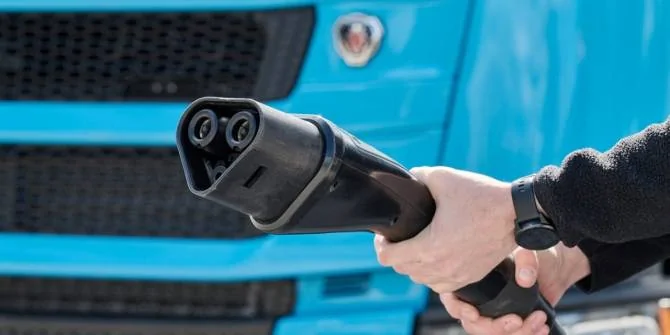
  • Power cables with active cooling, or else they’ll melt like a cheap extension cord at a Fourth of July barbecue
  • Buffer batteries to keep the grid from doing a faceplant every time someone plugs in their new wonder-car
https://wattsupwiththat.com/2025/07/04/why-your-ev-wont-fill-up-in-five/
Sponsored


thefunkygibbon

Well-Known Member
Joined
Mar 14, 2025
Threads
16
Messages
254
Reaction score
139
Location
Peterborough
Vehicles
Taycan Turbo
Country flag
pretty much a non-article, sounds like anti EV propaganda.
600kw batteries in a car is frankly not going to happen anytime in the next 20 years. maybe for trucks and such vehicles.

also , yes, obviously you wouldn't charge that in 5mins, you couldn't even charge existing battery sizes in 5 minutes. as that would take over a megawatt, which would a) vaporize any currently available charging cable without some kind of active cooling integrated into it. and b) is about the same power as 300 houses. to summarise: noone is expecting 5 mins charging at any point soon without a complete overhaul of the entire energy grid to support it.
 

j.w.s

Well-Known Member
First Name
Jeff
Joined
Oct 26, 2022
Threads
13
Messages
267
Reaction score
436
Location
San Francisco, CA USA
Vehicles
2023 Taycan GTS, 2024 Rivian R1S
Country flag
Here’s Huawei’s claim:
Huawei, the Chinese technology giant, has recently made waves in the electric vehicle (EV) industry with claims of a groundbreaking solid-state battery that could redefine the future of transportation.
According to reports from TechRadar, Huawei asserts that this new battery technology can deliver an astonishing range of up to 1,800 miles on a single charge while achieving a full recharge in under five minutes. If verified, these specifications could position Huawei as a formidable player in the EV battery race, challenging established leaders like Tesla, BYD, and CATL.

But, as usual, reality is hiding out in the fine print, ducking the spotlight while the PR machine does its victory lap. Nobody wants to talk about physics. Nobody asks how, exactly, you’re supposed to pour Niagara Falls through a garden hose.

Let’s start with the chemistry, because that’s what gets the headlines. Huawei, CATL, BYD, and every battery startup with a logo and a LinkedIn page are racing to show off lab results with solid electrolytes, nitrogen-doped sulfide electrodes, and energy densities that would make a Tesla blush. Yes, it’s impressive. Yes, it’s real science. Yes, the batteries likely exist, even if only in lab versions.

But chemistry is only half the story—the easy half, frankly. The hard part is what comes after: getting all that energy in and out of the battery without melting the neighborhood. Let’s do some back-of-the-envelope math, my favorite kind.
. . .
Charging a 600 kWh battery in 5 minutes isn’t a “nice to have” kind of deal. It’s a “requires the power output of a small hydroelectric dam” situation.

Energy equals power multiplied by time. So: 600 kWh divided by (5/60) hours is 7,200 kW—7.2 megawatts—per car. That’s not a typo. MEGAwatts. Per car. That’s the kind of load that would make your local substation break out in hives.

And it’s not just the grid. You’ll need:

  • High-voltage wiring thicker than your wrist
  • Transformers the size of shipping containers
  • Power cables with active cooling, or else they’ll melt like a cheap extension cord at a Fourth of July barbecue
  • Buffer batteries to keep the grid from doing a faceplant every time someone plugs in their new wonder-car
https://wattsupwiththat.com/2025/07/04/why-your-ev-wont-fill-up-in-five/
Quite the straw-man argument there! 600 kWh? How about more like 100. 400V solid state batteries? More like 800, 1000, or more. Active cooling? It's everywhere already.

So what about a more normal 100 kWh battery, which would require 1.2 megawatts? That's less than four EA chargers with their theoretical 350kw output, a bit more than two Gravity 500kW chargers, or exactly one Tesla Semi charger or one of the new BYD chargers in China. Or - just to drive the point home - 1/3 of the planned capacity of the Metawatt charging standard being built now for trucks. So actually not a problem at all it seems.
 

refazi

Well-Known Member
First Name
Refael
Joined
Mar 28, 2020
Threads
6
Messages
509
Reaction score
270
Location
San Francisco, CA
Vehicles
2025 Taycan Turbo S, 2025 Taycan CT 4, 2024 Audi e-tron RS GT
Country flag
It's just a matter of time until the Mega watt plugs AKA MCS will be everywhere.. just like it took a while for CCS/NACS to be deployed
 

chun

Well-Known Member
Joined
Feb 4, 2024
Threads
27
Messages
2,354
Reaction score
2,109
Location
Switzerland
Vehicles
Taycan Turbo 2020, Cayman GT4
Country flag
Quite the straw-man argument there! 600 kWh? How about more like 100. 400V solid state batteries? More like 800, 1000, or more. Active cooling? It's everywhere already.

So what about a more normal 100 kWh battery, which would require 1.2 megawatts? That's less than four EA chargers with their theoretical 350kw output, a bit more than two Gravity 500kW chargers, or exactly one Tesla Semi charger or one of the new BYD chargers in China. Or - just to drive the point home - 1/3 of the planned capacity of the Metawatt charging standard being built now for trucks. So actually not a problem at all it seems.
The load on the infrastructure is also overly exaggerated. Most of the sites that would offer this kind of speed would have local battery storage, that allow fast discharge, and would charge at lower speeds from the grid in period of low load on the grid, such as night time, when the energy is priced lower also

And we have proof of that, Chinese charging infrastructure, with thousands of 500kw chargers, tens of thousands of 300-400kw chargers, all putting "load on the grid" at the same time, only that the load is on the on-site storage batteries, and not directly on the grid. And soon hundreds/thousands of megawatt chargers.

And most countries have yet to properly invest in solar panels. Put it on the roof of every building in Zruich, and not only will it produce loads of energy for "free", but also reduce city temperature. Or how about putting it on the empty side of alps facing the sun all day long? Or actually going back to nuclear plants... The grid will be just fine, if countries don't follow USA in going back to coal :)


refazi

Well-Known Member
First Name
Refael
Joined
Mar 28, 2020
Threads
6
Messages
509
Reaction score
270
Location
San Francisco, CA
Vehicles
2025 Taycan Turbo S, 2025 Taycan CT 4, 2024 Audi e-tron RS GT
Country flag
Right now the issue is not the load, but the grid transmission capacity, to get a big transformer to down convert the high voltage the wait is many long months..
AI and Bitcoin mining data centers have a similar challenge, that's why batteries are a great solution for the short term.
 

TonyR

Well-Known Member
First Name
Tony
Joined
Feb 27, 2025
Threads
2
Messages
118
Reaction score
66
Location
Lancashire, UK
Vehicles
Taycan 4s, Porsche Cayman, BMW520, Toyota Prius.
Country flag
It's just a matter of time until the Mega watt plugs AKA MCS will be everywhere.. just like it took a while for CCS/NACS to be deployed
Have you seen the size of the cables involved in those?
 

TonyR

Well-Known Member
First Name
Tony
Joined
Feb 27, 2025
Threads
2
Messages
118
Reaction score
66
Location
Lancashire, UK
Vehicles
Taycan 4s, Porsche Cayman, BMW520, Toyota Prius.
Country flag
Quite the straw-man argument there! 600 kWh? How about more like 100. 400V solid state batteries? More like 800, 1000, or more. Active cooling? It's everywhere already.

So what about a more normal 100 kWh battery, which would require 1.2 megawatts?
Except they are claiming 1800 miles, not 300 in 5 mins. Electric motors are not going to increase in efficiency much so it's all going to be in battery size and energy storage. Voltage doesn't change the amount of energy you need, it just reduces the thickness of cable you need. So 1800 miles is going to need 6x the power than 300 miles.


chun

Well-Known Member
Joined
Feb 4, 2024
Threads
27
Messages
2,354
Reaction score
2,109
Location
Switzerland
Vehicles
Taycan Turbo 2020, Cayman GT4
Country flag
Electric motors are not going to increase in efficiency much
Wield claim.

There already is major differences from manufacturer to manufacturer in terms of efficiency.

And yes, those claims are laboratory claims.

Unless your car is 15m long, it won't ever have a 600kwh battery to have 1800miles of range :)
 

whitex

Well-Known Member
Joined
Jul 30, 2021
Threads
87
Messages
8,213
Reaction score
7,248
Location
WA, USA
Vehicles
2023 Taycan TCT, 2024 Q8 eTron P+
Country flag
Total FUD and click bate. Since “your EV” means “EV with 600kWh+ battery”, it doesn’t apply to any consumer EV, not a one. I can use the very same argument for ICE cars, let’s assume the gas tank is 600 gallons, almost no gas station can fill it in 5 minutes, now let’s assume there are 12 cars filling up at the same time… (do your own math, you can make some sensational claims too).
 

Jasper4S

Well-Known Member
First Name
Jasper
Joined
Oct 5, 2022
Threads
27
Messages
1,472
Reaction score
2,150
Location
Netherlands
Vehicles
Taycan 4s ST, Jeep Avenger EV, KTM Duke 790
Country flag
If true, why would 5 minutes be an USP if I had a 600kw battery? I should rest every couple of hours anyway, and I’m in no rush after 12 hours of non stop driving. For me the “problem” with EV’s is either resolved with bigger batteries or faster charging. Not both as that will trigger the human/driver limit.

Cool it will come in the far future, but imo it solves a problem that doesn’t exist.
 

BjörnfromHamburg

Well-Known Member
First Name
Björn
Joined
Sep 7, 2024
Threads
2
Messages
744
Reaction score
740
Location
Hamburg, Germany
Vehicles
Taycan Turbo S Cross Turismo 2022, 992.2 CarreraT convertible
Country flag
Of course faster charging is always a big selling point.
But yet already my J1.1 on road trips gives me a quite perfect pause-timer with it's charging necessity, almost always being ready to go quicker than I am.
The J1.2 is even better, in plateau and thermal issues.

I would instead appreciate truely reliable 300 kW chargers at any time, without being restricted to 150 kW every now and than.

The need for charging 5-80 % in 5 minutes for me would be relevant maybe once or twice a year.

For the further-away future of e-mobilitiy with much higher number of travelling cars, it will be useful though, regarding the rate of vehicles being charged per hour.
 

bn8959

Well-Known Member
First Name
Ben
Joined
Mar 29, 2023
Threads
16
Messages
595
Reaction score
435
Location
UK, South West
Vehicles
Taycan GTS ST (MY24)
Country flag
For me I don’t have any issue with range or charging speed. The crux is the availability of chargers - either there needs to be enough quantity of chargers that I can rock up, charge and take as much time as I need (which puts the preference on range over charge speed), OR the charging needs to be fast enough that I wait with the car for a short period of time, then move off and park elsewhere to take a break (similar to refueling ICE), which puts the preference well towards very fast charging. I don’t feel I need both. People hogging chargers is already a problem enough.
Sponsored


Top