Sponsored

Tesla S v Taycan

daveo4EV

Well-Known Member
First Name
David
Joined
Jan 28, 2019
Threads
192
Messages
7,003
Reaction score
10,473
Location
Santa Cruz
Vehicles
Cayenne Hybrid, 911(s) GT3/Convertable
Country flag
I went from a Tesla Model S performance to a Taycan Turbo S. The differences: -

1. The Taycan is much faster, particularly in the midrange.
2. The Taycan has a better ride.
3. The Taycan is quieter at motorway speeds.
4. The Taycan charges faster.
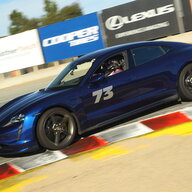
5. The Taycan performs really well on a track. It corners well and I can achieve very reasonable lap times. You could not take a Model S on a track. It would be dangerous.
6. It goes without saying that build quality, customer service, and reliability are far better.

Charging In the UK, most major routes now have multiple hubs so this perceived advantage that Tesla is purported to have is no longer true. Ionity is now plug and charge, so the experience is no difference. The biggest single advantage is that Ionity is now 30p per kWh, half of the price of Tesla network.
  1. I found my Model 3P to be much quicker than my 2020 Taycan Turbo in general day to day driving
  2. yes - 100% yes
  3. Taycan next level quiet vs. Model S or Model 3 - just soooo good.
  4. Taycan only charges faster at a "functional" charging stall…that is a bit more hit/miss in North America vs. the Supercharger network
  5. Taycan peforms about as well on track as a Model 3 in terms of stamina - braking and handling are better for the Taycan - but both vehicle's lack stamina - the Model S is abysmal on track and not comparable.
  6. Taycan has spent more time in service that all of my 6 Teslas combined since 2013 - so again this is hit/miss - 2 weeks in service for an "OTA" update is embarrassing vs. Tesla's rock solid and frequent OTA updates with no time consuming dealer visit required - and Tesla will never tell you none of their "EV certified techs" are busy or unavailable to work on your car - because all their techs are certified to work on EV's.
  7. Ride quality is with out compare - Taycan wins hands down vs. Model 3/Y - but is better than S/X with air suspension but the S/X with air-suspension are pretty good - but not Taycan good.

that being said I still prefer the Taycan to any current Model S offering - but let's keep it realistic
Sponsored

 
Last edited:

grahamsimmonds

Well-Known Member
First Name
Graham
Joined
Nov 18, 2019
Threads
5
Messages
154
Reaction score
336
Location
Portsmouth UK
Vehicles
Taycan Turbo S
Country flag
#1 I found my Model 3P to be much quicker than my 2020 Taycan Turbo in general day to day driving
#2 yes - 100% yes
#3 next level quiet vs. Model S or Model 3 - just soooo good.
#4 the Taycan only charges faster at a "functional" charging stall…that is a bit more hit/miss in North America vs. the Supercharger network
#5 the Taycan peforms about as well on track as a Model 3 in terms of stamina - braking and handling are better for the Taycan - but both vehicle's lack stamina - the Model S is abysmal on track and not comparable.
#6 my Taycan has spent more time in service that all of my 6 Teslas combined since 2013 - so again this is hit/miss - 2 weeks in service for an "OTA" update is embarrassing vs. Tesla's rock solid and frequent OTA updates with no time consuming dealer visit required.

that being said I still prefer the Taycan to any current Model S offering - but let's keep it realistic
I am talking about owning a Model S in the UK, not the US. From the sounds of it, non Tesla charging in the UK is far better than it is in the US.

Taking a stock Model 3 Performance on a track would be dangerous too. For a start, Porsche uses DOT4 brake fluid where Tesla use standard DOT1 brake fluid which boils under stress, leading to your pedal hitting the floor. The brake pads and discs are also standard road ones. You would have to replace those before going to a track. To be fair, this is the same for most road cars and we do have a number of Model 3 owners who take their cars to track days but they are all modified at least as above.

I also wonder about the standard of Porsche service being worse in the US? I have had no issues and fantastic service in the two years I have owned the car. Compared to my Tesla MSP which had to be resprayed after delivery, have its front drive shafts replaced after 20,000 miles, its cast Turbine 21s replaced due to vibration (all Porsche wheels are forged), and all of the usual issues like MCU1 failure, DRL failure, yellow borders, auto wipers and headlights not working etc., UK Tesla customer service is appalling and getting worse. We are treated like a colony here. Nearest dealer is 40 miles away as opposed to 4.5 miles to my nearest OPC. I could not wait to get rid of it.
 

AngloCan

Member
First Name
Mike
Joined
May 30, 2022
Threads
0
Messages
15
Reaction score
7
Location
Calgary
Vehicles
AMG GLC63S, 2020 TTS
Country flag
What are you talking about, any hit to a charge door dislodging the outside shell could easily land that shell as shown in the picture. I guarantee you no vandal staged it there, or they probably would have thrown it like a Frisbee or taken with as a souvenir.

Not saying this wasn't vandalism by the way, only that the picture doesn't prove it. Also, if someone wants to vandalize your car, perhaps charge door is cheaper to fix than a broken side mirror, broken charge port, or even keyed paint job. See this video of what vandals tried with an EV which didn't have an easy door to break.
Why, just why? What is wrong with this generation that they can't find something better to do with their time - like read tire sidewalls on the nearest motorway! :devil: We don't get the luxury of Sentry Mode either with a side-on attack unlike some Tesla's! For me, having the powered doors is one less thing to worry about if I'm charging in public. I'll be interested to see how they fair with a typical Canadian winter...


 

jontybutts

Well-Known Member
First Name
Jonty
Joined
Mar 31, 2021
Threads
4
Messages
279
Reaction score
532
Location
Devon
Vehicles
Eletre R, Taycan
Country flag
As someone who was also a long term sufferer of various Tesla mobiles I can honestly say I miss absolutely nothing about them.
I now spontaneously burst out in laughter when I see someone suffering the same delusions I did when I owned one…..that they are any good.
I laugh a lot as there are literally hundreds on every journey nowadays, all identical, all I know, admiring me in a proper car that is also electric…
I have the electric charge covers, would not be without them.
 

whitex

Well-Known Member
Joined
Jul 30, 2021
Threads
87
Messages
8,198
Reaction score
7,236
Location
WA, USA
Vehicles
2023 Taycan TCT, 2024 Q8 eTron P+
Country flag
#6 my Taycan has spent more time in service that all of my 6 Teslas combined since 2013 - so again this is hit/miss - 2 weeks in service for an "OTA" update is embarrassing
It's interesting how OTA has different definitions. I see some manufacturers define it as "downloaded through internet to a dealer for installation". It is still embarrassing for the update to take that long though. They do have an OTA module in the car, but perhaps they failed to account for days long updates, so the opted not to use it? Or maybe the update process is fragile and requires trained personnel to not brick the car accidentally?


daveo4EV

Well-Known Member
First Name
David
Joined
Jan 28, 2019
Threads
192
Messages
7,003
Reaction score
10,473
Location
Santa Cruz
Vehicles
Cayenne Hybrid, 911(s) GT3/Convertable
Country flag
It's interesting how OTA has different definitions. I see some manufacturers define it as "downloaded through internet to a dealer for installation". It is still embarrassing for the update to take that long though. They do have an OTA module in the car, but perhaps they failed to account for days long updates, so the opted not to use it? Or maybe the update process is fragile and requires trained personnel to not brick the car accidentally?
from articles I've read they are not quite ready for true OTA updates - the 12V battery is not capable of running the vehicle systems during heavy activity with the main systems offline - so for "big" updates you have to have the vehicle attached to external 12V power supply to make sure it doesn't die mid-update…

combine this with lead times, limited technical staff, normal dealer service bay scheduling, and other overhead and it can easily take 2 weeks to apply a 1/2 day update…more if there are problems with the update procedures.

basically they are really really far behind Tesla/Lucid/Rivian in this space - all o which are vehicle built from ground up to be able to do this sort of thing - the legacy guys are at a disadvantage here.
 

simcity

Well-Known Member
First Name
Sean
Joined
May 22, 2022
Threads
40
Messages
1,546
Reaction score
1,288
Location
Suffolk, UK
Vehicles
'23 Taycan Turbo
Country flag
from articles I've read they are not quite ready for true OTA updates - the 12V battery is not capable of running the vehicle systems during heavy activity with the main systems offline - so for "big" updates you have to have the vehicle attached to external 12V power supply to make sure it doesn't die mid-update…

combine this with lead times, limited technical staff, normal dealer service bay scheduling, and other overhead and it can easily take 2 weeks to apply a 1/2 day update…more if there are problems with the update procedures.

basically they are really really far behind Tesla/Lucid/Rivian in this space - all o which are vehicle built from ground up to be able to do this sort of thing - the legacy guys are at a disadvantage here.
Basically they (Porsche) are a 'car' company.

Tesla is a software company.
 

whitex

Well-Known Member
Joined
Jul 30, 2021
Threads
87
Messages
8,198
Reaction score
7,236
Location
WA, USA
Vehicles
2023 Taycan TCT, 2024 Q8 eTron P+
Country flag
from articles I've read they are not quite ready for true OTA updates - the 12V battery is not capable of running the vehicle systems during heavy activity with the main systems offline - so for "big" updates you have to have the vehicle attached to external 12V power supply to make sure it doesn't die mid-update…

combine this with lead times, limited technical staff, normal dealer service bay scheduling, and other overhead and it can easily take 2 weeks to apply a 1/2 day update…more if there are problems with the update procedures.

basically they are really really far behind Tesla/Lucid/Rivian in this space - all o which are vehicle built from ground up to be able to do this sort of thing - the legacy guys are at a disadvantage here.
If it was just the 12V issue, they could just copy the solution from Tesla and others - keep the HV battery ON with the DC2DC converter during the update. They obviously have that capability if you can preheat the car from the app. I suspect the issue is much deeper than that. True OTA updates are very complex, I should know, as I've spent last few years working in that space. What seems trivial "oh, just press a button, wait a few minutes, and look, I have new OS on my device" takes a lot of orchestration under the hood to do it reliably, securely, and avoid bricking the device if something goes wrong. That is a very different mindset than typical automotive tech connecting to individual ECU CAN buses and deploying firmware one at a time.


daveo4EV

Well-Known Member
First Name
David
Joined
Jan 28, 2019
Threads
192
Messages
7,003
Reaction score
10,473
Location
Santa Cruz
Vehicles
Cayenne Hybrid, 911(s) GT3/Convertable
Country flag
If it was just the 12V issue, they could just copy the solution from Tesla and others - keep the HV battery ON with the DC2DC converter during the update. They obviously have that capability if you can preheat the car from the app. I suspect the issue is much deeper than that. True OTA updates are very complex, I should know, as I've spent last few years working in that space. What seems trivial "oh, just press a button, wait a few minutes, and look, I have new OS on my device" takes a lot of orchestration under the hood to do it reliably, securely, and avoid bricking the device if something goes wrong. That is a very different mindset than typical automotive tech connecting to individual ECU CAN buses and deploying firmware one at a time.
I agree and understand - I have 30+ years doing software professionally for major tech firm(s) - the legacy auto guys have their work cut out for them given their supply chain - hardware & software…

it's a daunting task - and not one I feel they realize they need to take on.
 

f1eng

Well-Known Member
First Name
Frank
Joined
Aug 19, 2021
Threads
48
Messages
4,765
Reaction score
8,335
Location
Oxfordshire, UK
Vehicles
Taycan CT4S, Ferrari 355, Merc 500E, Prius PHV
Country flag
If it was just the 12V issue, they could just copy the solution from Tesla and others - keep the HV battery ON with the DC2DC converter during the update. They obviously have that capability if you can preheat the car from the app. I suspect the issue is much deeper than that. True OTA updates are very complex, I should know, as I've spent last few years working in that space. What seems trivial "oh, just press a button, wait a few minutes, and look, I have new OS on my device" takes a lot of orchestration under the hood to do it reliably, securely, and avoid bricking the device if something goes wrong. That is a very different mindset than typical automotive tech connecting to individual ECU CAN buses and deploying firmware one at a time.
I agree and understand - I have 30+ years doing software professionally for major tech firm(s) - the legacy auto guys have their work cut out for them given their supply chain - hardware & software…

it's a daunting task - and not one I feel they realize they need to take on.
It seems to me it is also probably considerably complicated by the multiple option choices, some probably using legacy controllers.
A Tesla has either a standard configuration, or a "self driving" one, that means any update will be for one of two.
A Taycan may or may not have:-
Air suspension
Torque vectoring
Active anti-roll bars
rear axle steering

Just this combination of possibilities increases both the number of variants of the update software/firmware and the possibility of bugs.

I suspect straightforward OTA updates on Porsches will only happen after their options list looks like a Teslas, ie blank.
 

simcity

Well-Known Member
First Name
Sean
Joined
May 22, 2022
Threads
40
Messages
1,546
Reaction score
1,288
Location
Suffolk, UK
Vehicles
'23 Taycan Turbo
Country flag
It seems to me it is also probably considerably complicated by the multiple option choices, some probably using legacy controllers.
A Tesla has either a standard configuration, or a "self driving" one, that means any update will be for one of two.
A Taycan may or may not have:-
Air suspension
Torque vectoring
Active anti-roll bars
rear axle steering

Just this combination of possibilities increases both the number of variants of the update software/firmware and the possibility of bugs.

I suspect straightforward OTA updates on Porsches will only happen after their options list looks like a Teslas, ie blank.
It’s also very much how the electronics are architected. Tesla has one MCU that does everything (and an additional self driving one).

Legacy manufacturers still use the distributed CANbus model with dozens of ECUs for separate functions. Usually with hardware from someone like Bosch or Valeo.

When you architect and control the whole hardware and software stack and have one or two ECUs then updates can be much simpler.
 

whitex

Well-Known Member
Joined
Jul 30, 2021
Threads
87
Messages
8,198
Reaction score
7,236
Location
WA, USA
Vehicles
2023 Taycan TCT, 2024 Q8 eTron P+
Country flag
It seems to me it is also probably considerably complicated by the multiple option choices, some probably using legacy controllers.
A Tesla has either a standard configuration, or a "self driving" one, that means any update will be for one of two.
A Taycan may or may not have:-
Air suspension
Torque vectoring
Active anti-roll bars
rear axle steering

Just this combination of possibilities increases both the number of variants of the update software/firmware and the possibility of bugs.

I suspect straightforward OTA updates on Porsches will only happen after their options list looks like a Teslas, ie blank.
I respectfully disagree with your assessment. Proper OTA can absolutely be done (and has been done), though by no means is it simple. It has to be designed from the get-go however, from when you start designing hardware, rather than tacked on as an afterthought.

I have been working on OTA for automotive for a few years now, including some who got it right (or close), and others who are constantly dragged down by their and their suppliers legacy development models. What you describe is in fact a problem, but that is more of a problem in validation, as it creates a large number of configuration combinations. That can actually be overcome by proper modular design.

You mention Tesla not having many options, however historically their OTA has been even more of an exploding matrix of combinations. For the first 4 years, Tesla had a la carte options which created a huge numbers of combinations (at least 3 different suspensions, 3 different versions of MCU1, 2 different winter packages, 4 different electronically controlled seats, over 20 different battery configurations (7 capacities officially, but each one had multiple revisions of hardware), 3 different wheels, etc - that's just in the first 4 years before Autopilot 2 which added a whole lot software to OTA). It actually did make testing on all possible combinations impossible, so sometimes an update would go out which would not work on a particular configuration (ask people with executive seats, who once had to live a few weeks with only half their seats being heated, since Tesla QA never had even one such car to test on). Over time Tesla standardized and simplified their configurations but continued to innovate. In the first years Elon was proud of the fact that Tesla changed their hardware every 2 weeks. The number of configurations in the field was staggering, and yet their OTA worked 99.999% of the time. Yes at first there were a few firmwares not updatable over the air (e.g. drive unit) but eventually that became updatable too. Both innovation and component shortages caused Tesla to use substitute chips in their cars, which require different firmware. I would be willing to bet Tesla has many, many, more 2012-2022 Model S (all still get OTA) configuration combinations out there than Taycans have, as far as software is concerned. Tesla now has 4 models with similarly rich history of different hardware in them, all of which receive OTA updates.

Tesla has a few advantages here:
  1. Designed from scratch - no legacy designs and processes to inherit
  2. Designed for OTA updatability from the very beginning - much higher priority than traditional automakers and their suppliers
  3. No dealers - no problems with OTA features or updates pissing off dealers who feel they are losing revenue.
  4. Vertical integration - a lot of stuff is done in-house, no need to deal with Tier 1's and their legacy designs and processes or update protocols. One dictator who can push a unified OTA design on everything, vs. having fight different suppliers who have engineering teams with different ideas/solutions.
  5. Willing to take greater risks than others
  6. Continuous Integration model - updates going out as often as weekly.
The last one is a bit controversial because it basically means updates go out with much less testing that Porsche for example, however they go out to limited number of people from the those who chose the "advanced" (bleeding edge) update stream, and telemetry plus user feedback is fed back into engineering to fix any issues which are found before sending out to more people, then even more people, and on, and on. People who choose "standard" updates, only get updates which few tens of thousands of other cars already got and didn't report anything critical. It doesn't mean updates don't have bugs, but it does mean bugs get fixed quickly. This model of course has many drawbacks too, like forcing everyone to get latest software means driving a 5 year old Tesla is like using a 5 year old iPhone, you still got the latest iOS, but some features are missing due to lack of new hardware, and it runs ever more slowly. Some, like me, also don't like new UI for example as it was designed for show rather than functionality, but you have to take the update if for no other reason but to get security patches (remember, it's a 24/7 connected device).
 

f1eng

Well-Known Member
First Name
Frank
Joined
Aug 19, 2021
Threads
48
Messages
4,765
Reaction score
8,335
Location
Oxfordshire, UK
Vehicles
Taycan CT4S, Ferrari 355, Merc 500E, Prius PHV
Country flag
I respectfully disagree with your assessment. Proper OTA can absolutely be done (and has been done), though by no means is it simple. It has to be designed from the get-go however, from when you start designing hardware, rather than tacked on as an afterthought.

I have been working on OTA for automotive for a few years now, including some who got it right (or close), and others who are constantly dragged down by their and their suppliers legacy development models. What you describe is in fact a problem, but that is more of a problem in validation, as it creates a large number of configuration combinations. That can actually be overcome by proper modular design.

You mention Tesla not having many options, however historically their OTA has been even more of an exploding matrix of combinations. For the first 4 years, Tesla had a la carte options which created a huge numbers of combinations (at least 3 different suspensions, 3 different versions of MCU1, 2 different winter packages, 4 different electronically controlled seats, over 20 different battery configurations (7 capacities officially, but each one had multiple revisions of hardware), 3 different wheels, etc - that's just in the first 4 years before Autopilot 2 which added a whole lot software to OTA). It actually did make testing on all possible combinations impossible, so sometimes an update would go out which would not work on a particular configuration (ask people with executive seats, who once had to live a few weeks with only half their seats being heated, since Tesla QA never had even one such car to test on). Over time Tesla standardized and simplified their configurations but continued to innovate. In the first years Elon was proud of the fact that Tesla changed their hardware every 2 weeks. The number of configurations in the field was staggering, and yet their OTA worked 99.999% of the time. Yes at first there were a few firmwares not updatable over the air (e.g. drive unit) but eventually that became updatable too. Both innovation and component shortages caused Tesla to use substitute chips in their cars, which require different firmware. I would be willing to bet Tesla has many, many, more 2012-2022 Model S (all still get OTA) configuration combinations out there than Taycans have, as far as software is concerned. Tesla now has 4 models with similarly rich history of different hardware in them, all of which receive OTA updates.

Tesla has a few advantages here:
  1. Designed from scratch - no legacy designs and processes to inherit
  2. Designed for OTA updatability from the very beginning - much higher priority than traditional automakers and their suppliers
  3. No dealers - no problems with OTA features or updates pissing off dealers who feel they are losing revenue.
  4. Vertical integration - a lot of stuff is done in-house, no need to deal with Tier 1's and their legacy designs and processes or update protocols. One dictator who can push a unified OTA design on everything, vs. having fight different suppliers who have engineering teams with different ideas/solutions.
  5. Willing to take greater risks than others
  6. Continuous Integration model - updates going out as often as weekly.
The last one is a bit controversial because it basically means updates go out with much less testing that Porsche for example, however they go out to limited number of people from the those who chose the "advanced" (bleeding edge) update stream, and telemetry plus user feedback is fed back into engineering to fix any issues which are found before sending out to more people, then even more people, and on, and on. People who choose "standard" updates, only get updates which few tens of thousands of other cars already got and didn't report anything critical. It doesn't mean updates don't have bugs, but it does mean bugs get fixed quickly. This model of course has many drawbacks too, like forcing everyone to get latest software means driving a 5 year old Tesla is like using a 5 year old iPhone, you still got the latest iOS, but some features are missing due to lack of new hardware, and it runs ever more slowly. Some, like me, also don't like new UI for example as it was designed for show rather than functionality, but you have to take the update if for no other reason but to get security patches (remember, it's a 24/7 connected device).
I am sure you are right, my point was less whether or not it is feasible to send updates OTA and more the difficulty of a bug free integration of all the functions and updates on a potentially complex combination of new and legacy controllers..

Mind you I have switched off automatic updates on any devices I own so I can decide when, or even whether, to implement them.

I use my own mass storage here on 5 Drobo devices, the latest version of OSX doesn’t support Dropbox and they aren’t going to change to suit. If I had left auto upgrades on I would have been screwed.
 

whitex

Well-Known Member
Joined
Jul 30, 2021
Threads
87
Messages
8,198
Reaction score
7,236
Location
WA, USA
Vehicles
2023 Taycan TCT, 2024 Q8 eTron P+
Country flag
I am sure you are right, my point was less whether or not it is feasible to send updates OTA and more the difficulty of a bug free integration of all the functions and updates on a potentially complex combination of new and legacy controllers..
OTA is always complex, especially on car, even if the car came in a single configuration. This is because it has many firmwares for many ECUs (controllers), which come from different vendors too, all are flashed differently, have a particular order in which they need to be updated, you have to handle what happens if one of the fails to update (can you revert it, in what order does the revert need to happen, etc). I won't bore you with the details, sufficed to say, it is very complex to get it right. The good news is, once you get it right, the OTA should be scalable to multiple configurations. Of course validation of software on a large configuration matrix is a separate topic, but here we are just talking about Porsche not being able to apply updated to a Taycan while it's parked in customer's garage.

Mind you I have switched off automatic updates on any devices I own so I can decide when, or even whether, to implement them.

I use my own mass storage here on 5 Drobo devices, the latest version of OSX doesn’t support Dropbox and they aren’t going to change to suit. If I had left auto upgrades on I would have been screwed.
I get it, though by discontinuing updates your devices become vulnerable to well known cyber security attacks. Take almost any phone which has not been updated for a couple of years, you can compromise it with well known exploits.

Personally I just bought a decommissioned server, put it in a rack, put fresh drives in it, installed Windows Server on it, and turned it into a family storage currently with 16TB RAID 1 drive, with VPN support when out of the house, and nightly backups to another 16TB drive (used to be tape backup, but hard drives are just cheaper). The nice thing about Windows file sharing, it's unlikely to get discontinued on devices. With RAID I can easily swap in for failed drives without the server missing a beat (which does happen every few years).
 

Scandinavian

Well-Known Member
First Name
Peter
Joined
Nov 3, 2019
Threads
52
Messages
3,904
Reaction score
3,549
Location
France
Vehicles
Taycan T, Aston Martin DB9, Porsche 996 C4 Cab, i4
Country flag
OTA is always complex, especially on car, even if the car came in a single configuration. This is because it has many firmwares for many ECUs (controllers), which come from different vendors too, all are flashed differently, have a particular order in which they need to be updated, you have to handle what happens if one of the fails to update (can you revert it, in what order does the revert need to happen, etc).
My SA told me there are 100 ECU’s in the Taycan, so what you described is exactly what he told me.

And as you say supplied by a variety of sub contractors, all with their own firmware. Wonder how they all handle the variety of chips now that there is a shortage.
Sponsored


Top