Sponsored

New Tesla Universal Charging not working (nothing happens at all)

Scandinavian

Well-Known Member
First Name
Peter
Joined
Nov 3, 2019
Threads
52
Messages
3,907
Reaction score
3,552
Location
France
Vehicles
Taycan T, Aston Martin DB9, Porsche 996 C4 Cab, i4
Country flag
Nothing up my sleeve here. I simply want to know how much of the power the Tesla EVSE is supplying is making its way to the Taycan.
Here are a few data points for you. I can not say how accurate my consumption figure from my panel is but from my panel a Tesla wall connector is drawing 10.95 to 11.05 kW. Some fluctuation happens which I think is due to fluctuations in the supply voltage. This is on 400 volt , 3 phase supply.

The car then reports 10.2 kW also some times fluctuation but a bit smoother it feels.

Now even more interesting is how much actually goes into the battery and looking at CarScanner app that figure can vary quite a lot, depending on heating requirement of the car and battery.

Car scanner reported at the same time 9.6 kW into the battery

With reservation for errors in the measuring equipment in the house and apps, the following is what I have observed.

Supply From panel 11.0. kW
Charging display car 10.2 kW
Battery supply 9.6 kW

I have an older Tesla unit so I can not connect with any app to see what it reports.

So 10 to 12% loss through all the cables, connectors etc, panel to EVSE, EVSE to car etc, and all charging equipment involved.

Nothing however gets in any way hot, but there is a difference in temperature to the surrounding that you can notice.
Sponsored
 

daveo4EV

Well-Known Member
First Name
David
Joined
Jan 28, 2019
Threads
193
Messages
7,028
Reaction score
10,511
Location
Santa Cruz
Vehicles
Cayenne Hybrid, 911(s) GT3/Convertable
Country flag
Nothing up my sleeve here. I simply want to know how much of the power the Tesla EVSE is supplying is making its way to the Taycan.
EVSE's are _NOT_ chargers - they are off/on flow control switches - no more and/or no less than exactly the the raw amount of power based on the formula (watts = volts * amps) will make it to the car…

for any given EVSE my 2020 Taycan Turbo reports the following "in car" kW from various EVSE's I've tried over the years

48 amps @ 240 volts = 11.52 kW "raw" - shows up as about 10.68 kW in the car charging the battery
40 amps @ 240 volts = 9.6 kW "raw" - shows up as about 8.86 kW in the car charging the battery
32 amps @ 240 volts = 7.68 kW "raw" - shows up as about 6.8 kW in the car charging the battery

the different between the raw power and hte actual power charging the battery has nothing to do with the EVSE - but rather the losses incurred by the vehicle's on board systems (there is alwasy some loss for the AC/DC conversation) and then there is overhead of power being used by other systems - Porsche's in car software display is design by Porsche to show the power actually being sent to the battery rather than the "raw" input power. The numbers are inilne with normal Electrical Engineering designs for AC/DC LiON charging systems.

Any variation in the "raw" amount of power being delivered has nothing to do with the EVSE but rather tends to be variation inherient in the variations of grid-supplied voltages - 240V is the "ideal" voltage and "the goal" but in practice north American grid voltage can vary from as low as 210V and as high as 250 volts…given that watts is Volts * amps - this means for any given 40 amp circuit in north america a range of 8.4 kW to 10 kW would be nominal for a 40 amp circuit and not a cause for concern.

If you want a metaphor an EVSE is much more like a "water valve" than a "water filter" - all North American EVSE's simply "pass through" what ever raw AC power they are receiving from the power they are being supplied - their _ONLY_ role is to start/stop the flow of power based on commands from the onboard charging/hardware/software embedded in the vehicle. They also "report" the amount of amps they can provide - so that the vehicle does not request/consume too much power and overload the circuit.

But one EVSE can not be "faster" at charging an EV than any other EVSE because all they are is a raw flow control switch and simply allow what ever amount of VOLTS/AMPS they are powered by to be delivered to the vehicle.
 

Scandinavian

Well-Known Member
First Name
Peter
Joined
Nov 3, 2019
Threads
52
Messages
3,907
Reaction score
3,552
Location
France
Vehicles
Taycan T, Aston Martin DB9, Porsche 996 C4 Cab, i4
Country flag
Porsche's in car software display is design by Porsche to show the power actually being sent to the battery rather than the "raw" input power.
It is what gets supplied to the cars battery, but not necessarily what power will increase the battery charge level. If there is a requirement to heat up the battery, that will reduce the actual charge going into the battery. That is why it is advised to preheat the battery or charge once a drive is completed.

I connected up to a 50 kW DC charger, on a very cold day, and saw that the car showed 44 kW in the cars display and the app. However checking with Car Scanner only about 35 kW was registered in the battery input. The PTC heater was drawing about 10 kW!
 

ciaranob

Well-Known Member
Joined
Jul 3, 2021
Threads
83
Messages
3,547
Reaction score
2,639
Location
Houston, TX
Vehicles
CT4S 2022 Mini Cooper S 2024 Electric in 2025/6
Country flag
For ref my EVSE 'sees' 11.5 and I consistently see 10.4 at the car - very rarely see ca. 10.5 - using a ChargePoint HomeFlex on a 60A breaker.
 

daveo4EV

Well-Known Member
First Name
David
Joined
Jan 28, 2019
Threads
193
Messages
7,028
Reaction score
10,511
Location
Santa Cruz
Vehicles
Cayenne Hybrid, 911(s) GT3/Convertable
Country flag
the main point is there is no such thing as a "faster" EVSE for the same circuit/volts/amps/location…

all EVSE's will perform at the same charge rate in the same home on the same circuit on the same size wire/breaker…

one 60/48 amp EVSE is not going to be faster than another 60/48 amp - Porsche's EVSE will not Charge the Taycan any faster than ChargePoints or Tesla's and vice versa.

if you want to charge your EV faster you need a bigger circuit (bigger breaker) and a car that can take a faster charge - unless you've purchased an "under spec" EVSE (like a 16 amp Leaf EVSE) swapping different EVSE's will make _NO_ difference.


CaliPorsche

Well-Known Member
First Name
DAVE
Joined
Jul 14, 2023
Threads
17
Messages
239
Reaction score
249
Location
California ??
Vehicles
2020 Taycan 4S, 2022 Cayenne S, 964 Widebody Speedster, AMG
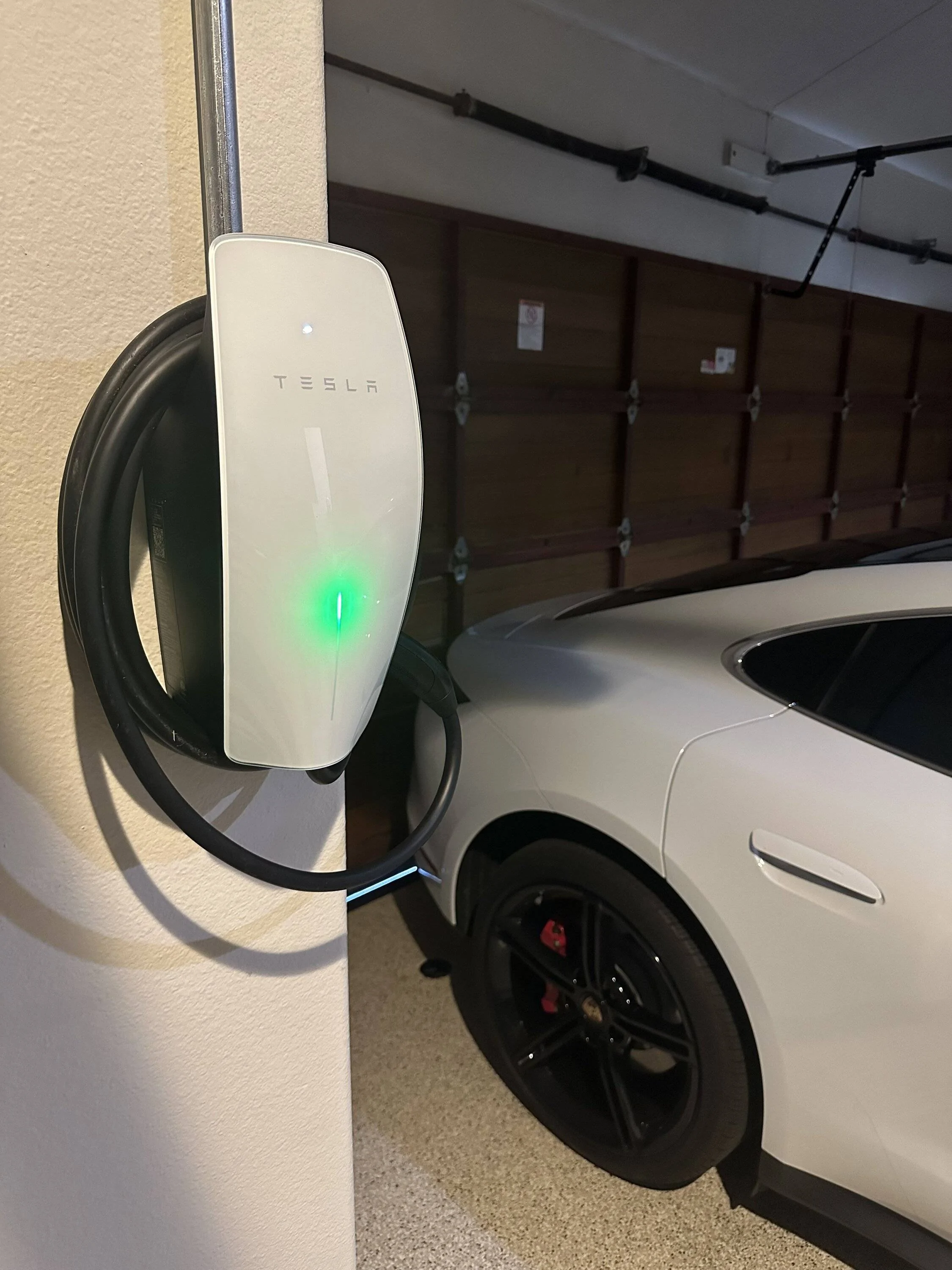
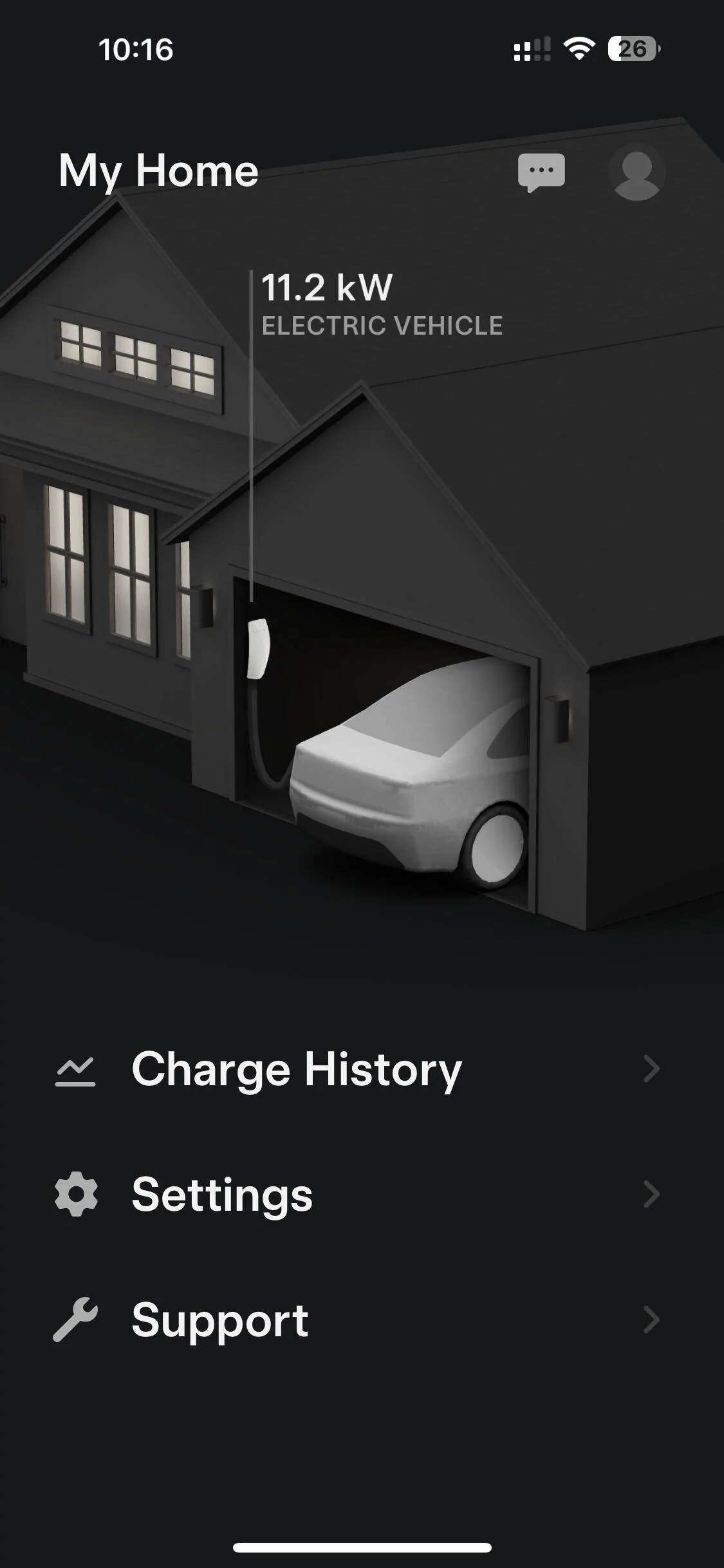
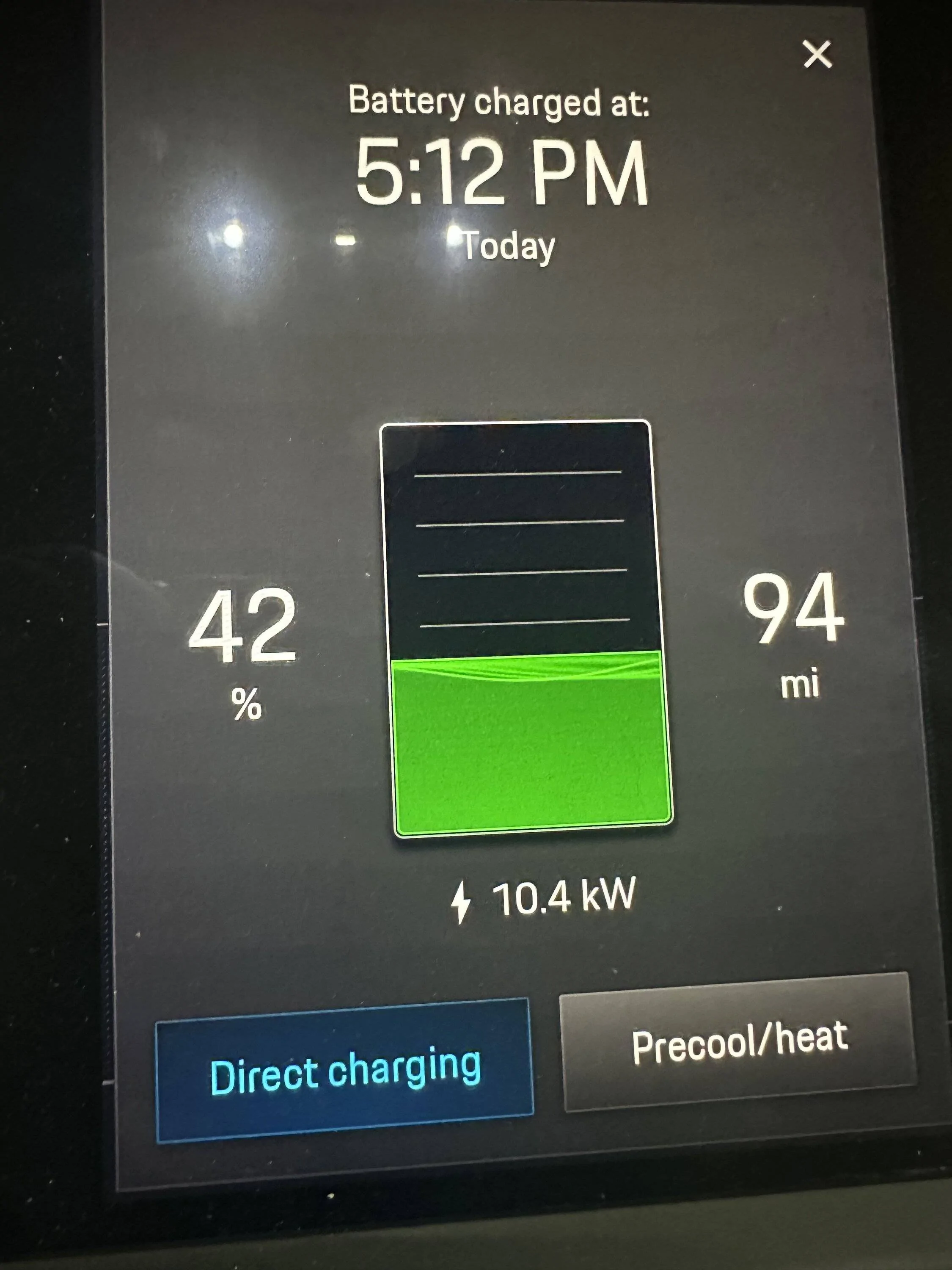
@RAHRCR here are some screen pics of the universal charger.
My set up is a 60a breaker with #4 gauge copper run in about 30ft of metal conduit from the panel.
As you can see in a “cold start” I am reading 11.2kw/h at the Tesla charger (read through the app) and at the same time in the car 10.4kw/h.
From experience the charger gets up to 11.4kw/h and I see 10.6 kw/h at the car.

Porsche Taycan New Tesla Universal Charging not working (nothing happens at all) IMG_2590


Porsche Taycan New Tesla Universal Charging not working (nothing happens at all) IMG_2588


Porsche Taycan New Tesla Universal Charging not working (nothing happens at all) IMG_2589
 

Scandinavian

Well-Known Member
First Name
Peter
Joined
Nov 3, 2019
Threads
52
Messages
3,907
Reaction score
3,552
Location
France
Vehicles
Taycan T, Aston Martin DB9, Porsche 996 C4 Cab, i4
Country flag
I believe once you turn on the Taycan at all, the ECU’s , all 100 of them consume about 6-800 watts. I guess that is even when you lock the car since the BMS etc needs to be active.


(spelling corrected)
 
Last edited:

RAHRCR

Well-Known Member
Joined
Jan 19, 2022
Threads
46
Messages
1,863
Reaction score
2,055
Location
Northeast, US
Vehicles
Taycan Cross Turismo 4S
Country flag
@RAHRCR here are some screen pics of the universal charger.
My set up is a 60a breaker with #4 gauge copper run in about 30ft of metal conduit from the panel.
As you can see in a “cold start” I am reading 11.2kw/h at the Tesla charger (read through the app) and at the same time in the car 10.4kw/h.
From experience the charger gets up to 11.4kw/h and I see 10.6 kw/h at the car.

IMG_2590.jpeg


IMG_2588.png


IMG_2589.jpeg
Appreciate the info!
(Thanks to the other contributors as well)


LongLive959

Well-Known Member
Joined
Jul 11, 2023
Threads
18
Messages
207
Reaction score
139
Location
Toronto
Vehicles
Tesla Model S
Country flag
So is the Tesla universal charger better than the cable I’m getting with my car? I won’t have the 19.2 option. Currently I have a Tesla gen 3 wired to a 100amp breaker, but I need to replace it due to some corrosion on the cable end. I was thinking to get the universal wall connector, but my S.A. told me not to mess with adapters etc, as nothing beats the cable supplied by Porsche plugged in to a nema 14-50.

I’m sure the difference in power is negligible (for my purposes). I’m more interested in quality/longevity.
 
OP
OP

eisenb11

Well-Known Member
Joined
Jan 28, 2024
Threads
7
Messages
122
Reaction score
93
Location
Redondo Beach, CA
Vehicles
Taycan RWD
Country flag
So is the Tesla universal charger better than the cable I’m getting with my car? I won’t have the 19.2 option. Currently I have a Tesla gen 3 wired to a 100amp breaker, but I need to replace it due to some corrosion on the cable end. I was thinking to get the universal wall connector, but my S.A. told me not to mess with adapters etc, as nothing beats the cable supplied by Porsche plugged in to a nema 14-50.

I’m sure the difference in power is negligible (for my purposes). I’m more interested in quality/longevity.
I don't see why the adapter would make any difference.

The Porsche charger plugged into a 50A outlet is going to max out at 48A since you have a breaker that's at least 60A. The Tesla is also 48A in that configuration. Personally, I like the Tesla charger because it has nice thin cords that are easier to work with. The Porsche cords are chunky. I also upgraded from a Tesla Gen 3 to the Universal Charger so I could charge the Taycan.

Are the thicker Porsche cords safer? Maybe, I don't know... but then again, Tesla isn't the one with the big recall! ;-)
 

CaliPorsche

Well-Known Member
First Name
DAVE
Joined
Jul 14, 2023
Threads
17
Messages
239
Reaction score
249
Location
California ??
Vehicles
2020 Taycan 4S, 2022 Cayenne S, 964 Widebody Speedster, AMG
So is the Tesla universal charger better than the cable I’m getting with my car? I won’t have the 19.2 option. Currently I have a Tesla gen 3 wired to a 100amp breaker, but I need to replace it due to some corrosion on the cable end. I was thinking to get the universal wall connector, but my S.A. told me not to mess with adapters etc, as nothing beats the cable supplied by Porsche plugged in to a nema 14-50.

I’m sure the difference in power is negligible (for my purposes). I’m more interested in quality/longevity.
EDITED to correct CCS to J-1772, too much pre post wine …….?

I do not think of the Tesla universal charger as a Tesla charger with an afterthought J-1772 adapter, the engineered product includes an extended NACS plug that has the J-1772 plug extension added to it, which to me is different to a third-party or aftermarket adapter being used.

IMHO the main thing with the Tesla chargers compared to others is that they are proven to be extremely reliable and engineered well ( I am not a fan of Tesla cars tbh), They have stood the test of time. It also gives you maximum flexibility in that in future, whether you own a J-1772 or a NACS car.

on the other hand the Porsche chargers ……. Just search this forum……..
 
Last edited:

daveo4EV

Well-Known Member
First Name
David
Joined
Jan 28, 2019
Threads
193
Messages
7,028
Reaction score
10,511
Location
Santa Cruz
Vehicles
Cayenne Hybrid, 911(s) GT3/Convertable
Country flag
I do not think of the Tesla universal charger as a Tesla charger with an afterthought CCS adapter, the engineered product includes an extended NACS plug that has the CCS plug extension added to it, which to me is different to a third-party or aftermarket adapter being used.

IMHO the main thing with the Tesla chargers compared to others is that they are proven to be extremely reliable and engineered well ( I am not a fan of Tesla cars tbh), They have stood the test of time. It also gives you maximum flexibility in that in future, whether you own a CCS or a NACS car.

on the other hand the Porsche chargers ……. Just search this forum……..
just some clarity - the Tesla Universal EVSE is for NACS and J-1772 - NOT CCS - CCS1 is the DC-Fast charging standard (electrical and physical)…CCS consists of a J-1772 portion and the two lower "pins" for the DC power connections…this design is part of the reason it sucks and is horrible but we'll not go into that here.

the residential Tesla Universal Wall Charger is an AC (only) EVSE that provides a native NACS AC EVSE plug and an integrated J-1772 adapter which is the AC L1/L2 standard prior to NACS - they have essentially shipped a "teslaTap" integrated into their EVSE so you can L1/L2 charge any North American EV with an NACS port or J-1772 port.

If you want to check this for your self on your Taycan the port on the driver's side of your Taycan is J-1772 _ONLY_ (not CCS1) - the port on the passenger side is either a J-1772 port _OR_ a CCS port depending on what type of EVSE you're plugging into.

There are few if any home/residential CCS1 EVSE's - and none of them are affordable or practical in my opinion.

CCS1 will die over time and be replaced fully by NACS but we'll all need the following adapters almost forever…
  • NACS Vehicle to J-1772 EVSE (like the PMC+/PMCC or public ChargePoint L2 chargers or every non-Tesla EVSE ever installed in North America) - existing Tesla owners use this to charge Teslas at public/private J-1772 EVSE's
    • every Tesla has shipped with one of these since day 1 - and it's how most Tesla owners "charge" at work
  • J-1772 Vehicle to NACS L1/L2 AC EVSE - this is TeslaTap or similar and used by existing J-1772 vehicles to charge at Tesla Destination chargers AC L1/L2 EVSE's at hotels and businesses
    • these are NOT superchargers - they are AC L1/L2 EV charging only - it's how your Taycan can charge at Post Ranch Inn in Big Sur, CA for example since they only have Tesla EVSE's for their guests
  • NACS Vehicle to CCS1 DC Fast Charging - this is an existing adapter Tesla Sells and allows newer (2020 or later?) North American Tesla's to fast charge at EA/EVGo/ChargePoint and other CCS1 FastDC EVSE's
    • future EV's from all vendors will need/use this adapter to charge at CCS EVSE's once they transition to NACS as a native port on their vehicle.
    • Example if say the 2026 Macan has native NACS ports - you'll need this adapter to charge at any EA site in north america that has not added a NACS charging cable to any given EA site/stall - if you pull into an EA site with a new NACS EV - you'll need this adapter to use the existing/legacy CCS1 cables on all existing EA chargers…
      • I know EA has announed they are moving their EVSE's to NACS - but this will not happen everywhere, all at once, and maybe never for some "legacy" locations…
      • a CCS1/NACS adapter will be a useful tool for EV road warriors for at least the next 6 years…
  • CCS1 Vehicle DCFast charging to an NACS DC FastCharger - this is the elusive adapter and only "coming soon" from all NACS vehicle vendors - you can get a Preview of this adapter at any one of 42 "MagicDock" enabled Tesla Supercharger sites - this is the adapter that will let an existing CCS1 EV charge at a NACS FastDC charger (supercharger or otherwise)
    • I've personally used this adapter at the Tesla Supercharger in Scotts Valley, CA to charge my 2020 Taycan Turbo - it works slick…but it's integrated into the station and it not portable
    • there is currently no support from Tesla for "bring your own" adapter w/superchargers - so we'll see how this plays out with Ford/GM roll outs
as EV's and charging sites migrate to NACS there will still be a need for J-1772 adapters and CCS1 adapter

so regardless of what type of EV you own now or in the future - if you want o be able to access/use existing & future EV charger infrastructure you'll be best served by having some adapters in your vehicle…
  • older/legacy (pre-2026) EV's will need adapter(s) to access "newer" EV NACS chargers (AC or FastDC)
  • newer NACS EV's will need adapter(s) to access "legacy" EV chargers (J-1772 and CCS1)
you'll either need to bridge your older EV into/onto the NACS EV chargers, or you'll need adapters to allow your new shiny NACS EV to access legacy/existing EV charging infrastructure…

I would anticipate in 8+ years there will be enough EV's and EV chargers based on NACS that adapters will only be for truly OCD/Anal people and have low utilization - but until that point J-1772/CCS1 EVs will want a TeslaTap and NACS adapter in the frunk, and newer NACS EV's will want a J-1772/CCS1 adapter in the frunk…

for reference the North American PMC+/PMCC from Porsche (and shared with Audi) is one of the worst and most expensive J-1772 EVSE's ever made/sold - and is currently under recall/confiscation by Porsche given how badly they f'd it up - but it is technically a mobile J-1772 EVSE supporting L1/L2 charging from 8-40 amps…Porsche also sells the slightly better Porsche Wall Charger which is a non-Mobile hardwired L1/L2 EVSE adjustable from 12-80 amps and reasonably priced and does not entirely suck, but it's still not my first choice for a J-1772 EVSE…but I can not fault people for choosing it.

what has been left unsaid in all this NACS press releases is what happens to all the Hybrid's (J-1772 only no CCS DCFast charging support) and will all these vendors ship their own EVSE's as NACS EVSE's rather than J-1772 EVSE's - since most EV vendors have their own branded EVSE's - are we moving _ALL_ PHEV/Hybrid/BEV to NACS - or only vehicles that support FastCharging? Are we shipping/selling NACS EVSE's or will we continue to sell J-1772 home based EVSE's - gonna be fun to watch this all play out…
 
Last edited:

jcroix

Well-Known Member
First Name
John
Joined
Jul 29, 2021
Threads
3
Messages
63
Reaction score
60
Location
Austin
Vehicles
2022 Porsche Taycan 4S
Country flag
I had the same issue. Tesla support did an over the air software patch that enlivened the charger. It works fine now, just call support…
Me, too. Had the same problem, called Tesla, update sent, and now it works great.
 

daveo4EV

Well-Known Member
First Name
David
Joined
Jan 28, 2019
Threads
193
Messages
7,028
Reaction score
10,511
Location
Santa Cruz
Vehicles
Cayenne Hybrid, 911(s) GT3/Convertable
Country flag
Installed a Tesla Universal Wall Charger yesterday Feb. 11th…
  • prior setup - Three(3) Tesla Gen3 Wall Chargers powershared
    • two J-1772's (Blue & Red face plate)
    • one NACS/Tesla (White face plate)
    • each max power 48 amps (60 amp breaker)
    • powersharing (3 units) splitting 80 amps (100 amp breaker)
  • Goal swap the NACS Gen3 unit for the new Universal unit [White faceplate unit being decommissioned]
  • put "main" unit into "administration mode"
  • go to "power sharing" interface" remove the NCAS unit from the power sharing "list"
  • remove the unit from the wall cradle/dock
  • was hoping you could just swap units - dismount unit from cradle/dock and remount new unit on same "dock"
    • alas the new universal cradle/dock is different
    • no biggie - remove the old "dock" and mount the new dock
  • once dock is mounted and wired up -mount the new Universal unit on the new dock
  • power up the new unit - it starts up in admin "mode"
  • join the units "wifi hotspot" on my iPad
  • navigate via web-browser to 192.168.92.1 - admin/configuration page for Tesla Wall connectors
  • pair the unit with my home wifi network
  • verify unit is joined to home wifi and has internet access
  • reboot the new unit
  • rejoin new unit's wifi hotspot
  • navigate to 192.168.92.1
  • check software update
  • wait for update to download - reboot the unit
  • login and check unit's administration page - verify no more software updates
  • verify unit is functioning - do a 5 min charging session w/2020 Taycan Turbo
    • unit works great provides 48 amp charge rate ~11 kW - Taycan reports 10.48 kW during charging session
  • place "main" power sharing Wall Charger into "administration" mode [Blue face plate]
  • join [Blue]'s wifi hot spot
  • navigate to [Blue]'s administration page 192.168.92.1
  • tap "power haring" option on administration page
  • tap "add wall charger"
  • enter new wall charger's Wifi network SID and password
  • wait a few minutes
  • reboot
  • relogin
  • verifiy power sharing on main [Blue] unit now shows 3 units in power sharing mode
    • each unit max power 48 amps (60 amp breaker)
    • 3 units listed as "ready"
    • verify power haring "budget" is 80 amps (100 amp breaker)
  • plug in two units to vehicles
    • charge Cayenne and Taycan at the same time
    • verify power sharing split load is working
    • all is well!!!
so after install and software update - all is well - the Tesla Gen3 Universal Wall charger is part of my power sharing setup - providing max power of 48 amps - and working well for my Taycan & Cayenne

optional steps:
  • join the Wall Charger to your Tesla "home" via the Tesla app - so you can monitor wall charger charging sessions and download statistics
  • see Tesla.app for "add product" instruction - add a "wall" charger
  • it will take 10-15 minutes and few reboots of the Wall charger
  • no reason to do this other than
    • charging statistics
    • charging monitoring
    • schedule management (EVSE can have restricted schedule)
    • intergration with Tesla solar & battery for power/capacity management
    • FOMO
    • potential future features as Tesla rolls out new firmware and potential clever features.
The universal wall charger is working great for me - Hardware install and physical installation was easy, straight forward, and similar to previous Tesla wall chargers - it was easy because I had the existing circuit - so this install was effectively a "swap" of an existing unit to a new and very similar unit.

Software update and wifi/hotspot administration requires some technical savvy and confort with webbrowsers and isolated wifi networks - once software updates are applied and the unit is "joined" to your home network my experience from the past 18 months is these units are "fuss free" - but you have to get them "setup" and configured

power sharing is slick and I highly recommend it for mulit-EV homes…

for $600 mostly shipped overnight - this is one of the best EVSE's on the market for value, feature setup, charging capacity, quality, ease of setup/install…

https://www.taycanforum.com/forum/t...hargers-powersharing-setup.18889/#post-290461
Sponsored

 
Last edited:


Top