Sponsored

Once again...the battery...

T4S

Well-Known Member
Joined
Apr 22, 2024
Threads
1
Messages
63
Reaction score
83
Location
USA
Vehicles
Taycan 4S, Tesla
Country flag
From an engineering perspective (I be one), Porsche does not understand the battery and these modules. They don't manufacture the battery cells, and clearly there is a lot they don't know about failure modes. The simple fact that my battery was subjected to a battery of tests by their best trained technician, and they still sent me off with a bad battery, indicates their 'understanding' of the causes of these battery failures is all retrospective. When something fails, they send it to LG, the manufacturer, and they wait for LG to do the analysis.
It depends on who is looking at the failures. Is it Porsche engineering and are they the ones who have final say on whether it is battery replacement or module replacement? I don’t think they send it to LG, that would be an even longer waiting time (think of how many OEMs they have to work with).

What year is your car and what was the part number of the replacement modules?
Sponsored

 
Last edited:

OP
OP
Vim Schrotnock

Vim Schrotnock

Well-Known Member
First Name
Vim
Joined
Oct 20, 2018
Threads
37
Messages
1,269
Reaction score
1,886
Location
Cincinnati
Vehicles
GTB1 Race Cayman, Taycan Turbo S
Country flag
I'll try to get the replacement module numbers tonight. My car is the first 2020 Turbo S in the area. In retrospect, incredibly dumb decision to get the 'first' of a completely new car and technology for Porsche.

I can tell you the way manufacturing companies work with their OEM's. There is an entire department, call it 'sourcing' that is responsible for all OEM suppliers. The responsibility means that the suppliers deliver parts/sub-assemblies on time, in the quantity required, and that meet all Porsche defined specifications. All critical parts are inspected on a sampling basis.

All manufacturers deal with issues related to components that meet the previously defined specifications, but cause a product failure - initially for unknown reasons. Porsche Quality Engineers will look at the failure(s), and determine a root cause. In the case of a battery cell failure, it is absolutely certain that Porsche will contact LG and work with them to understand the failure mode and what needs to be done to revise the processes to insure the subsequent cells do not exhibit the same failure.

One significant complication is the cell is affected by other elements of the system - battery temperature, charging process, and other connected systems that could potentially damage a good cell. The cells could be good, but the HV charging system faulty. Porsche is significantly disadvantaged because the defective cars/sub-assemblies are not returned to Porsche, but remain in the field, and there are a very small number of people who have a limited ability to diagnose what could be a very complex problem.
 

WasserGKuehlt

Well-Known Member
Joined
Sep 7, 2022
Threads
5
Messages
2,066
Reaction score
2,456
Location
WA
Vehicles
4CT, 996C2, MacanS
Country flag
I'll try to get the replacement module numbers tonight. My car is the first 2020 Turbo S in the area. In retrospect, incredibly dumb decision to get the 'first' of a completely new car and technology for Porsche.

I can tell you the way manufacturing companies work with their OEM's. There is an entire department, call it 'sourcing' that is responsible for all OEM suppliers. The responsibility means that the suppliers deliver parts/sub-assemblies on time, in the quantity required, and that meet all Porsche defined specifications. All critical parts are inspected on a sampling basis.

All manufacturers deal with issues related to components that meet the previously defined specifications, but cause a product failure - initially for unknown reasons. Porsche Quality Engineers will look at the failure(s), and determine a root cause. In the case of a battery cell failure, it is absolutely certain that Porsche will contact LG and work with them to understand the failure mode and what needs to be done to revise the processes to insure the subsequent cells do not exhibit the same failure.

One significant complication is the cell is affected by other elements of the system - battery temperature, charging process, and other connected systems that could potentially damage a good cell. The cells could be good, but the HV charging system faulty. Porsche is significantly disadvantaged because the defective cars/sub-assemblies are not returned to Porsche, but remain in the field, and there are a very small number of people who have a limited ability to diagnose what could be a very complex problem.
You have now repeated an earlier claim that Porsche has no understanding of how the battery modules work. It may be true (albeit unlikely) that their understanding stops at the chemistry aspect, but I can guarantee you that *no one* ships a software-integrated component without having a full understanding of it or the capacity to debug it. The BMS is not provided by LG Chem, and neither is the rest of the charging subsystem. Porsche designed the entire car, and specified the interfaces and other characteristics then given to OEMs for implementation. There will be metrics they collect from the modules, for the car’s operation/BMS and/or as part of fleet telemetry. We can see a shitload of data with a crappy OBD dongle, and I imagine there is a lot more they have access to.

I’m not disagreeing on the interaction model between manufacturers and suppliers. It is indeed based on specs and samples (in a previous life i worked on such specs and reference drivers for video cards, partnering with my employer’s “hardware quality lab”) - but the OEM’s products do what the manufacturer imagined/designed/asked them to do. Physical defects will need to be root-caused by the supplier (and perhaps that is what you meant), but there’s just no way a manufacturer would not be able to understand the failure mode from their perspective. After all, they own the integration, and it should be clear to an SME if the module reported false values, stopped responding to instructions, drew more current than should have, overheated etc.

If Porsche’s technician who investigated your case is telling you otherwise, they’re blowing smokebeing disingenuous.
 

T4S

Well-Known Member
Joined
Apr 22, 2024
Threads
1
Messages
63
Reaction score
83
Location
USA
Vehicles
Taycan 4S, Tesla
Country flag
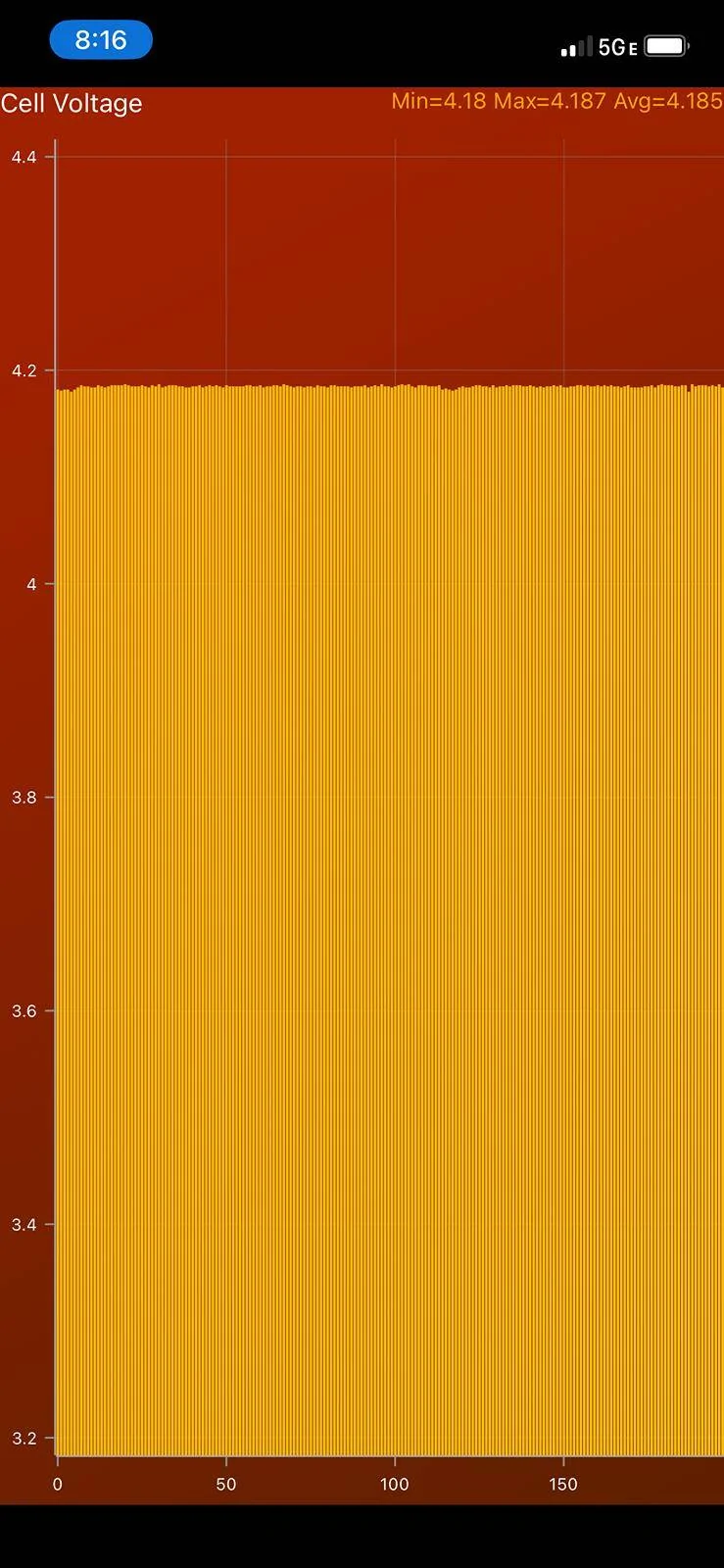
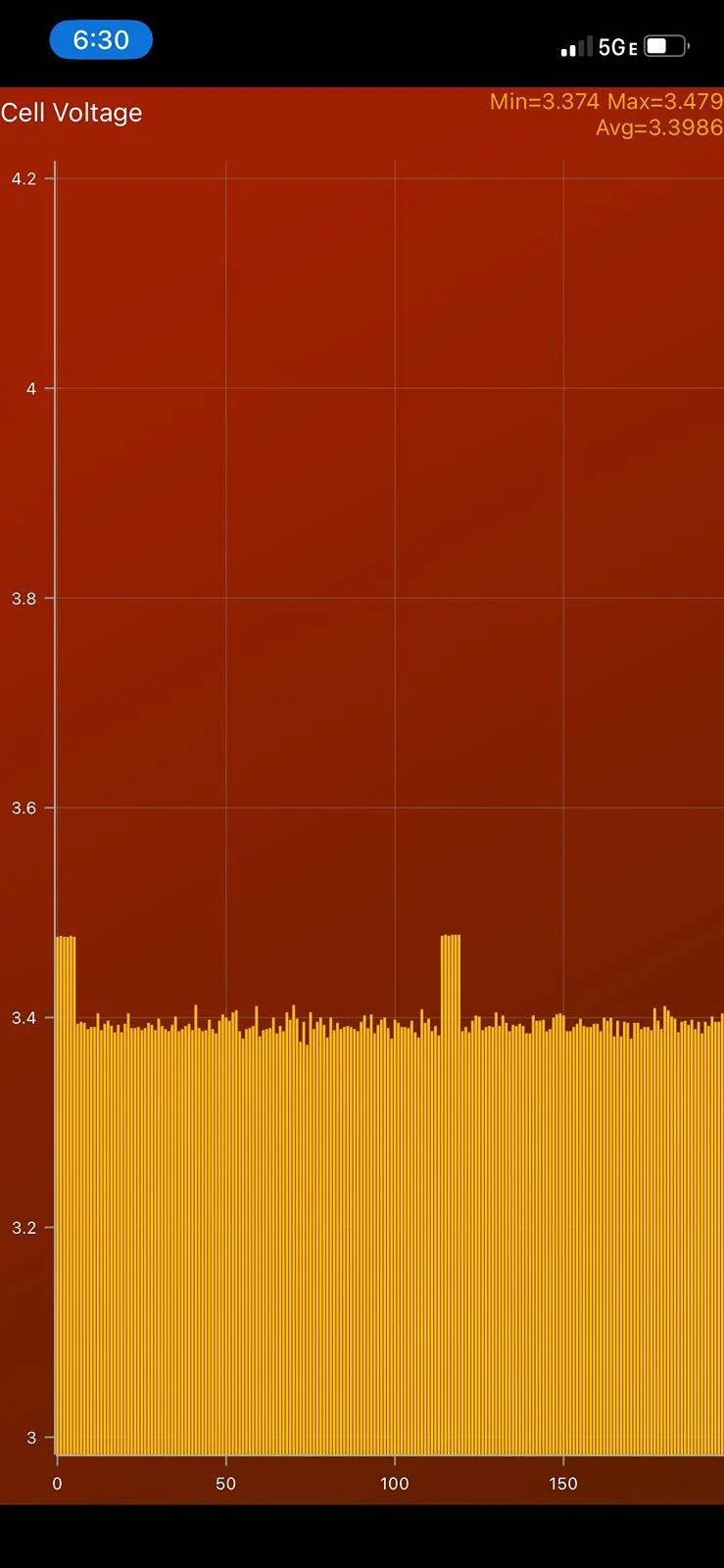
I recently got my car back after a month of being in service to replace my HV battery modules. After seeing your post, I took a look at the voltage data from my HV battery pack and the results are below. Granted, this is at 95% charge after I finished charging to 100%, but the imbalance looks similar to yours. Can you guess how many modules I got replaced?

I haven't received any Electrical System Errors, but this has me a bit concerned and I only had the car back for less than a week. However, I will run the battery down to 10-15%, take the data, and recharge back up to 100% to hopefully rebalance the battery.

Let us know how it goes with your car!
Finally had the chance to attempt a battery rebalance. Data below is at 10% and after charging back to 100%. Didn't seem to make much of a difference (maybe I did it wrong?), but the car seems to be fine for now.

Porsche Taycan Once again...the battery... IMG_5461
Porsche Taycan Once again...the battery... IMG_5465
Porsche Taycan Once again...the battery... IMG_5471
Porsche Taycan Once again...the battery... IMG_5469
 
OP
OP
Vim Schrotnock

Vim Schrotnock

Well-Known Member
First Name
Vim
Joined
Oct 20, 2018
Threads
37
Messages
1,269
Reaction score
1,886
Location
Cincinnati
Vehicles
GTB1 Race Cayman, Taycan Turbo S
Country flag
I will qualify this by stating that I am certainly no expert on diagnosing battery problems. My non-expert view is that your voltages look quite uneven. It looks like 5 modules have significantly lower voltages than the average. I've attached a graph of my battery voltages, and you can see there is quite a difference. I would repeat the balancing and see what happens. Good luck!
Porsche Taycan Once again...the battery... IMG_5312


T4S

Well-Known Member
Joined
Apr 22, 2024
Threads
1
Messages
63
Reaction score
83
Location
USA
Vehicles
Taycan 4S, Tesla
Country flag
I will qualify this by stating that I am certainly no expert on diagnosing battery problems. My non-expert view is that your voltages look quite uneven. It looks like 5 modules have significantly lower voltages than the average. I've attached a graph of my battery voltages, and you can see there is quite a difference. I would repeat the balancing and see what happens. Good luck!
IMG_5312.PNG
Yeah, I will probably try the rebalancing again. Did rebalancing your battery solve any voltage differences with the new modules? I replaced 5 modules, so it's safe to assume those are the modules with the lower voltage.
 
OP
OP
Vim Schrotnock

Vim Schrotnock

Well-Known Member
First Name
Vim
Joined
Oct 20, 2018
Threads
37
Messages
1,269
Reaction score
1,886
Location
Cincinnati
Vehicles
GTB1 Race Cayman, Taycan Turbo S
Country flag
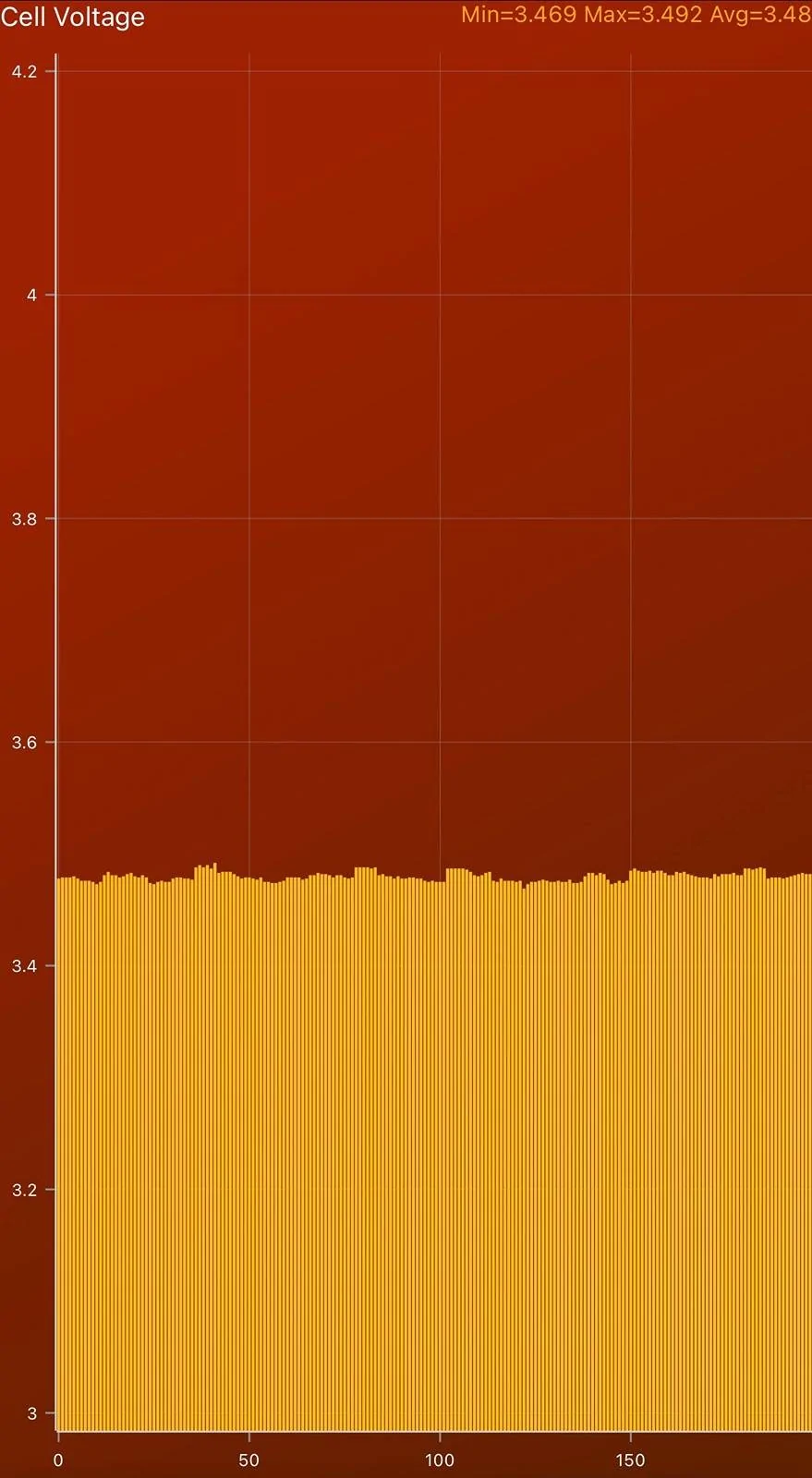
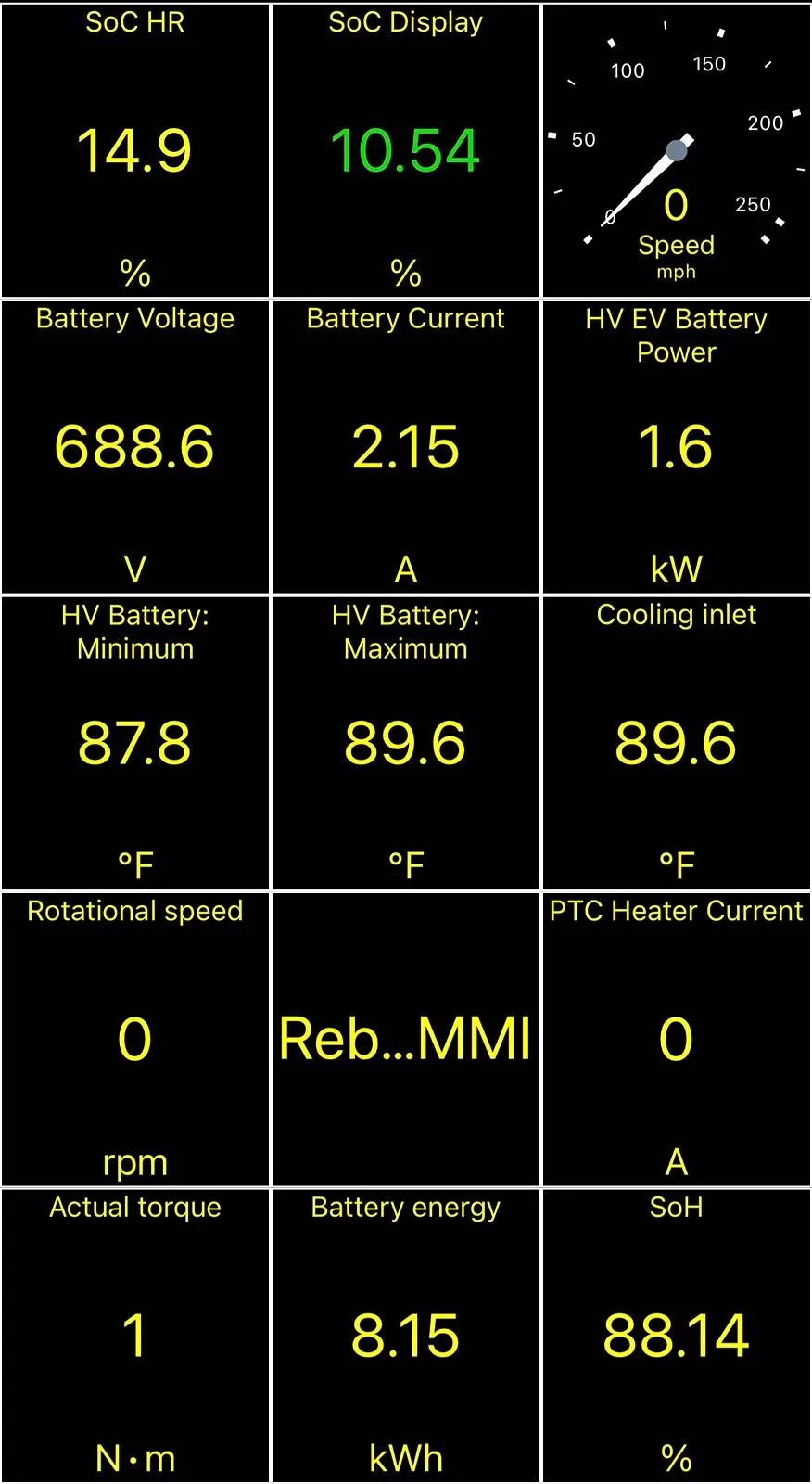
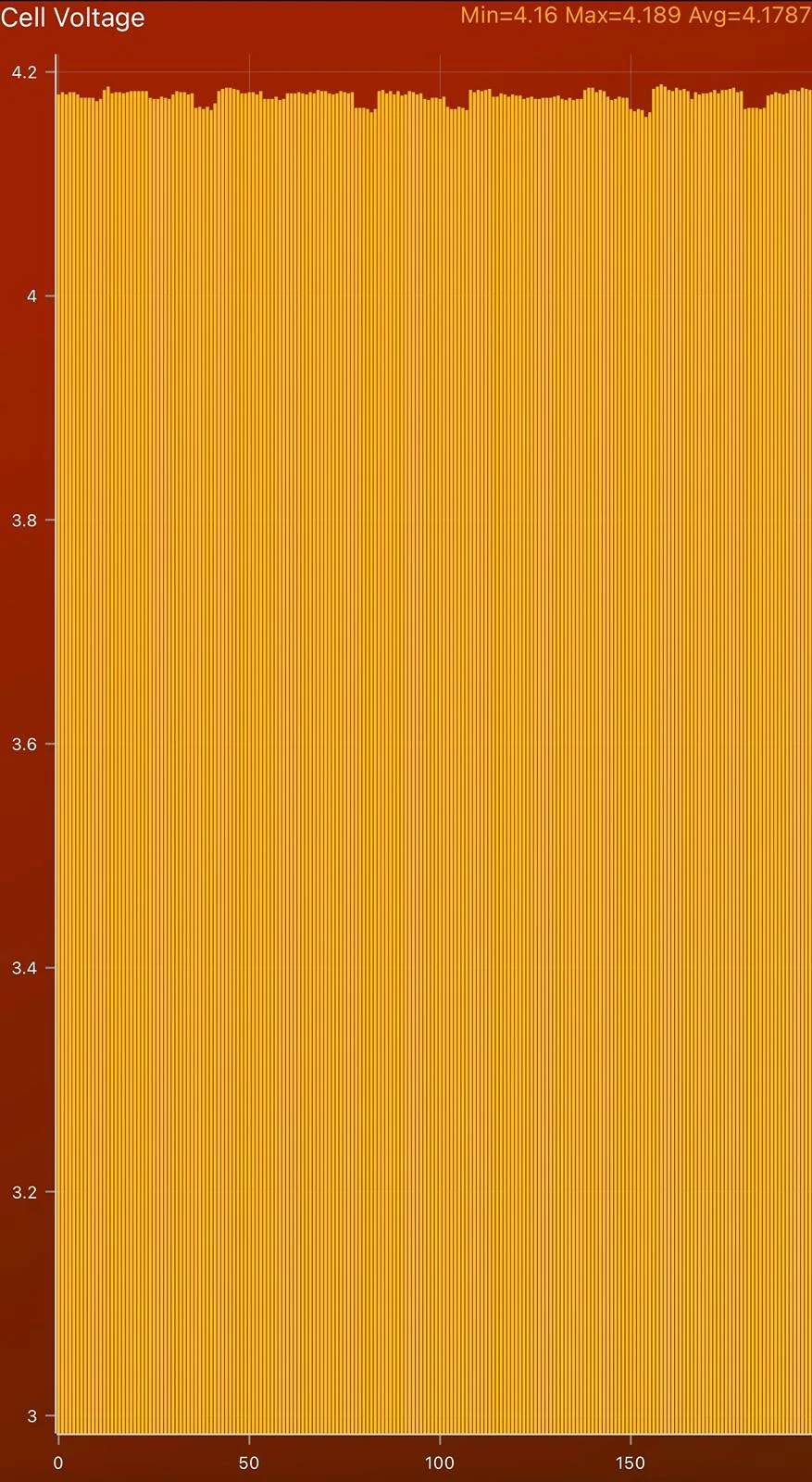
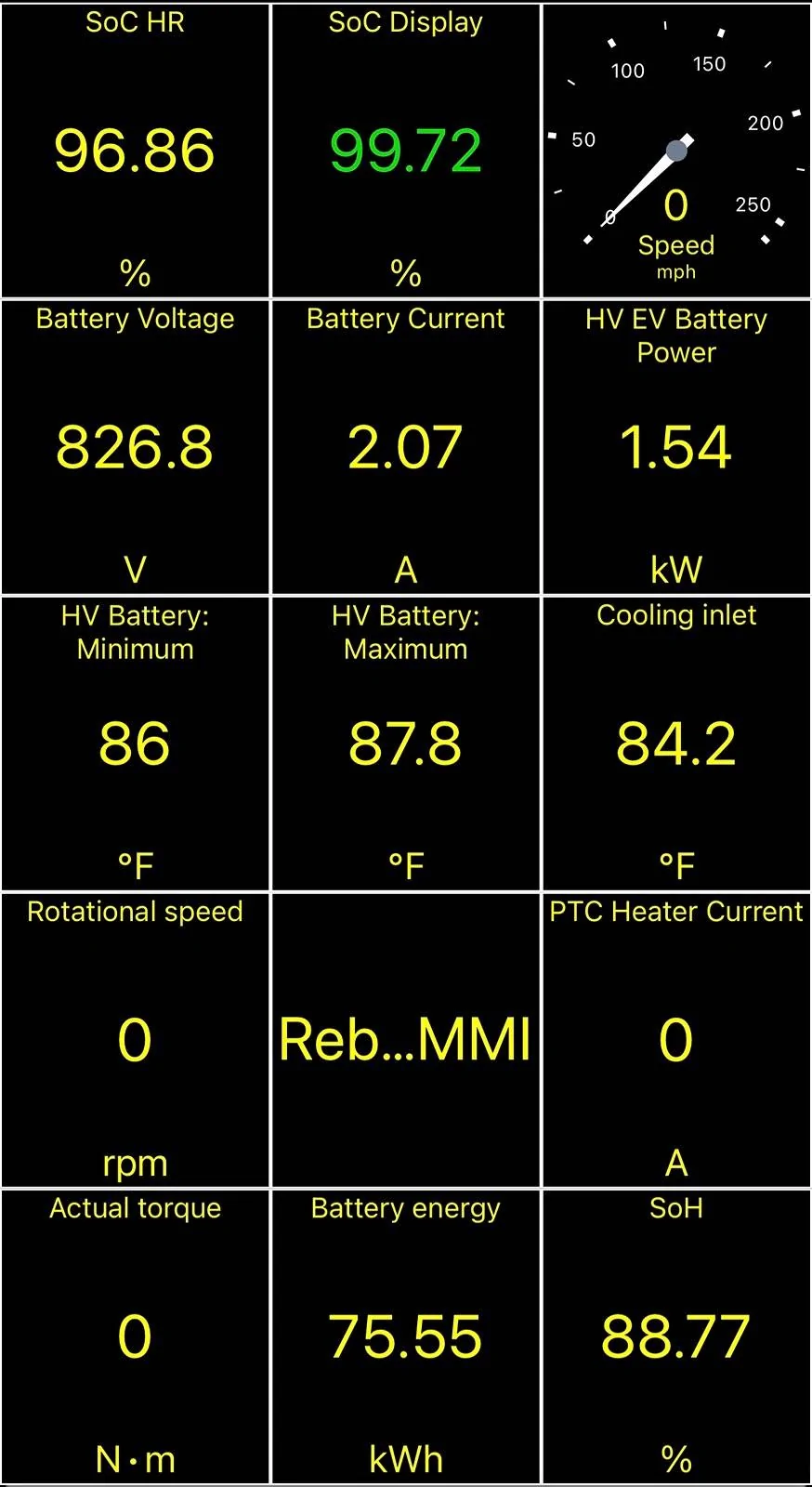
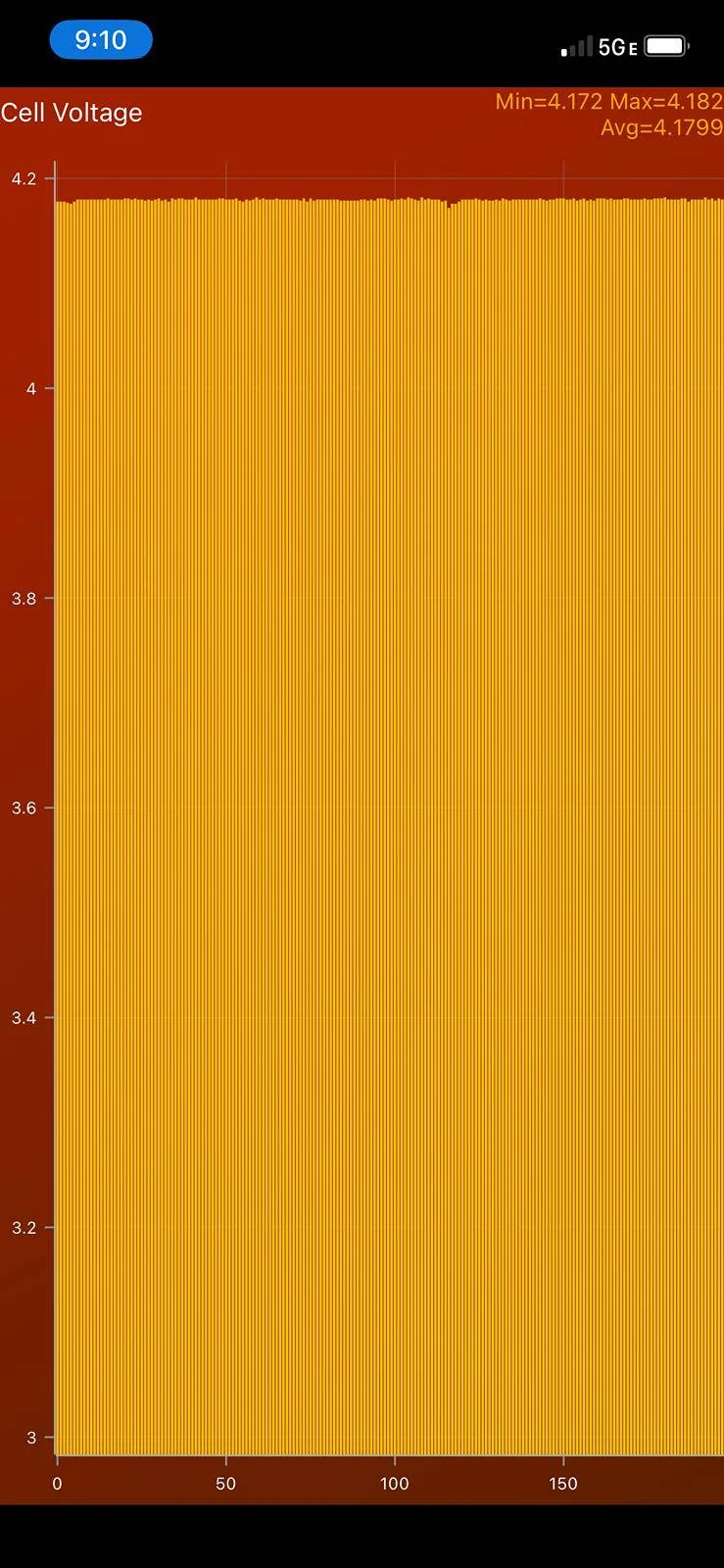
The rebalancing affected the SOH most - it eventually went from 90%-94% after 4 rebalances. Here's my readings after the first rebalance. As you can see, there is a definite difference at the lower charge, but a very small difference at the max.
Porsche Taycan Once again...the battery... IMG_4769
Porsche Taycan Once again...the battery... IMG_4785
 
OP
OP
Vim Schrotnock

Vim Schrotnock

Well-Known Member
First Name
Vim
Joined
Oct 20, 2018
Threads
37
Messages
1,269
Reaction score
1,886
Location
Cincinnati
Vehicles
GTB1 Race Cayman, Taycan Turbo S
Country flag
Another item to consider - I've just had my car in the shop and the battery is being replaced. So...I don't know if this is a good comparison.?


T4S

Well-Known Member
Joined
Apr 22, 2024
Threads
1
Messages
63
Reaction score
83
Location
USA
Vehicles
Taycan 4S, Tesla
Country flag
Another item to consider - I've just had my car in the shop and the battery is being replaced. So...I don't know if this is a good comparison.?
Nice! So hopefully you'll get even better range and balancing with the new pack. But your previous data is helpful for comparison.
 
OP
OP
Vim Schrotnock

Vim Schrotnock

Well-Known Member
First Name
Vim
Joined
Oct 20, 2018
Threads
37
Messages
1,269
Reaction score
1,886
Location
Cincinnati
Vehicles
GTB1 Race Cayman, Taycan Turbo S
Country flag
OK, car is finally back after a full battery replacement. I had the good fortune to speak to Tom, one of the few Porsche certified battery technicians in the country who had flown in to do a number of module replacements in other cars. Tom was the technician who had done my original module replacement.

I talked with him for some time about 'rebalancing' and what it was really doing for the battery. It was a great discussion, and I think it clears up a number of points that have been discussed on this forum. We also talked about best charging practices for maximum battery life and range.

First, Tom said my home battery charging to 85% every day is 'perfect' for the battery. I think this is an important piece of data, because there have been a lot of opinions expressed, and a variety of 'expert' videos etc. on this topic. To hear from one of the 11 certified battery technicians in the country is for me, the definitive authority. It's especially nice that this charging process is the simplest and easiest as well.

The only problem with this process is that the battery does not get a chance to 'balance' the cells at a low charge. The cell balancing is a process controlled by the ICU when the car is disconnected from the charger and sits for a period of time (overnight). Over this period of time, the software will try to 'even out' the voltage between the individual modules. The reason this is important is the range of the vehicle is determined by the 'weakest cell' in both the high and low states of charge. This means your effective battery use is determined by the lowest voltage cell in both the maximum (100%) state, and the minimum (10-15%) state. Typically there will be a larger variation in the minimum state, and the balancing will act to raise the voltages of the lower cells and drop the higher cell voltage.

To simplify, the 'rebalancing' consists of taking the car down to 10-15% charge and letting it sit overnight not connected to the charger. Then the car should be charged using a home charger to 100%. Tom recommended doing this a few times at first, then every couple months afterwards. I'll post OBD data later.
 

Tooney

Well-Known Member
Joined
Aug 14, 2021
Threads
743
Messages
4,452
Reaction score
3,637
Location
Ohio
Vehicles
2022 Taycan 4S
Country flag
@Vim Schrotnock I remember your car had some HV battery modules replaced in the past.
What prompted the full battery replacement: warning errors, your OBD readings, a recall?
I'm trying to understand why the first time some modules were replaced, and this most recent time the entire battery was replaced.
Do you believe they had good reason for module replacement the first time, and full battery replacement this time, or is this a case of the first fix did not work so this time we replace the whole thing?
Did the first fix not really work, or was this most recent fix for a different problem?
Do you have the impression they can correctly diagnose HV battery problems and correctly decide what should be done?
 
Last edited:

Sace

Well-Known Member
First Name
Anders
Joined
Mar 8, 2023
Threads
0
Messages
256
Reaction score
226
Location
Denmark
Vehicles
Taycan Sport Tourismo
Country flag
OK, car is finally back after a full battery replacement. I had the good fortune to speak to Tom, one of the few Porsche certified battery technicians in the country who had flown in to do a number of module replacements in other cars. Tom was the technician who had done my original module replacement.

I talked with him for some time about 'rebalancing' and what it was really doing for the battery. It was a great discussion, and I think it clears up a number of points that have been discussed on this forum. We also talked about best charging practices for maximum battery life and range.

First, Tom said my home battery charging to 85% every day is 'perfect' for the battery. I think this is an important piece of data, because there have been a lot of opinions expressed, and a variety of 'expert' videos etc. on this topic. To hear from one of the 11 certified battery technicians in the country is for me, the definitive authority. It's especially nice that this charging process is the simplest and easiest as well.

The only problem with this process is that the battery does not get a chance to 'balance' the cells at a low charge. The cell balancing is a process controlled by the ICU when the car is disconnected from the charger and sits for a period of time (overnight). Over this period of time, the software will try to 'even out' the voltage between the individual modules. The reason this is important is the range of the vehicle is determined by the 'weakest cell' in both the high and low states of charge. This means your effective battery use is determined by the lowest voltage cell in both the maximum (100%) state, and the minimum (10-15%) state. Typically there will be a larger variation in the minimum state, and the balancing will act to raise the voltages of the lower cells and drop the higher cell voltage.

To simplify, the 'rebalancing' consists of taking the car down to 10-15% charge and letting it sit overnight not connected to the charger. Then the car should be charged using a home charger to 100%. Tom recommended doing this a few times at first, then every couple months afterwards. I'll post OBD data later.
I saw this documentation posted earlier explaining how the balancing works (Even if this document is not for the Taycan the principle is the same): https://www.taycanforum.com/forum/t...g-to-100-for-battery-health.19734/post-305945

So the actual balancing will take place after the charging has finished - So you probably need to let it sit for a while after it's charged.

I suspect the procedure is as much about calibrating the capacity measurement as it is to balance the cells. The balancing kicks in automatically during normal charging patterns as well.
 
OP
OP
Vim Schrotnock

Vim Schrotnock

Well-Known Member
First Name
Vim
Joined
Oct 20, 2018
Threads
37
Messages
1,269
Reaction score
1,886
Location
Cincinnati
Vehicles
GTB1 Race Cayman, Taycan Turbo S
Country flag
I saw this documentation posted earlier explaining how the balancing works (Even if this document is not for the Taycan the principle is the same): https://www.taycanforum.com/forum/t...g-to-100-for-battery-health.19734/post-305945

So the actual balancing will take place after the charging has finished - So you probably need to let it sit for a while after it's charged.

I suspect the procedure is as much about calibrating the capacity measurement as it is to balance the cells. The balancing kicks in automatically during normal charging patterns as well.
Yes, the adjustment of individual cell voltages will be done automatically after each charging cycle at whatever the charge is. The reason for the procedure that was outlined to me is simply to allow a reasonable period of time for the balancing of the individual module voltages at a very low state of charge.
 
OP
OP
Vim Schrotnock

Vim Schrotnock

Well-Known Member
First Name
Vim
Joined
Oct 20, 2018
Threads
37
Messages
1,269
Reaction score
1,886
Location
Cincinnati
Vehicles
GTB1 Race Cayman, Taycan Turbo S
Country flag
@Vim Schrotnock I remember your car had some HV battery modules replaced in the past.
What prompted the full battery replacement: warning errors, your OBD readings, a recall?
I'm trying to understand why the first time some modules were replaced, and this most recent time the entire battery was replaced.
Do you believe they had good reason for module replacement the first time, and full battery replacement this time, or is this a case of the first fix did not work so this time we replace the whole thing?
Did the first fix not really work, or was this most recent fix for a different problem?
Do you have the impression they can correctly diagnose HV battery problems and correctly decide what should be done?
These are all good questions, and I'm afraid that I, and very probably Porsche, can't really answer them definitively. I don't want to speculate. Once they determined the entire battery would be replaced, I didn't spend any time on a 'post mortem', and didn't ask a whole lot of questions as to why. I do think they are quite challenged in diagnosing HV battery problems.

I can say that my taking a picture of the dash with the error message (which later went away) was very important, and I would encourage anyone else to do the same in this situation.
 

bluesky

Well-Known Member
Joined
Sep 4, 2022
Threads
5
Messages
273
Reaction score
299
Location
Palo Alto, CA
Vehicles
BMW F10 M5 Comp, BMW F10 550i
Country flag
Yes, the adjustment of individual cell voltages will be done automatically after each charging cycle at whatever the charge is. The reason for the procedure that was outlined to me is simply to allow a reasonable period of time for the balancing of the individual module voltages at a very low state of charge.
I believe something is not clear here and less than step by step instructions.

If balancing happens after charging, then are the steps?:
  1. Drive until charge is down to 10-15%
  2. connect briefly to charger to trigger start of balancing?
  3. disconnect from charger and let sit overnight
  4. charge to 100%
  5. let sit again? For how long? Drive soon/immediately?
From above posts, not clear if step 2 above is necessary to do low charge balancing. also not clear what is step after charging to 100%, if any.
Sponsored


Top