Sponsored

Instavolt 120kw 400v chargers

W1NGE

Well-Known Member
First Name
Adrian
Joined
Jan 11, 2021
Threads
53
Messages
11,017
Reaction score
6,805
Location
Aberdeen, Scotland
Vehicles
992.2, ex GTS ST & 4S owner, Macan T
Country flag
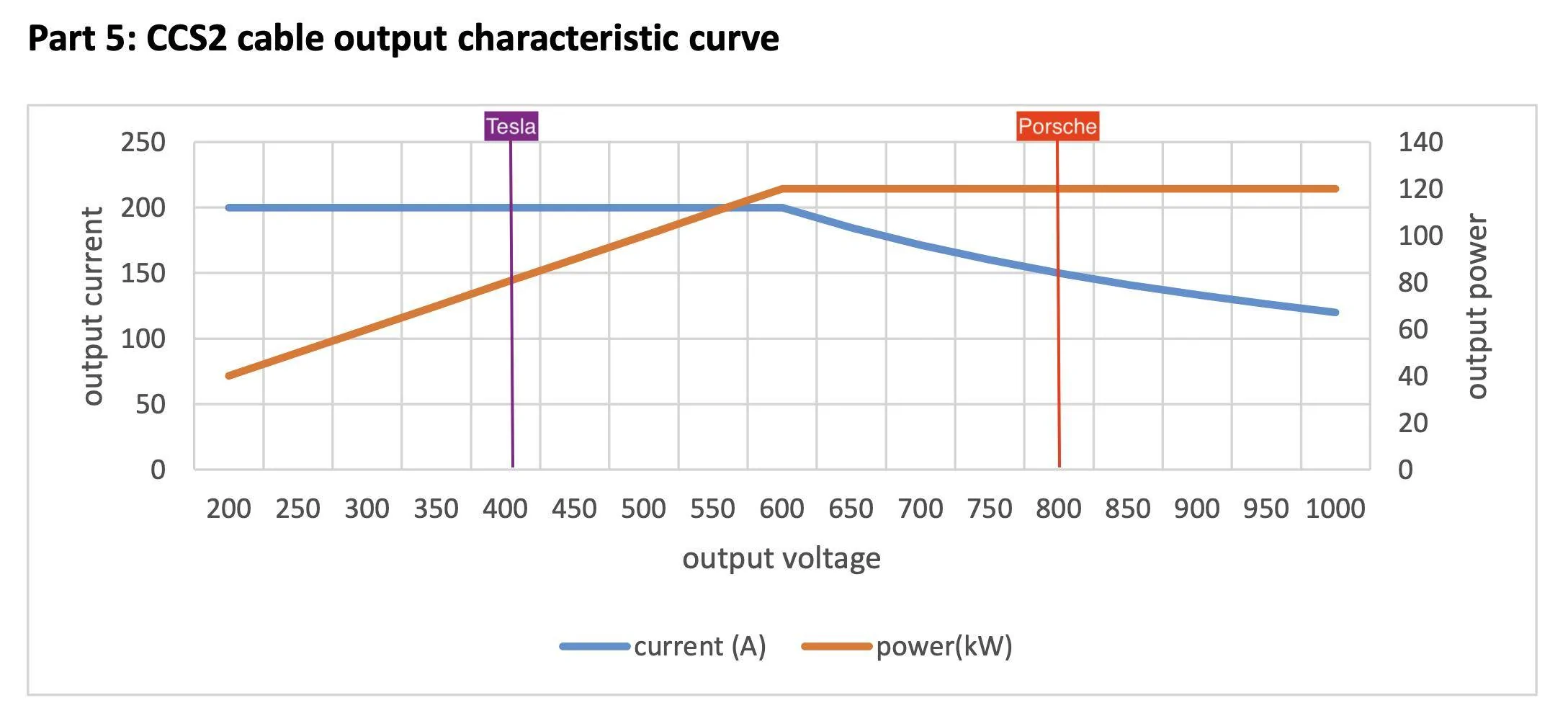
Nice digging ? but I think you're reading the current curve (blue) rather than power curve (orange)....the current drops off as expected. The unit delivers full power once its current draw is allowed to drop from its max. rated. Again expected.

So backs up what I've been saying - this is a multi-voltage unit capable of 800V (and beyond as we can see). Not a fixed 400V unit.

A Tesla could only pull approx. 80 kW in ideal conditions from this Instavolt unit, given it's a 400V DC charging car.

A Porsche that's pulling 115 kW must be doing it at nominally 800V or thereabouts - given we know it's an 800V architecture. Its not going to magically drop to 600V.

The Porsche 150kW on-board DC-DC converter (booster) option is a red herring on this Instavolt scenario. It makes no odds.

Screenshot 2023-01-09 at 22.50.03.png
I'm still not convinced (sorry) something else is at play here.

Why would Instavolt (Costa, McDonalds, others) be rolling out these units since 2019 where only a single brand of vehicle at that time could take advantage of it - Taycan has been the only 800v vehicle until Kia came along. These vehicles would have been a trickle in terms of volume.

I suspect some wizardry happens to up the output to help reach the target outputs quoted otherwise what is the point of these units - they're at the slow end of fast and not many customers able to take full advantage.

Worth probing Instavolt again?

Worth getting folk with / without the DC converter to try these units to satisfy our collective curiosity as we are still a little in the dark on that front too.
Sponsored

 

BigBob

Well-Known Member
First Name
Rob
Joined
Nov 27, 2021
Threads
46
Messages
1,959
Reaction score
1,533
Location
London
Vehicles
Taycan CT 4S, Range Rover Sport
Country flag
Worth getting folk with / without the DC converter to try these units to satisfy our collective curiosity as we are still a little in the dark on that front too.
Unfortunately my battery is already at 85%, or I'd force myself to go for a McMuffin, purely in the interest of science.
 

simcity

Well-Known Member
First Name
Sean
Joined
May 22, 2022
Threads
40
Messages
1,546
Reaction score
1,288
Location
Suffolk, UK
Vehicles
'23 Taycan Turbo
Country flag
I'm still not convinced (sorry) something else is at play here.

Why would Instavolt (Costa, McDonalds, others) be rolling out these units since 2019 where only a single brand of vehicle at that time could take advantage of it - Taycan has been the only 800v vehicle until Kia came along. These vehicles would have been a trickle in terms of volume.

I suspect some wizardry happens to up the output to help reach the target outputs quoted otherwise what is the point of these units - they're at the slow end of fast and not many customers able to take full advantage.

Worth probing Instavolt again?

Worth getting folk with / without the DC converter to try these units to satisfy our collective curiosity as we are still a little in the dark on that front too.
Not sure I follow your logic. Just to get this straight…

1. there’s a data plate on the unit that says it’s a multi-voltage unit (200 to 1000VDC on the CCS2 port)

2. You’ve gone and found a BYD spec document for the unit - handily with power and current output curves from the CCS2 connector which shows how much power it can deliver at different voltages.

To deliver anywhere near the rated output of 120 kW the unit MUST increase the output voltage on the CCS2 connector output to 600V and above. This is because it cannot deliver more than 200A of current (according to data plate and spec document).

3. @CrossTComingSoon has charged several times on these units and says he’s had around 115 kW from them.

So you don’t trust or believe either the data plate or the spec document?

Rather your logic is that there is “…some wizardry happens up to the output…” but you don’t know what…

Well OK then ?
 

W1NGE

Well-Known Member
First Name
Adrian
Joined
Jan 11, 2021
Threads
53
Messages
11,017
Reaction score
6,805
Location
Aberdeen, Scotland
Vehicles
992.2, ex GTS ST & 4S owner, Macan T
Country flag
Not sure I follow your logic. Just to get this straight…

1. there’s a data plate on the unit that says it’s a multi-voltage unit (200 to 1000VDC on the CCS2 port)

2. You’ve gone and found a BYD spec document for the unit - handily with power and current output curves from the CCS2 connector which shows how much power it can deliver at different voltages.

To deliver anywhere near the rated output of 120 kW the unit MUST increase the output voltage on the CCS2 connector output to 600V and above. This is because it cannot deliver more than 200A of current (according to data plate and spec document).

3. @CrossTComingSoon has charged several times on these units and says he’s had around 115 kW from them.

So you don’t trust or believe either the data plate or the spec document?

Rather your logic is that there is “…some wizardry happens up to the output…” but you don’t know what…

Well OK then ?
Predicated on:

1) Lack of clarity on our test vehicle in terms of options. No concrete assurance that the DC booster is not in play. The screenshots provided were incomplete / not the ones requested. Awaiting a build code or order sheet to confirm same.

2) To install 120kW (2019 onwards remember) and now 150kW EVSEs which are exclusively targeted toward Taycans, Audi E-tron GTs, Hyundai Sonics ie have an 800v bias for maxing charging seems entirely unlikely and not the EV masses.

3. Instavolt would have been called out by now if they were falsely advertising charging times etc (as they are) when stopping at these locations. Pretty sure Mr Tesla driver would have moaned about it.

4. Incorrect voltage stated on the data plate - Instavolt stated 400v only - agree that is a stretch but who knows.

5. Is it possible to bridge 2 X 200A within the EVSE to max the power output at 400v?

6. Is it possible that if up to 1000v were available that the Taycan negotiated this with the EVSE thereby bypassing the need for any DC booster.

7. The doc I found is one of several but agree it is a close match to the EVSE in scope.

8. Is it realistic to expect EV owners and all software apps to target EVSEs based on voltage ratings as well as headline power output? I suspect not.

We just need 2 X hungry and willing Taycan owners to go test.

I also forgot to mention that the earth is flat and there is no dark side of the moon either.
 

simcity

Well-Known Member
First Name
Sean
Joined
May 22, 2022
Threads
40
Messages
1,546
Reaction score
1,288
Location
Suffolk, UK
Vehicles
'23 Taycan Turbo
Country flag
Predicated on:

1) Lack of clarity on our test vehicle in terms of options. No concrete assurance that the DC booster is not in play. The screenshots provided were incomplete / not the ones requested. Awaiting a build code or order sheet to confirm same.

2) To install 120kW (2019 onwards remember) and now 150kW EVSEs which are exclusively targeted toward Taycans, Audi E-tron GTs, Hyundai Sonics ie have an 800v bias for maxing charging seems entirely unlikely and not the EV masses.

3. Instavolt would have been called out by now if they were falsely advertising charging times etc (as they are) when stopping at these locations. Pretty sure Mr Tesla driver would have moaned about it.

4. Incorrect voltage stated on the data plate - Instavolt stated 400v only - agree that is a stretch but who knows.

5. Is it possible to bridge 2 X 200A within the EVSE to max the power output at 400v?

6. Is it possible that if up to 1000v were available that the Taycan negotiated this with the EVSE thereby bypassing the need for any DC booster.

7. The doc I found is one of several but agree it is a close match to the EVSE in scope.

8. Is it realistic to expect EV owners and all software apps to target EVSEs based on voltage ratings as well as headline power output? I suspect not.

We just need 2 X hungry and willing Taycan owners to go test.

I also forgot to mention that the earth is flat and there is no dark side of the moon either.
To your point above, Tesla drivers will generally tend to go to a SuC as they’ll get up to 250 kW with the newer cars on v3 It’s also cheaper than Instavolt to charge….

I’ll probably need a full charge tomorrow on the X and I know that will pull well north of 120 kW when the batt is warmed and thirsty. Expect it will top out at 80 kW on that Instavolt.

Will let you know.

Can’t speak to the other chargers in their network - it’s likely they will be of various ages etc. That one at MaccyDs in Bow left the factory in April ‘21. BYD Auto themselves are I think nominal 600V cars for what that’s worth then there’s Kia, Hyundai and Polestar with their 800V cars. Then the raft of other Chinese manufacturers that we don’t really see too much of here, but understand they’re adopting nominal 800v cars. So I don’t think thats a reason.


simcity

Well-Known Member
First Name
Sean
Joined
May 22, 2022
Threads
40
Messages
1,546
Reaction score
1,288
Location
Suffolk, UK
Vehicles
'23 Taycan Turbo
Country flag
Oh If I can stomach three McMuffins in a week I’ll drop by in the Taycan, and see what it gets. ?
 

simcity

Well-Known Member
First Name
Sean
Joined
May 22, 2022
Threads
40
Messages
1,546
Reaction score
1,288
Location
Suffolk, UK
Vehicles
'23 Taycan Turbo
Country flag
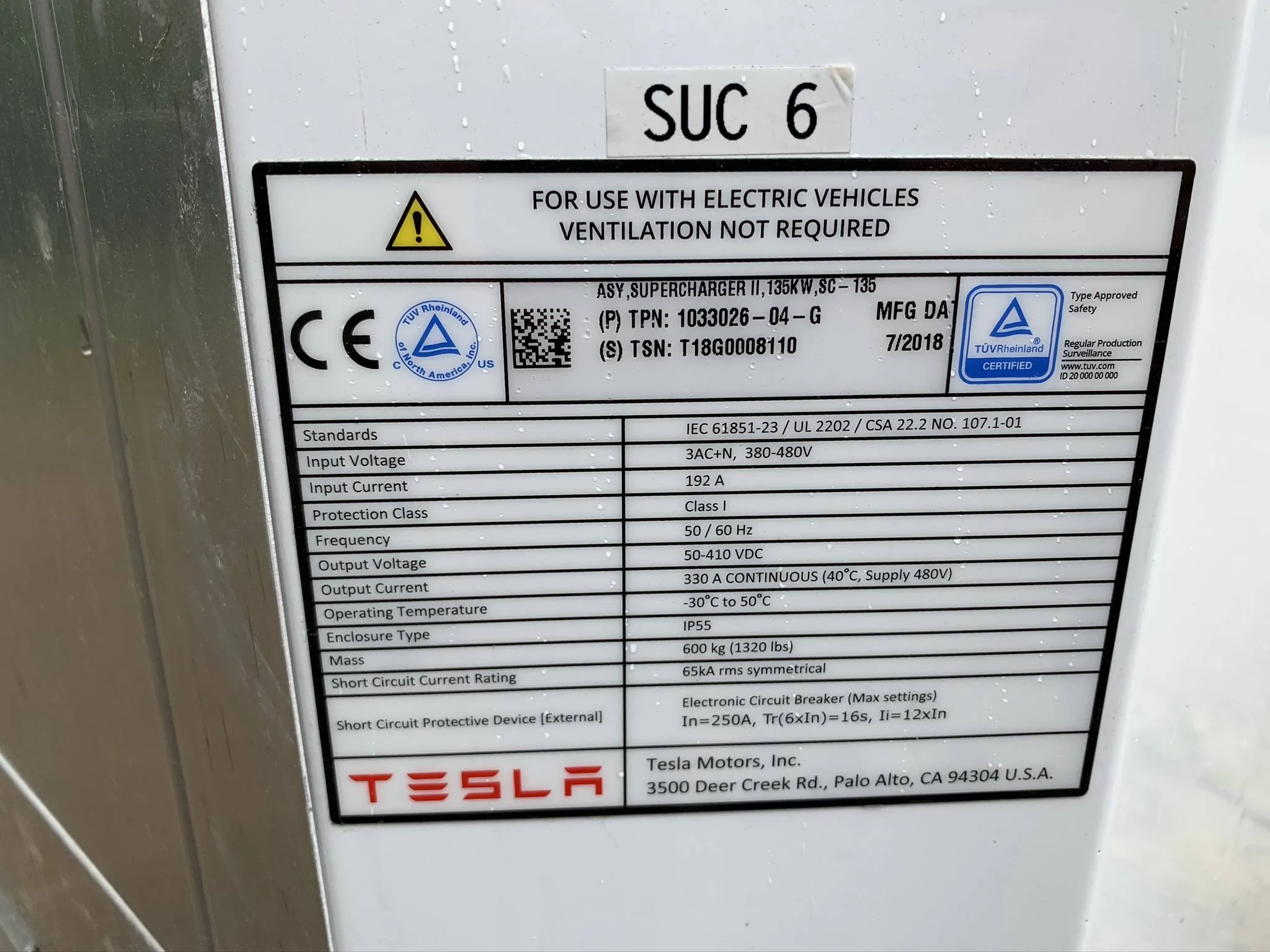
Different amperage outputs on the SuC’s.

This is the cabinet from the v2 “150kW” units at Marks Tey (Colchester). You can see the much higher current rating as opposed to the 120 kW Instavolt unit.

DA1FF2DD-95D4-48D6-A46E-F7766EB0698F.jpeg


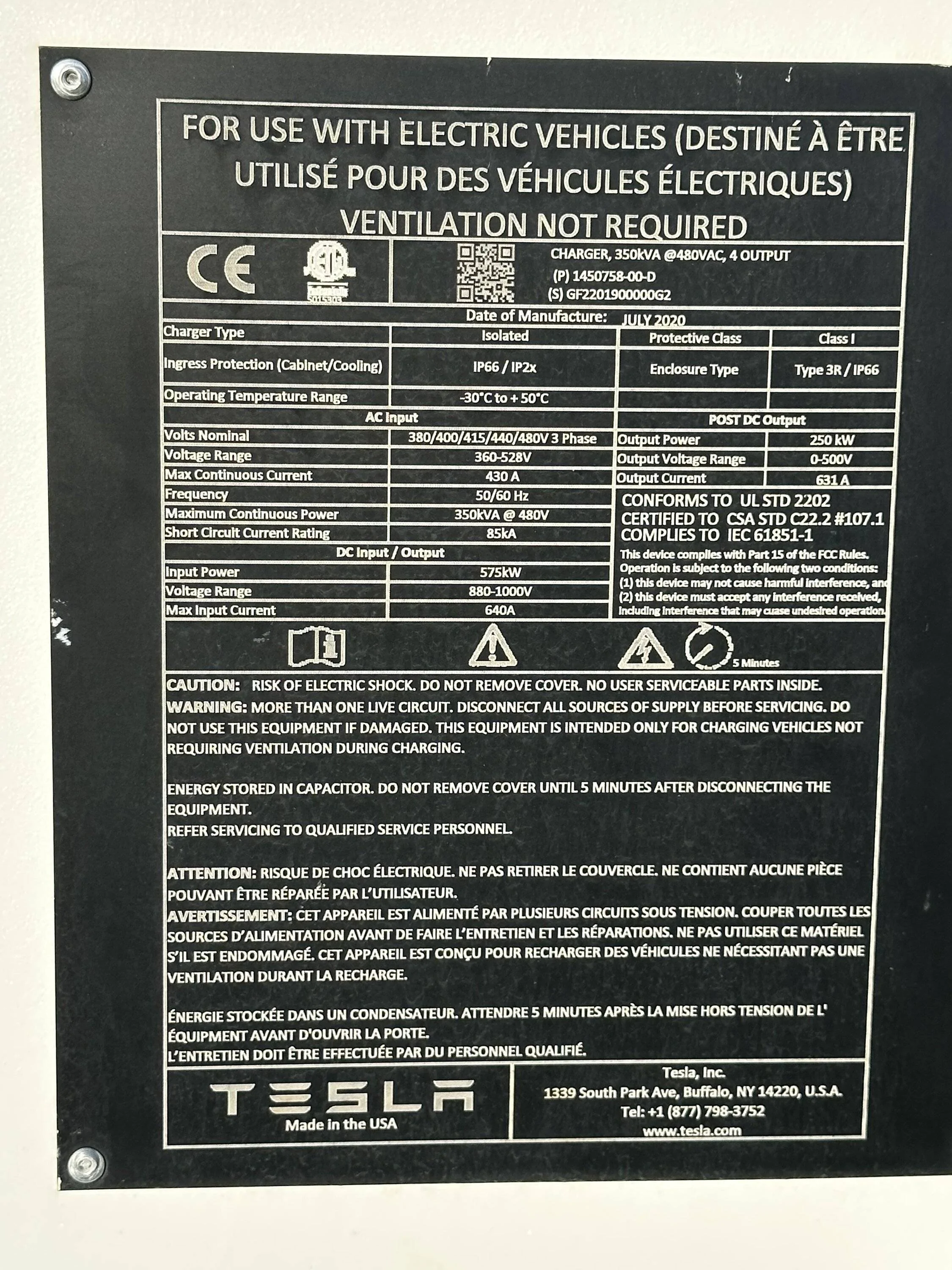
I can get a shot of a v3 (250 kW) unit when I’m next charging at one.
Shot of a v3 Supercharger cabinet data plate (Colchester). Much higher DC output power and current capability:

Porsche Taycan Instavolt 120kw 400v chargers 8FCF3DFD-D53D-4062-AA97-0B102707CA4C
 

simcity

Well-Known Member
First Name
Sean
Joined
May 22, 2022
Threads
40
Messages
1,546
Reaction score
1,288
Location
Suffolk, UK
Vehicles
'23 Taycan Turbo
Country flag
To your point above, Tesla drivers will generally tend to go to a SuC as they’ll get up to 250 kW with the newer cars on v3 It’s also cheaper than Instavolt to charge….

I’ll probably need a full charge tomorrow on the X and I know that will pull well north of 120 kW when the batt is warmed and thirsty. Expect it will top out at 80 kW on that Instavolt.

Will let you know.

Can’t speak to the other chargers in their network - it’s likely they will be of various ages etc. That one at MaccyDs in Bow left the factory in April ‘21. BYD Auto themselves are I think nominal 600V cars for what that’s worth then there’s Kia, Hyundai and Polestar with their 800V cars. Then the raft of other Chinese manufacturers that we don’t really see too much of here, but understand they’re adopting nominal 800v cars. So I don’t think thats a reason.
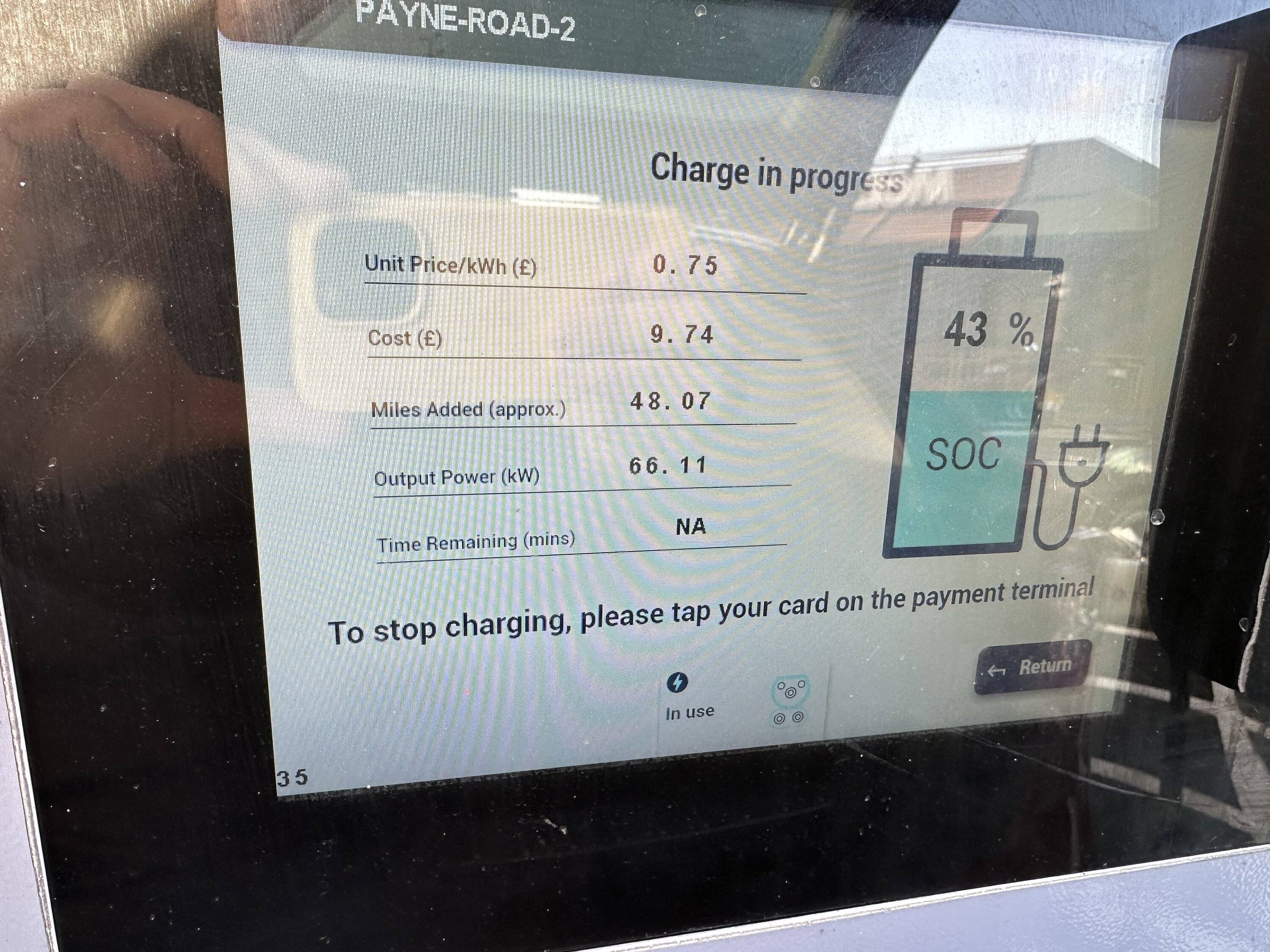
Tried that Instavolt this morning on the model X.

The battery was preconditioned and around 30% SoC. It could have been warmer to be fair, however the most I saw was 66 kW….perhaps if the battery was a tad warmer and at a lower SoC to encourage the best charge rate, but it’s telling on a 400v only car.

I’ll try again one day the Tesla with a properly warm battery and lower SoC.

Picture below from when I pulled the charge.

Porsche Taycan Instavolt 120kw 400v chargers 91E03287-25BE-44C3-8282-79491FCC7796


For comparison I then drove off that topup and went to Colchester SuC on my way to Suffolk. At a similar-ish SoC around 27%, the car almost immediately started pulling 136 kW. Again could have been better at a lower SoC.

Have also asked the good folks on the Tesla forum what their best charge rates are on these 120kW Instavolts.

So not totally conclusive, but looking very much like these units are output capped on a 400V car. There should be no lower output limit though on ANY Taycan - in the right conditions.

Will try that experiment next (at some point).


W1NGE

Well-Known Member
First Name
Adrian
Joined
Jan 11, 2021
Threads
53
Messages
11,017
Reaction score
6,805
Location
Aberdeen, Scotland
Vehicles
992.2, ex GTS ST & 4S owner, Macan T
Country flag
Shot of a v3 Supercharger cabinet data plate (Colchester). Much higher DC output power and current capability:

8FCF3DFD-D53D-4062-AA97-0B102707CA4C.webp
I took a dip into another EV forum and there are quite a lot of comments from folk regarding the limited power from Instavolt 120kW units and I found only 1 member who got the max 120kW (not sure which vehicle). Most folk getting either 60kW or 80kW and surmising that throttling/load sharing was to blame. Truth is these are likely caught in the 200A output & battery voltage architecture limitation.

Do we think it's shameful for EVSE Operators don't come clean on this and provide some helpful guidance?

Should apps (and PCM) used for charge planning and locating not capture additional meta data to help people make better choices and easy some of the frustration with 'slow' charging?

Worst outcome here is that we'll see folk on their hands and knees looking for the data plates to figure Amps and Volts before spending more than they need to on a charge!
 

W1NGE

Well-Known Member
First Name
Adrian
Joined
Jan 11, 2021
Threads
53
Messages
11,017
Reaction score
6,805
Location
Aberdeen, Scotland
Vehicles
992.2, ex GTS ST & 4S owner, Macan T
Country flag
Tried that Instavolt this morning on the model X.

The battery was preconditioned and around 30% SoC. It could have been warmer to be fair, however the most I saw was 66 kW….perhaps if the battery was a tad warmer and at a lower SoC to encourage the best charge rate, but it’s telling on a 400v only car.

I’ll try again one day the Tesla with a properly warm battery and lower SoC.

Picture below from when I pulled the charge.

91E03287-25BE-44C3-8282-79491FCC7796.jpeg


For comparison I then drove off that topup and went to Colchester SuC on my way to Suffolk. At a similar-ish SoC around 27%, the car almost immediately started pulling 136 kW. Again could have been better at a lower SoC.

Have also asked the good folks on the Tesla forum what their best charge rates are on these 120kW Instavolts.

So not totally conclusive, but looking very much like these units are output capped on a 400V car. There should be no lower output limit though on ANY Taycan - in the right conditions.

Will try that experiment next (at some point).
Keep testing - much appreciated - 99% conclusive now I'd say.

Would you have expected closer to 80kW rather than 60kW?
 

Englishtony2002

Well-Known Member
First Name
Tony
Joined
May 1, 2022
Threads
7
Messages
88
Reaction score
67
Location
Greater Manchester, UK
Vehicles
Taycan Turbo
Country flag
I am the COO at Rawcharging (www.rawcharging.com) and previously worked at ChargePoint. The chargers you are referencing at conjoined 62.5kW chargers, each pair having the ability to deliver up to 125kW at up to 1000V on a single unit PROVIDED that there is not a vehicle charging on the other charger in the pair. When two cars are connected the maximum power is reduced to 62.5kW and will not return to 125 even if one of the vehicles disconnects. The temp of your battery would have had an effect at the start, but explains why you only saw c. 60kW when the other car disconnected.
 

Englishtony2002

Well-Known Member
First Name
Tony
Joined
May 1, 2022
Threads
7
Messages
88
Reaction score
67
Location
Greater Manchester, UK
Vehicles
Taycan Turbo
Country flag
Keep testing - much appreciated - 99% conclusive now I'd say.

Would you have expected closer to 80kW rather than 60kW?
The majority of Instavolt chargers are NOT conjoined and will nto deliver more than 62.5kW, of the screen incorrectly displays 125kW.
 

Englishtony2002

Well-Known Member
First Name
Tony
Joined
May 1, 2022
Threads
7
Messages
88
Reaction score
67
Location
Greater Manchester, UK
Vehicles
Taycan Turbo
Country flag
I took a dip into another EV forum and there are quite a lot of comments from folk regarding the limited power from Instavolt 120kW units and I found only 1 member who got the max 120kW (not sure which vehicle). Most folk getting either 60kW or 80kW and surmising that throttling/load sharing was to blame. Truth is these are likely caught in the 200A output & battery voltage architecture limitation.

Do we think it's shameful for EVSE Operators don't come clean on this and provide some helpful guidance?

Should apps (and PCM) used for charge planning and locating not capture additional meta data to help people make better choices and easy some of the frustration with 'slow' charging?

Worst outcome here is that we'll see folk on their hands and knees looking for the data plates to figure Amps and Volts before spending more than they need to on a charge!
The MFG network that is equipped with the Swarco Rapids (the vast majority) are rated (and marked) at 150kW, however this is at 1000V (i.e. a max of 150Amps), thus a 400V architecture battery will peak at 60kW. an 800V Taycan would achieve 120kW.
 

W1NGE

Well-Known Member
First Name
Adrian
Joined
Jan 11, 2021
Threads
53
Messages
11,017
Reaction score
6,805
Location
Aberdeen, Scotland
Vehicles
992.2, ex GTS ST & 4S owner, Macan T
Country flag
I am the COO at Rawcharging (www.rawcharging.com) and previously worked at ChargePoint. The chargers you are referencing at conjoined 62.5kW chargers, each pair having the ability to deliver up to 125kW at up to 1000V on a single unit PROVIDED that there is not a vehicle charging on the other charger in the pair. When two cars are connected the maximum power is reduced to 62.5kW and will not return to 125 even if one of the vehicles disconnects. The temp of your battery would have had an effect at the start, but explains why you only saw c. 60kW when the other car disconnected.
Blimey!

Isn't there something in the Trades Description Act to prevent what is effectively mis-selling?

Rip-off Britain...here we go again!
 

Scandinavian

Well-Known Member
First Name
Peter
Joined
Nov 3, 2019
Threads
52
Messages
3,904
Reaction score
3,549
Location
France
Vehicles
Taycan T, Aston Martin DB9, Porsche 996 C4 Cab, i4
Country flag
Blimey!

Isn't there something in the Trades Description Act to prevent what is effectively mis-selling?

Rip-off Britain...here we go again!
Not sure it only is in the U.K. though!
I have experienced some chargers in Germany that are two cables. They state 300 kW but only deliver 150 per cable. Unfortunately our Charging Planner seem to classify them as 300 kW as well.

There is not that much difference at charging at 150 kW and full Ionity charge, but it is annoying when it happens.
Sponsored


Top