TaycanParis
Member
- First Name
- Klas
- Joined
- Jun 10, 2026
- Threads
- 1
- Messages
- 6
- Reaction score
- 94
- Location
- France
- Vehicles
- Taycan CT4 MY22

- Thread starter
- #1
I bought my Taycan 4 Cross Turismo expecting to love it.
I did not expect it to completely reset my understanding of what a car could be.
This is my first Porsche. I came into the brand without decades of 911 ownership behind me, without childhood memories of air-cooled engines, and without any particular need to defend the badge. I simply wanted a fast, beautiful, practical electric car that could carry my family and our luggage across Europe.
What I found was something far more special.
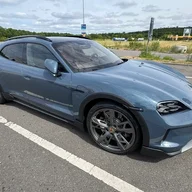
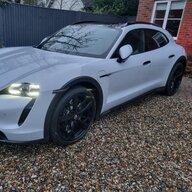
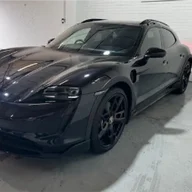
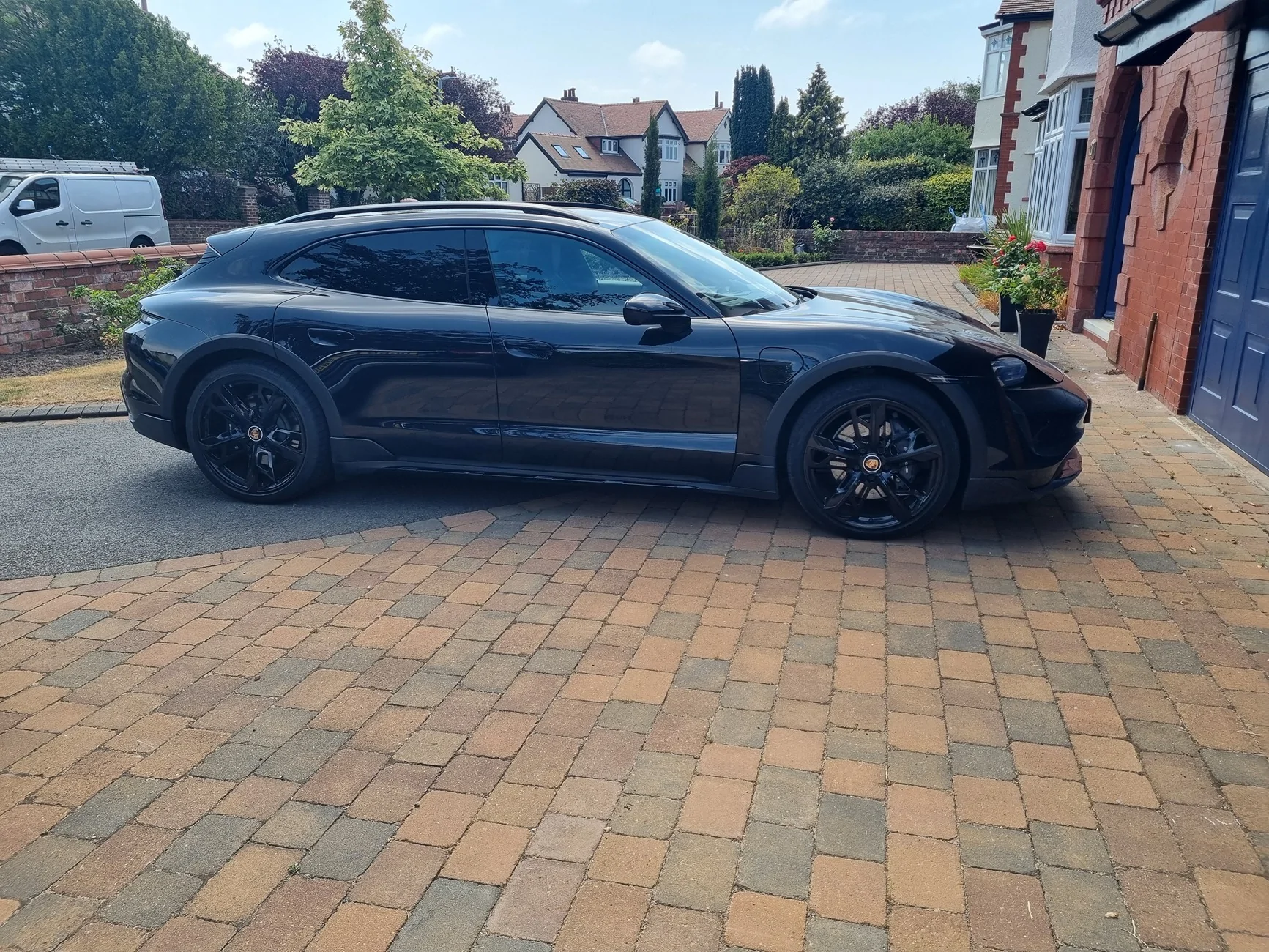
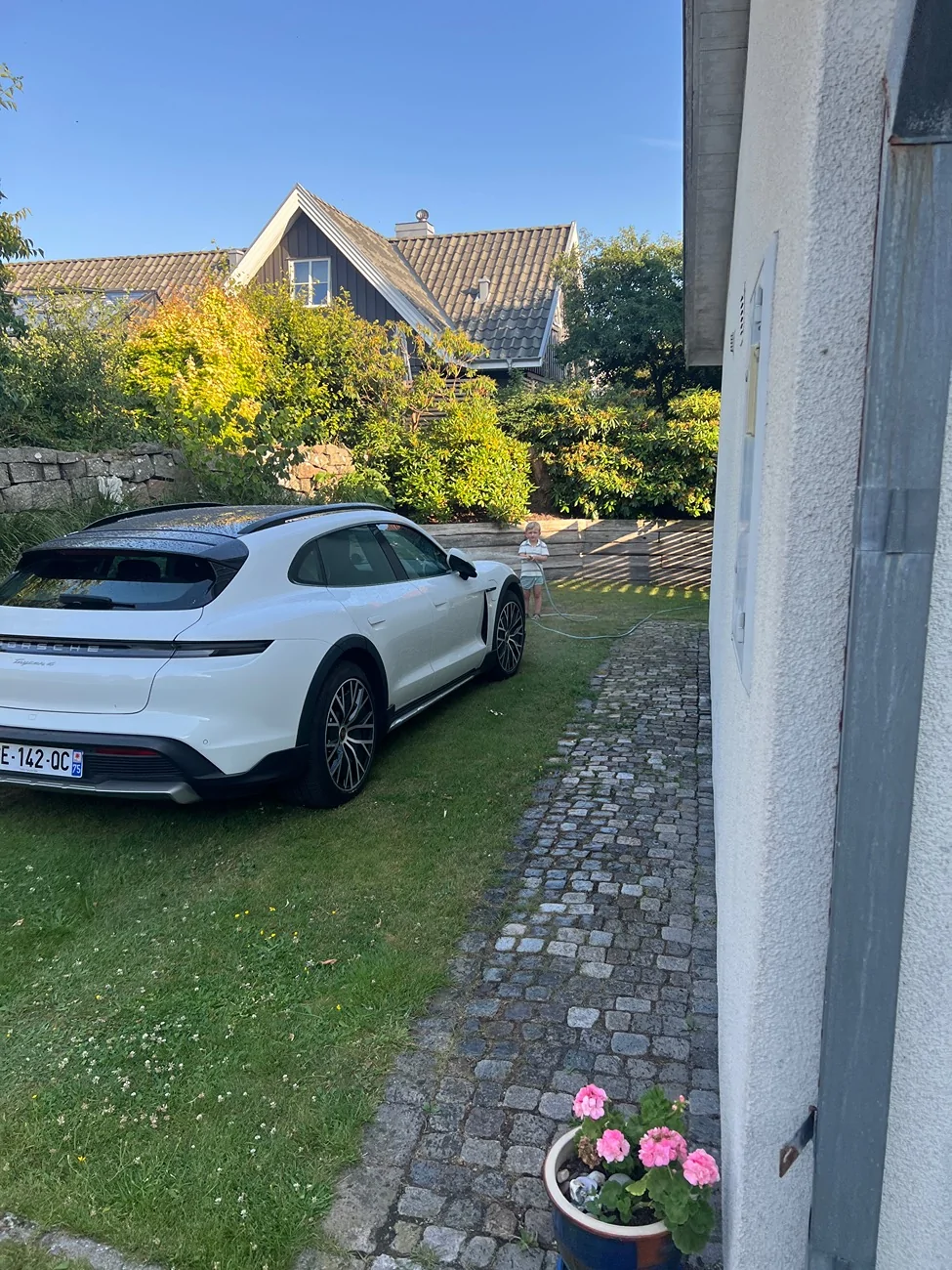
My CT4 is a 2022 car on 20-inch Turbo S Aero wheels, with rear-axle steering, air suspension, the panoramic roof, roof rails and the Off-Road Design Package. In other words, it is not the lightest, lowest or most range-optimised Taycan ever built.
And I absolutely adore it.
There are faster Taycans, of course. Much faster ones. But I genuinely struggle to imagine needing more performance on a public road. The CT4 already delivers that surreal Taycan sensation: immediate acceleration, immense traction and a centre of gravity that makes two tonnes of family estate car seem to disappear beneath you.
What impresses me most, however, is not how fast it is.
It is the completeness of it.
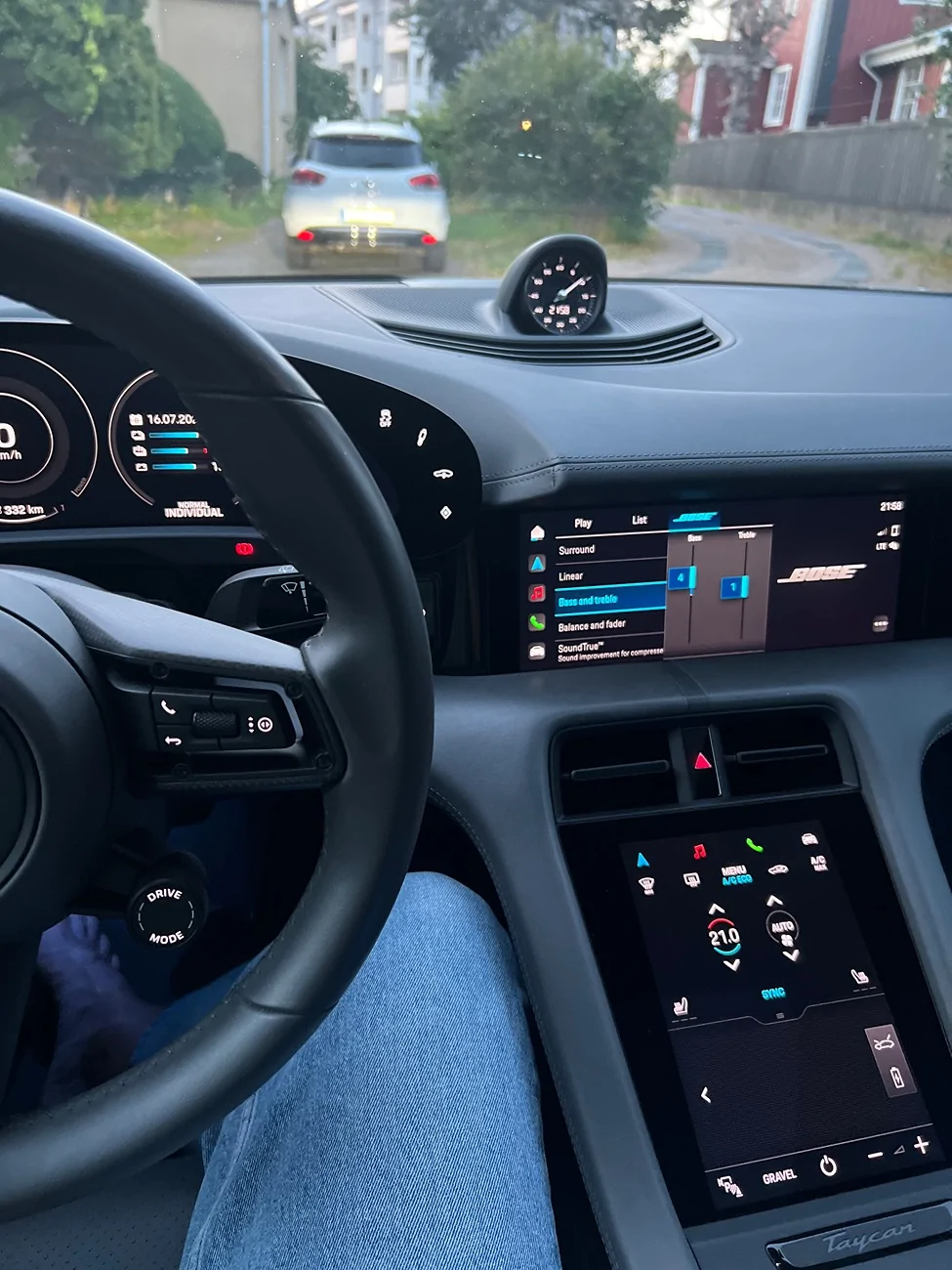
It can glide silently through a town with the composure of a luxury car, then shrink around you on a twisting road. The steering is beautifully judged. The body control is extraordinary. The rear-axle steering makes it feel far smaller than it is. The ride remains composed even when the road deteriorates. Then you park it, look back, and remember that this wonderfully practical family car also happens to be one of the most beautiful shapes Porsche has ever produced.
The Cross Turismo does not feel like an electric estate wearing a Porsche badge. It feels like Porsche took the electric drivetrain seriously enough to build an entirely new kind of Porsche around it.
And then there is the subject that seems to dominate every Taycan discussion: range.
Before buying mine, I read everything. Disappointing range estimates. Winter consumption. Battery degradation. Charging curves. Stories about people arriving at chargers with 3 per cent remaining, apparently one broken Ionity station away from disaster.
I assumed range would be the compromise I would have to accept in exchange for everything else.
It has not been.
Since collecting the car, we have driven it from Paris to the south of France, from Paris to Bremen, across Denmark and Sweden, and on countless shorter family journeys. One day it is covering 800 kilometres through rain, heat and motorway traffic. The next it is carrying children and luggage along small coastal roads. Most recently, we drove from Höllviken to Bjärred, across to Louisiana in Denmark, and back again.
It simply gets on with it.
On faster motorway journeys at 120 to 130 km/h, I generally see consumption in the region of 24 to 25 kWh/100 km. In good conditions on slower roads, the car regularly drops towards 18 to 21. I have seen sub-18 figures over meaningful distances. From a large, four-wheel-drive, two-tonne Cross Turismo with an off-road package, that is remarkable.
No, it will not travel 500 motorway kilometres at 130 km/h without stopping. But neither will my family.
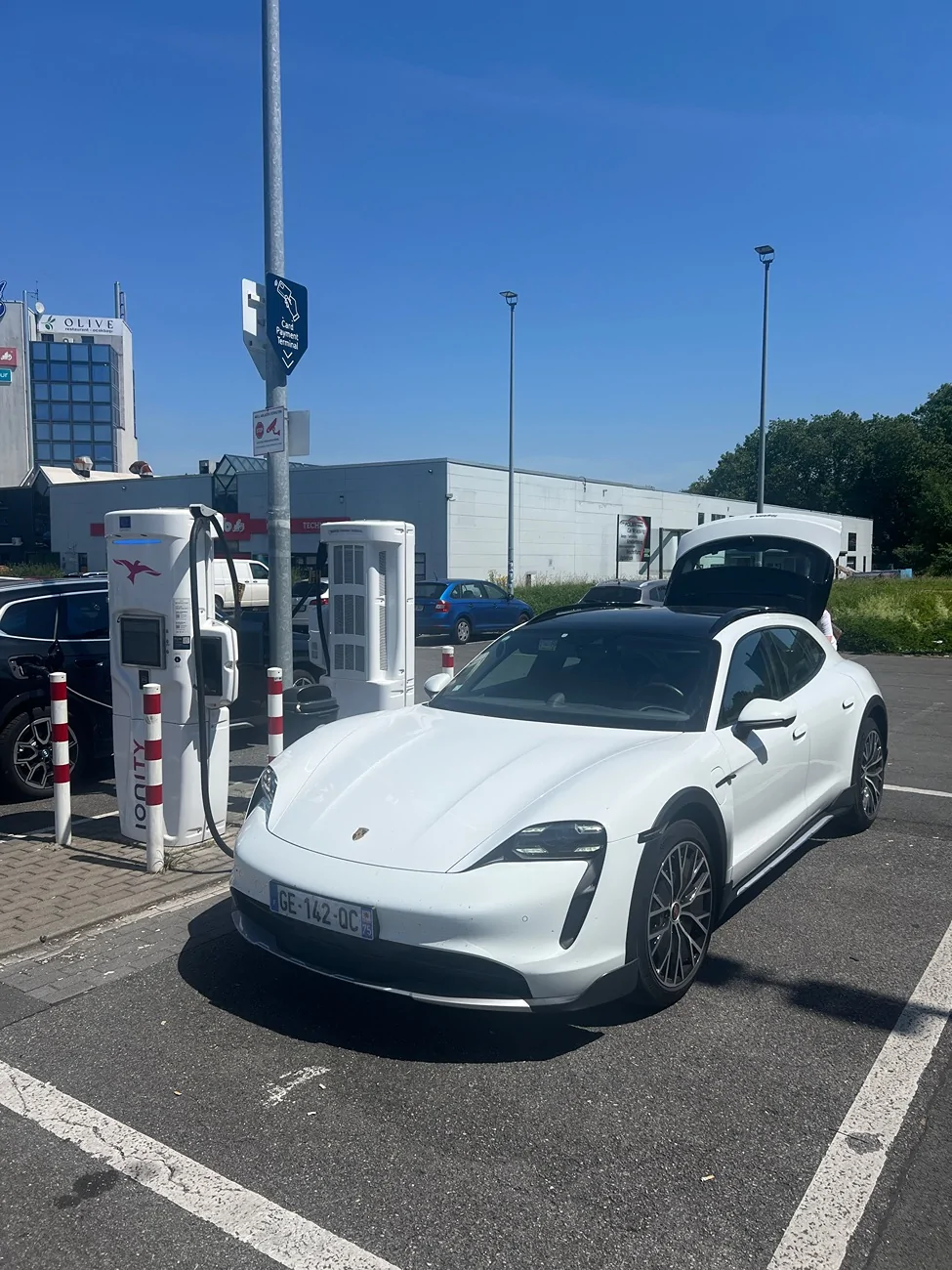
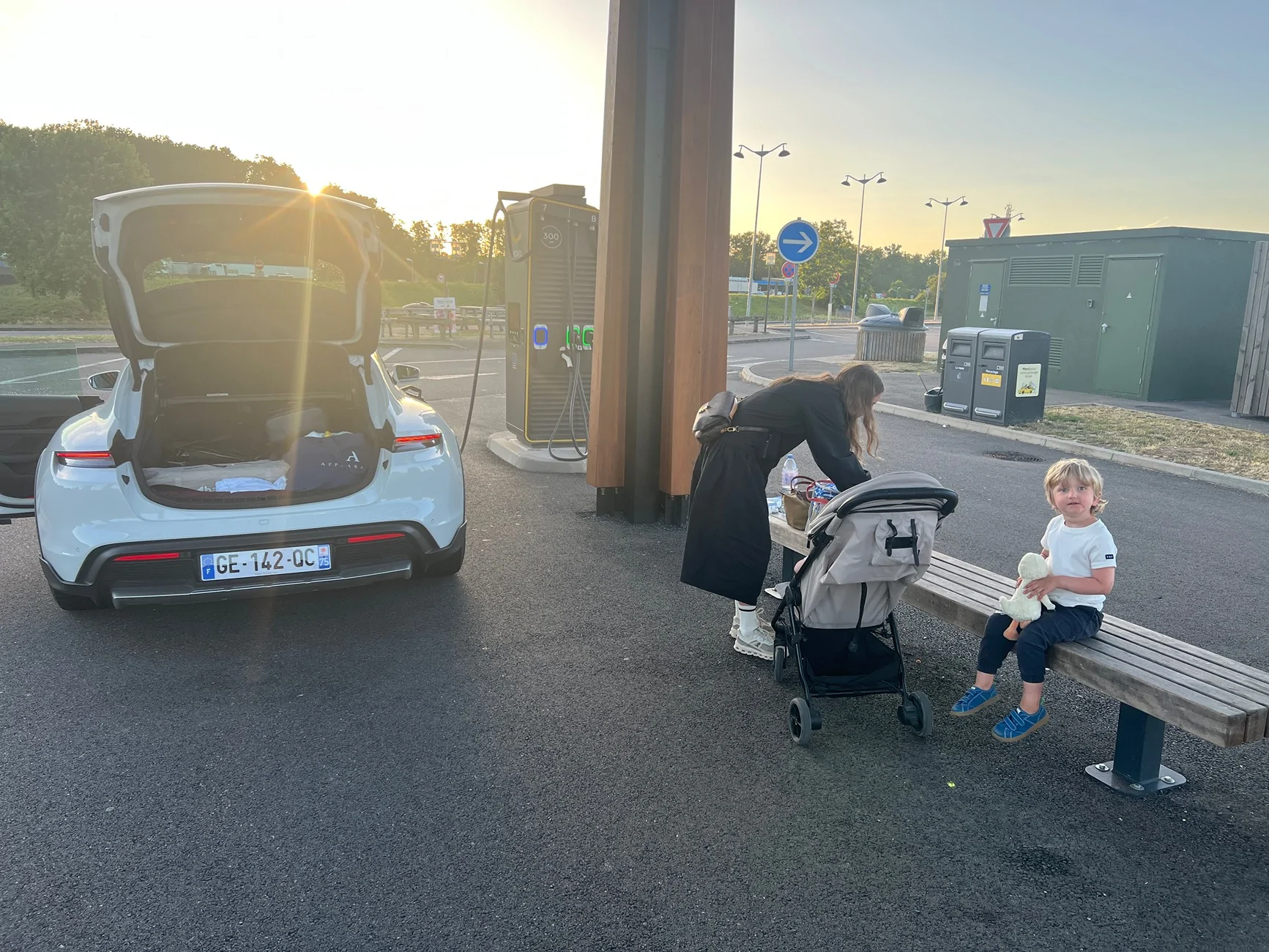
After two or three hours, somebody needs coffee, food, a toilet or simply ten minutes outside the car. When the battery is warm and the charger is working properly, the Taycan often finishes charging before we have finished doing whatever caused us to stop.
That is the part the range-anxiety conversation misses.
You do not experience an electric road trip as one enormous countdown from 100 per cent to zero. You experience it as a series of very manageable driving stages, with short stops that fit naturally into the journey. The Taycan’s great strength is not merely the size of its battery. It is how efficiently it uses that battery, how consistently it covers ground and how quickly it can take energy back on board.
After thousands of kilometres, I no longer think, “Can the car make it?”
I think, “Where would we like to stop?” That is a profound difference.
Of course, it is not perfect. The software can occasionally remind you that Porsche had considerably more experience building chassis than computers. The range estimator can be comically pessimistic after a run of short journeys. Public charging infrastructure still varies enormously. And owning a Taycan will teach you far more about temperature, wind and elevation than you ever expected to know.
But none of those things defines the ownership experience.
What defines it is the moment you leave early in the morning with the family asleep, the cabin quiet and the road almost empty. It is the way the car settles at speed, utterly stable and untroubled. It is the little movement of the steering wheel as you guide it into a long bend. It is the impossible combination of calmness and urgency. It is arriving hundreds of kilometres later feeling as though the car could turn around and do the whole journey again.
The Taycan is sometimes discussed as though it were an early and now outdated attempt at an electric Porsche, judged mainly by a WLTP number or compared with newer cars carrying larger batteries.
That misses the point entirely.
A car is not a battery specification with seats attached. Range matters, but so do steering, braking, comfort, confidence, design, build quality and the simple desire to drive somewhere for no reason other than the road itself.
The Taycan, and perhaps especially the Cross Turismo, brings all of those things together in a way I have never experienced before.
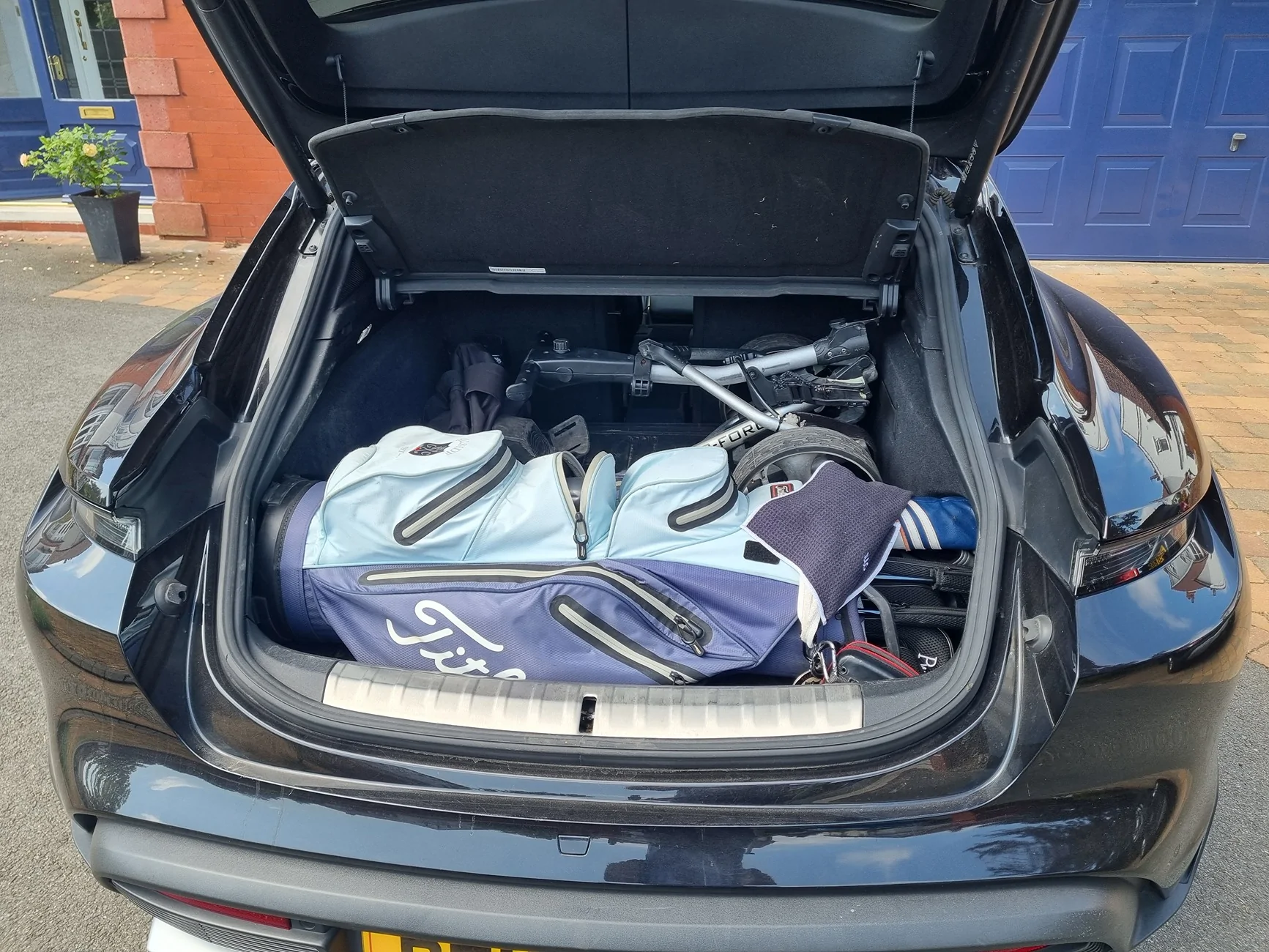
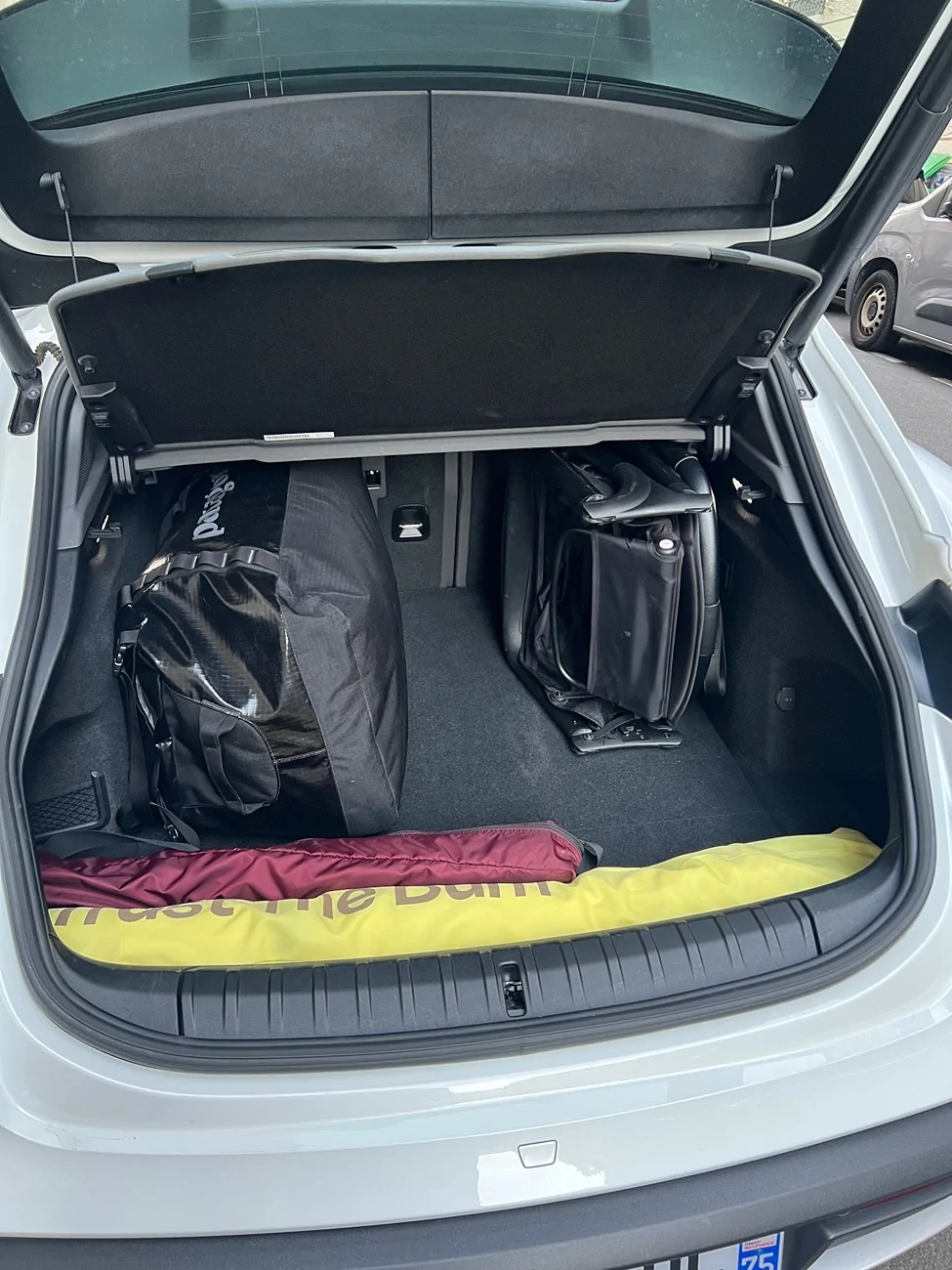
It is a sports car when I want one, a quiet long-distance express when I need one, and a family estate every day. It carries children, suitcases and all the debris of family life, yet still makes an ordinary journey feel like an event.
So yes, my first Porsche is electric.
It is also one of the finest cars I have ever driven.
And if this is what entering the Porsche world feels like, I finally understand why so many people never leave.


I did not expect it to completely reset my understanding of what a car could be.
This is my first Porsche. I came into the brand without decades of 911 ownership behind me, without childhood memories of air-cooled engines, and without any particular need to defend the badge. I simply wanted a fast, beautiful, practical electric car that could carry my family and our luggage across Europe.
What I found was something far more special.
My CT4 is a 2022 car on 20-inch Turbo S Aero wheels, with rear-axle steering, air suspension, the panoramic roof, roof rails and the Off-Road Design Package. In other words, it is not the lightest, lowest or most range-optimised Taycan ever built.
And I absolutely adore it.
There are faster Taycans, of course. Much faster ones. But I genuinely struggle to imagine needing more performance on a public road. The CT4 already delivers that surreal Taycan sensation: immediate acceleration, immense traction and a centre of gravity that makes two tonnes of family estate car seem to disappear beneath you.
What impresses me most, however, is not how fast it is.
It is the completeness of it.
It can glide silently through a town with the composure of a luxury car, then shrink around you on a twisting road. The steering is beautifully judged. The body control is extraordinary. The rear-axle steering makes it feel far smaller than it is. The ride remains composed even when the road deteriorates. Then you park it, look back, and remember that this wonderfully practical family car also happens to be one of the most beautiful shapes Porsche has ever produced.
The Cross Turismo does not feel like an electric estate wearing a Porsche badge. It feels like Porsche took the electric drivetrain seriously enough to build an entirely new kind of Porsche around it.
And then there is the subject that seems to dominate every Taycan discussion: range.
Before buying mine, I read everything. Disappointing range estimates. Winter consumption. Battery degradation. Charging curves. Stories about people arriving at chargers with 3 per cent remaining, apparently one broken Ionity station away from disaster.
I assumed range would be the compromise I would have to accept in exchange for everything else.
It has not been.
Since collecting the car, we have driven it from Paris to the south of France, from Paris to Bremen, across Denmark and Sweden, and on countless shorter family journeys. One day it is covering 800 kilometres through rain, heat and motorway traffic. The next it is carrying children and luggage along small coastal roads. Most recently, we drove from Höllviken to Bjärred, across to Louisiana in Denmark, and back again.
It simply gets on with it.
On faster motorway journeys at 120 to 130 km/h, I generally see consumption in the region of 24 to 25 kWh/100 km. In good conditions on slower roads, the car regularly drops towards 18 to 21. I have seen sub-18 figures over meaningful distances. From a large, four-wheel-drive, two-tonne Cross Turismo with an off-road package, that is remarkable.
No, it will not travel 500 motorway kilometres at 130 km/h without stopping. But neither will my family.
After two or three hours, somebody needs coffee, food, a toilet or simply ten minutes outside the car. When the battery is warm and the charger is working properly, the Taycan often finishes charging before we have finished doing whatever caused us to stop.
That is the part the range-anxiety conversation misses.
You do not experience an electric road trip as one enormous countdown from 100 per cent to zero. You experience it as a series of very manageable driving stages, with short stops that fit naturally into the journey. The Taycan’s great strength is not merely the size of its battery. It is how efficiently it uses that battery, how consistently it covers ground and how quickly it can take energy back on board.
After thousands of kilometres, I no longer think, “Can the car make it?”
I think, “Where would we like to stop?” That is a profound difference.
Of course, it is not perfect. The software can occasionally remind you that Porsche had considerably more experience building chassis than computers. The range estimator can be comically pessimistic after a run of short journeys. Public charging infrastructure still varies enormously. And owning a Taycan will teach you far more about temperature, wind and elevation than you ever expected to know.
But none of those things defines the ownership experience.
What defines it is the moment you leave early in the morning with the family asleep, the cabin quiet and the road almost empty. It is the way the car settles at speed, utterly stable and untroubled. It is the little movement of the steering wheel as you guide it into a long bend. It is the impossible combination of calmness and urgency. It is arriving hundreds of kilometres later feeling as though the car could turn around and do the whole journey again.
The Taycan is sometimes discussed as though it were an early and now outdated attempt at an electric Porsche, judged mainly by a WLTP number or compared with newer cars carrying larger batteries.
That misses the point entirely.
A car is not a battery specification with seats attached. Range matters, but so do steering, braking, comfort, confidence, design, build quality and the simple desire to drive somewhere for no reason other than the road itself.
The Taycan, and perhaps especially the Cross Turismo, brings all of those things together in a way I have never experienced before.
It is a sports car when I want one, a quiet long-distance express when I need one, and a family estate every day. It carries children, suitcases and all the debris of family life, yet still makes an ordinary journey feel like an event.
So yes, my first Porsche is electric.
It is also one of the finest cars I have ever driven.
And if this is what entering the Porsche world feels like, I finally understand why so many people never leave.
Sponsored